Automation Hub · India
Factory-Floor Automation in India: Where to Start, What It Saves
Factory-floor automation increases efficiency, throughput and quality while cutting labour cost — but only when applied to the right step first. For most Indian factories the highest-ROI starting point is the dispatch dock, where automating the manual pallet-securing step cuts the cycle from ~120 seconds to under 40, saves around ₹25 lakh a year, and pays back in 6–18 months.
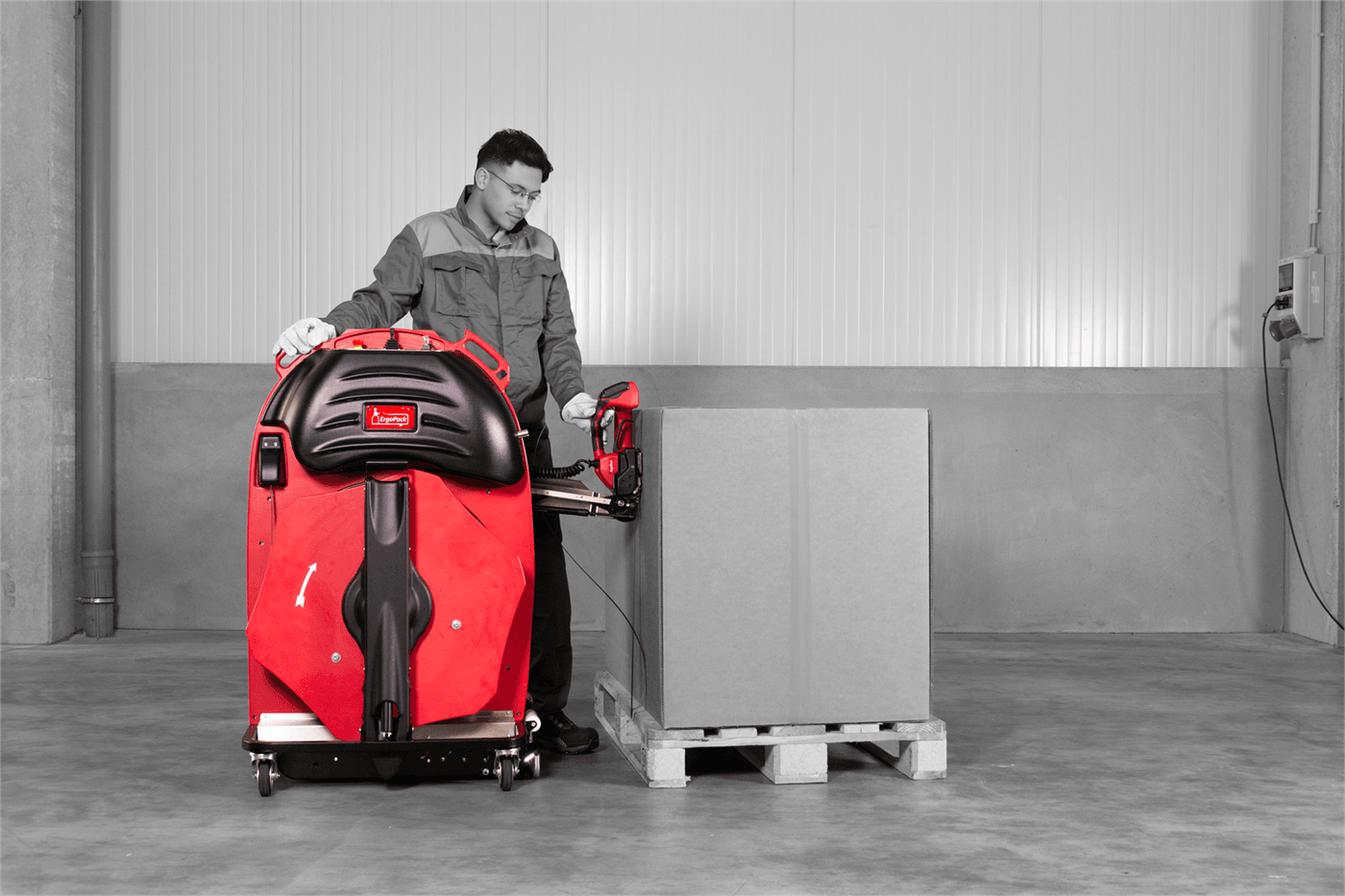
Rising wages, labour shortages and pressure to ship more with less are pushing every Indian factory and warehouse toward automation. But "automate everything" is the wrong strategy — automation pays only when it is aimed at the right step, in the right order. This hub maps the whole topic and links to a deep guide on each outcome: efficiency, throughput, labour cost and shipment rejections.
The principle that runs through all of it: your output is capped by your slowest, most labour-heavy step. On most Indian floors that step is at the dispatch dock — the manual securing of loaded pallets. Automating it first is contained, low-disruption and the fastest-paying automation project available, which is why it is the recommended entry point below.
What factory-floor automation actually delivers
Done well — aimed at the right step — automation delivers four measurable gains at once: lower labour cost, higher throughput, more consistent quality, and resilience to absence and turnover. Each of the spoke guides below covers one of these in depth, grounded in real numbers from the ErgoPack ROI calculator.
- Lower labour cost — fewer operators on repetitive tasks, hedged against rising wages.
- Higher throughput — machines work faster and do not fatigue.
- Consistent quality — repeatable output, fewer defects and shipment rejections.
- Resilience — output no longer depends on filling the hardest-to-staff roles.
The bottleneck-first rule
A factory’s output is set by its slowest step. Automate anything else and you simply build up work-in-progress in front of the real constraint — spending money without lifting output. So the first job is not "what can we automate?" but "what is our bottleneck and our most expensive repetitive task?" Automate that first, measure, then move to the next constraint.
For most Indian operations the production line is already partly automated, while the manual gap sits at dispatch — palletising, securing, wrapping. These steps are repetitive, labour-heavy and a common bottleneck, with fast payback and low disruption, which is why they are the natural place to begin.
Why the dispatch dock is the highest-ROI starting point
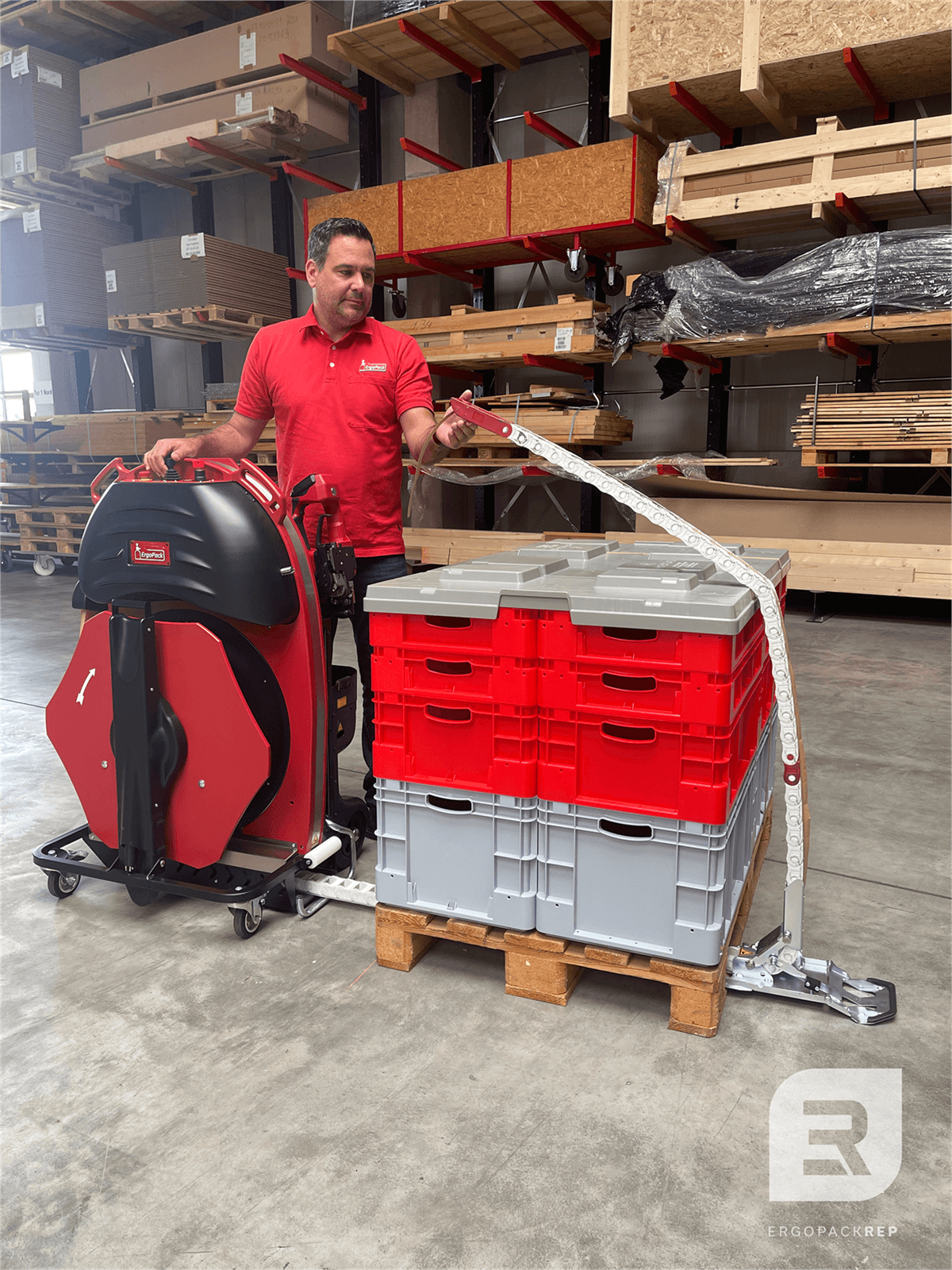
The cleanest first automation project is the pallet-securing (strapping) step. By hand it takes around 120 seconds and two operators per pallet, with inconsistent, by-feel tension that causes transit damage and rejections. Mobile automation cuts it to under 40 seconds with one operator and applies calibrated, repeatable tension every time.
A wheeled machine such as the ErgoPack 726X, GO or 700 needs no conveyors, no civil work and no line rebuild — it is brought to the pallet at any dock, so the gain is immediate and the risk low. On a typical floor this saves around ₹25 lakh a year across labour, strap and damage, and recovers the machine in 6–18 months.
The "first win" in real rupees — a worked example
Most automation guides talk in percentages; here is the actual rupee math for a typical Indian floor, using the ErgoPack ROI calculator defaults: one dispatch line, four manual operators across two shifts at ~₹30,000 monthly CTC, and ~50 pallets per shift secured at ~120 seconds with two people.
Moving that securing step to one operator at under 40 seconds, with calibrated tension that cuts ~12% of strap waste and removes the loose-load rejections, saves on the order of ₹25 lakh in the first year — labour, strap and damage combined. Against a mobile machine from around ₹1,75,000 and ~₹1 lakh/year AMC, that is a payback of roughly 6–18 months, after which the saving continues and grows as wages rise. Over ten years the cumulative saving approaches ₹2 crore.
This is the "cheap first win" that abstract robotics and AI roadmaps miss: a contained, mobile, sub-₹2-lakh project that pays back inside a year before you touch storage, conveyors or the production line.
The dispatch-dock automation case, in numbers
| Factor | Manual securing | Mobile automated |
|---|---|---|
| Operators per pallet | 2 | 1 |
| Time per pallet | ~120 seconds | Under 40 seconds |
| Strap waste | Higher (by-feel) | ~12% lower (calibrated) |
| Typical annual saving | — | ~₹25 lakh / floor |
| Payback | — | 6–18 months |
| Cost trend | Rises with wages | Fixed; saving grows |
Explore each automation outcome
Warehouse automation
Warehouse automation in India delivers the fastest return when it starts at the dispatch dock rather than the storage racks.
Read the guide →Manufacturing automation
Manufacturing automation in India works best when it is applied bottleneck-first rather than line-wide.
Read the guide →Increase efficiency
You increase factory-floor efficiency by removing the slowest, most labour-heavy step rather than pushing every step harder.
Read the guide →Reduce labour cost
You reduce factory labour cost most durably by automating the hardest, most repetitive manual task rather than trimming people across the board.
Read the guide →Reduce rejections
Most shipment rejections trace back to loose, inconsistently secured pallets that shift and collapse in transit.
Read the guide →Increase throughput
You increase throughput by clearing the bottleneck, not by adding people everywhere — output is capped by the slowest step.
Read the guide →Packaging automation
Packaging automation in India pays back fastest when it starts with the securing step, not wrapping or filling.
Read the guide →End-of-line automation
End-of-line automation — automating the palletising, securing and dispatch steps after production — is the fastest-paying automation project for most Indian factories, because production is already partly automated while the line-end is still manual.
Read the guide →Automate pallet strapping
To automate pallet strapping, replace manual hand-strapping with a mobile machine that feeds its own strap under and around the loaded pallet, applies calibrated tension and friction-welds the seal.
Read the guide →More output, no new shift
You increase output without adding a shift by raising the capacity of your existing shifts at the bottleneck — usually the manual securing step at dispatch.
Read the guide →Warehouse efficiency
You improve warehouse efficiency by removing the slowest, most labour-heavy step at the dispatch dock rather than reshuffling the racks.
Read the guide →Single-operator dispatch
Single-operator dispatch means securing loaded pallets with one person instead of the usual two, by automating the strapping step.
Read the guide →Automation for exporters
For exporters, dispatch automation pays back twice — once on labour and once on rejections.
Read the guide →Reduce packaging cost
You reduce packaging cost most by cutting the labour and waste in securing, not by buying cheaper materials.
Read the guide →Reduce overtime
Dispatch overtime usually comes from a slow securing step that pushes loading past the shift.
Read the guide →Lean dispatch
Lean dispatch applies lean principles to the loading dock — eliminating waiting, motion, re-work and overproduction at the point goods leave.
Read the guide →Worker safety
Manual pallet strapping is a leading source of dock injuries — repetitive bending, hand-tensioning strain and the risk of a loose, shifting load.
Read the guide →Frequently asked questions
- Where should an Indian factory start with automation?
- Start at the bottleneck — the slowest, most labour-heavy step. For most Indian factories that is the manual pallet-securing step at the dispatch dock. Automating it is contained, needs no conveyors or rebuild, cuts the cycle from ~120 seconds to under 40 with one operator, saves around ₹25 lakh a year, and pays back in 6–18 months — the fastest-paying first project before moving to the next constraint.
- Does automation always pay off?
- No — it pays when you have enough volume, a labour-heavy repetitive step, rising wages, and damage or rejection risk, and when you automate the bottleneck rather than a non-constraint. Where those conditions hold (most Indian dispatch floors), payback is typically 6–18 months. Model it against your own numbers before investing.
- How much does dispatch automation cost in India?
- Mobile pallet-securing machines that handle loaded pallets start around ₹1,75,000 and are quoted against your volume, loads and power. Against a typical saving of ~₹25 lakh a year, that recovers in 6–18 months — and unlike manual labour, the cost is fixed while the saving grows as wages rise.
- Can I automate just packing and dispatch without touching the production line?
- Yes — and for most Indian factories that is the smartest place to start. Mobile pallet-securing automation is a self-contained, end-of-line project: a wheeled machine is brought to the dispatch dock with no conveyors, civil work or change to the production line. You capture the labour and throughput gain in isolation, prove the ROI, then expand to other steps later. Dispatch automation does not require a line rebuild.
- What is the cheapest first automation step for a small or mid-size Indian factory?
- Automating the manual pallet-securing step at dispatch. A mobile machine from around ₹1,75,000 — far below a robotic cell, conveyor line or AS/RS — removes the most labour-heavy, repetitive task on the dock, pays back in 6–18 months, and needs no infrastructure. It is the lowest-cost, fastest-paying entry point into factory automation for SMEs.
- Is automation worth it given India’s lower labour wages?
- Yes, increasingly. Indian floors typically double-staff manual securing (two operators per pallet), so the labour saved is large; statutory wage rises widen the gap every year; and the machine also cuts strap waste and the export rejections that cost far more than wages. The result is a 6–18 month payback even at Indian wage levels, with the saving growing over time while the machine cost stays fixed.