Automation Hub · Spoke
How to Increase Output Without Adding a Shift
You increase output without adding a shift by raising the capacity of your existing shifts at the bottleneck — usually the manual securing step at dispatch. Automating it (from ~120 seconds to under 40 with one operator) lets the current shifts ship far more, deferring or avoiding the cost of a new shift entirely.
Adding a shift is one of the most expensive ways to increase output — new wages, supervision, power and overheads, every day, forever. Before committing to it, the cheaper question is: can my existing shifts simply do more? Usually they can, if you lift the bottleneck.
This guide explains how automating the dispatch bottleneck raises the capacity of your current shifts so you can defer or avoid a new shift altogether.
Raise existing-shift capacity at the bottleneck
Your shifts’ output is capped by their slowest step. On most Indian dispatch floors that is manual securing — two operators, ~120 seconds per pallet. Because it is the constraint, lifting it lifts the whole shift’s output, with no extra hours.
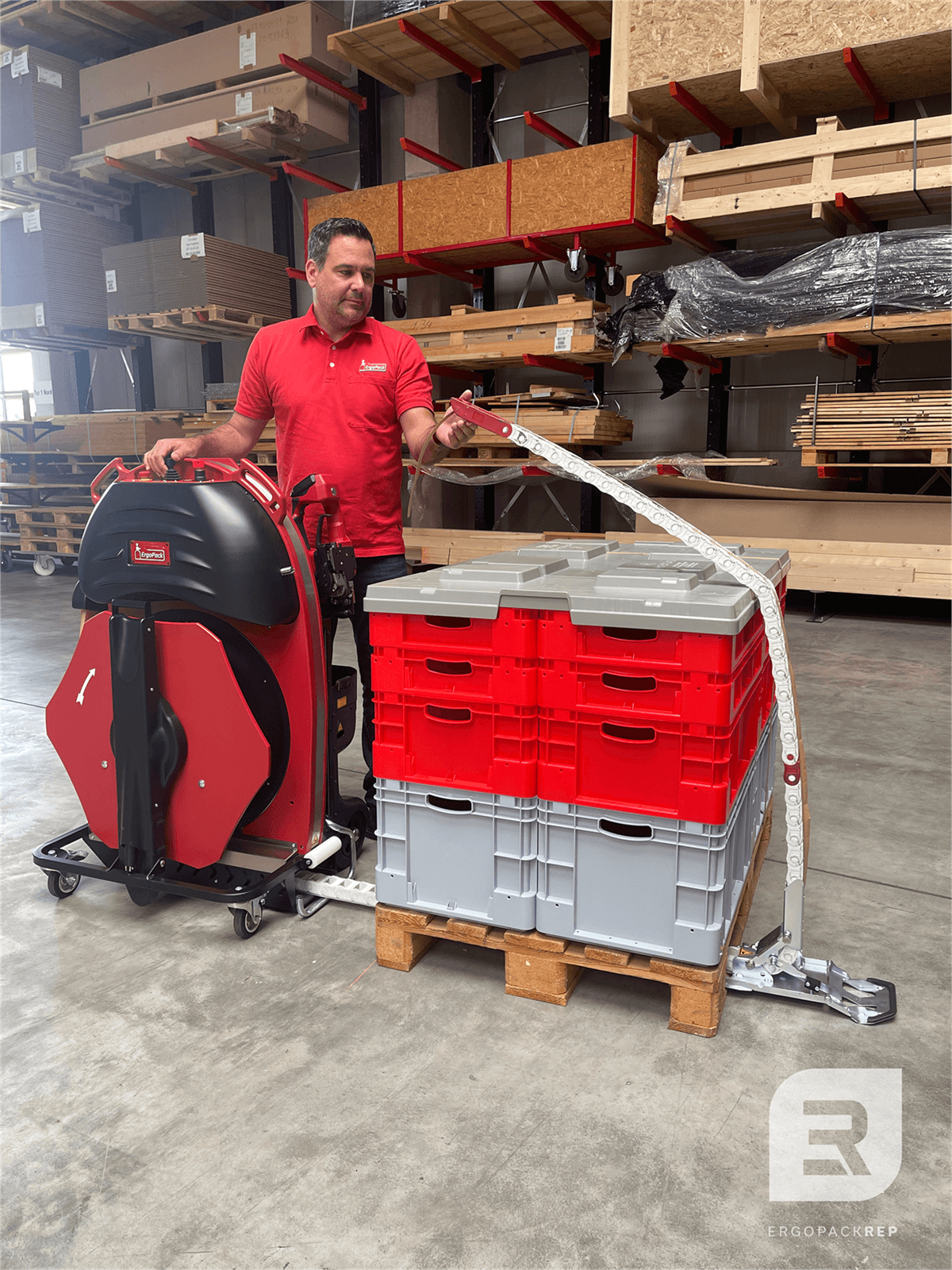
Automating securing with a mobile ErgoPack machine cuts the step to under 40 seconds with one operator, so the same shift secures far more pallets in the same time. Often that recovered capacity is enough to absorb growth that would otherwise have forced a costly new shift.
- Shift output is capped by the slowest step (usually securing).
- Automating it lifts the whole shift’s capacity, no extra hours.
- One operator at under 40 seconds vs two at ~120 seconds.
- Recovered capacity defers or avoids a new shift entirely.
The economics: machine vs a new shift
A mobile securing machine is a one-time cost that pays back in 6–18 months and then saves every year. A new shift is a permanent, recurring cost that rises with wages. Lifting existing-shift capacity is almost always the cheaper route to more output — and it improves consistency and cuts rejections at the same time.
Frequently asked questions
- How can I increase output without adding a shift?
- Raise the capacity of your existing shifts at the bottleneck. On most dispatch floors that is manual securing; automating it cuts the step from ~120 seconds to under 40 with one operator, so the same shift ships far more pallets in the same hours — often enough to absorb growth that would otherwise force a costly new shift.
- Is automating securing cheaper than adding a shift?
- Almost always. A mobile securing machine is a one-time cost that pays back in 6–18 months and then saves every year, while a new shift is a permanent recurring cost (wages, supervision, overheads) that rises with wages. Lifting existing-shift capacity is the cheaper route to more output.
- How much extra output can one machine unlock?
- On the secured step, automation roughly triples speed (~120s to under 40s) and frees an operator, while removing the re-work and rejected loads that quietly eat capacity. The recovered throughput on your current shifts is frequently enough to defer a new shift by a long way — model it against your pallet volume.