Automation Hub · Spoke
How to Reduce Labour Cost on the Factory Floor in India
You reduce factory labour cost most durably by automating the hardest, most repetitive manual task rather than trimming people across the board. Automating the manual pallet-securing step replaces two operators at ~120 seconds with one at under 40, saving around ₹25 lakh a year — a saving that grows as wages rise, while the machine cost stays fixed.
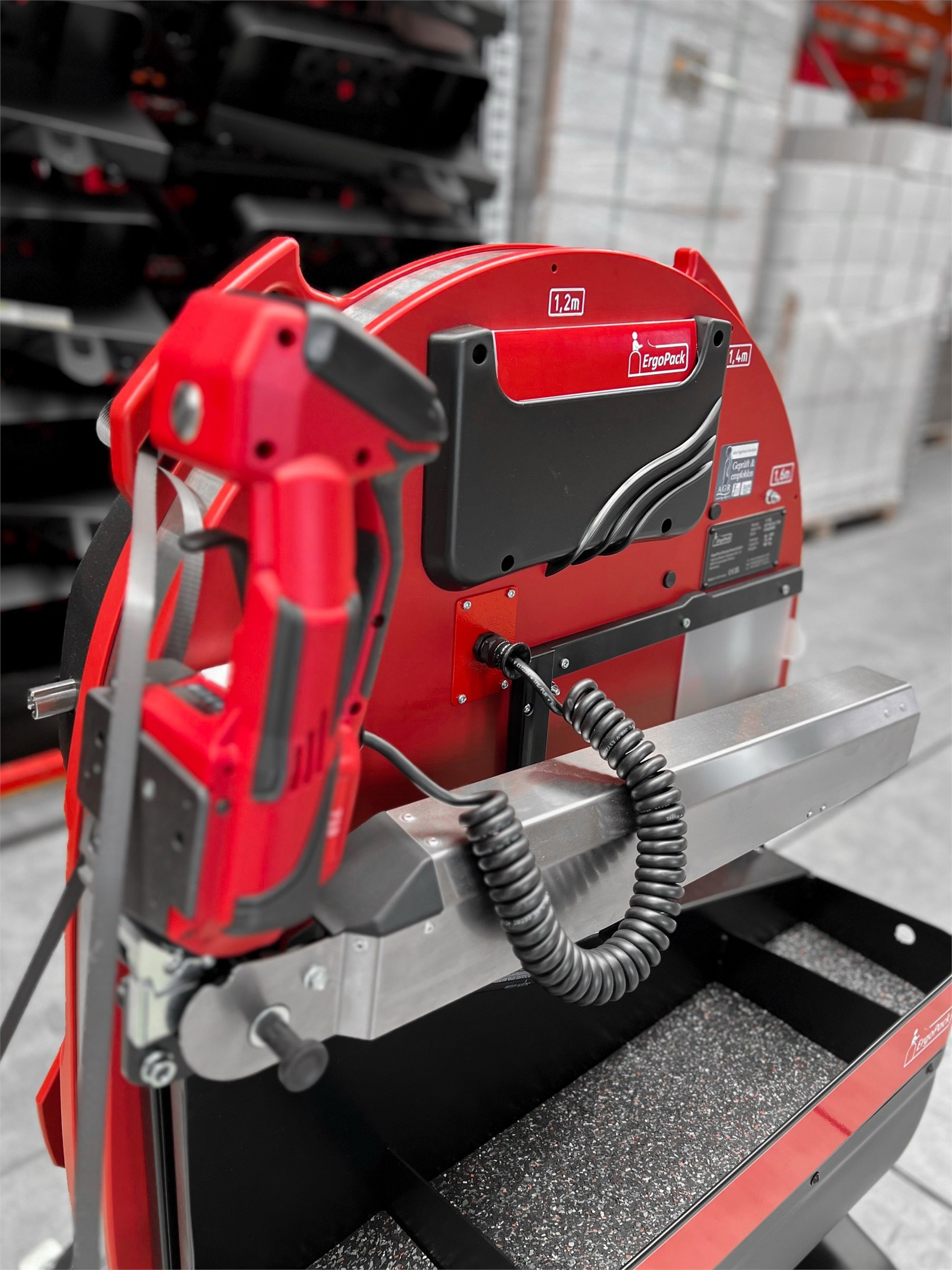
Indian wages rise every year, and statutory increases keep widening the gap between manual cost and automated cost. Trimming headcount across the board hurts output; the durable way to reduce labour cost is to automate the single hardest, most repetitive task so the same or fewer people produce far more.
This guide shows where that task usually is — the dispatch dock — and how automating it cuts labour cost in a way that compounds as wages climb.
Automate the worst task, don’t just cut heads
Manual pallet securing typically ties up two operators per pallet at ~120 seconds — heavy, repetitive, high-turnover work. Automating it with a mobile ErgoPack machine cuts it to one operator at under 40 seconds, freeing the other for skilled, value-adding work and removing the floor’s dependence on the hardest role to staff.
The labour saving is the biggest of four streams (labour, strap waste, damage, throughput) and, crucially, it grows: every wage rise increases the manual cost while the machine cost stays fixed. On a typical floor the combined saving is around ₹25 lakh a year, recovering the machine in 6–18 months.
- Manual securing: two operators, ~120 seconds, high turnover.
- Automated: one operator, under 40 seconds.
- Freed labour redeployed to skilled work.
- Saving grows with every wage rise; machine cost is fixed.
Why this beats hiring or trimming
Hiring more for a job people do not want is slow and costly; trimming heads cuts output. Automating the worst task gives immediate relief, consistent quality, resilience to absence, and a cost that falls relative to wages over time — the only labour strategy that improves rather than erodes as wages rise.
Manual securing vs automated — labour cost
| Factor | Manual hand-strapping | Mobile automated |
|---|---|---|
| Operators per pallet | 2 | 1 |
| Time per pallet | ~120 seconds | Under 40 seconds |
| Cost trend | Rises with wages | Fixed; saving grows |
| Resilience to absence | Low — dock slows | High — one operator covers |
| Strap waste | Higher (by-feel) | ~12% lower (calibrated) |
Frequently asked questions
- What is the best way to reduce labour cost on the factory floor?
- Automate the hardest, most repetitive task rather than trimming people everywhere. Manual pallet securing — two operators at ~120 seconds per pallet — is the usual candidate. Automating it leaves one operator at under 40 seconds, frees the other for skilled work, and saves around ₹25 lakh a year, with the saving growing as wages rise.
- Why does automation beat hiring when wages keep rising?
- Because the machine cost is fixed while manual cost rises with every wage increase — so the gap widens in the machine’s favour every year. Automation also gives immediate relief, consistent quality and resilience to absence, where hiring for a hard-to-staff role is slow, costly and high-turnover.
- How quickly does the labour saving pay back the machine?
- On a typical Indian floor — one line, four manual operators across two shifts — automating securing saves around ₹25 lakh a year across labour, strap and damage, recovering the machine in 6–18 months. After that the saving continues every year and grows as wages rise.
- How much can automation actually reduce labour cost on the securing step?
- It halves the headcount on the step — from two operators to one — and cuts the time per pallet by about two-thirds (~120 seconds to under 40). Because the operator stands still while the machine travels around the pallet, one person achieves what a two-person team did. On the securing step that is roughly a 50% labour-cost reduction, and because wages rise yearly while the machine cost is fixed, the percentage saving grows over time.
- Does reducing labour cost mean firing people?
- No — the durable approach is redeployment, not layoffs. Manual securing is heavy, repetitive, high-turnover work that is hard to staff and harder to retain. Automating it frees that person for skilled, value-adding work (picking, QA, loading) and makes the dock resilient to the absences and turnover that plague it. You reduce labour cost per pallet while making the same team more productive — which is also why automation doubles as a labour-shortage and retention solution.