Automation Hub · Spoke
How to Increase Throughput Without Adding People
You increase throughput by clearing the bottleneck, not by adding people everywhere — output is capped by the slowest step. On most Indian dispatch floors that step is manual pallet securing; automating it (from ~120 seconds to under 40 with one operator) lifts throughput at the exact constraint, letting you ship more without new headcount.
Throughput is not increased by adding effort everywhere — it is increased by clearing the single slowest step, because output is capped by that constraint. Add people or speed anywhere else and you just build up work-in-progress in front of the real bottleneck.
This guide shows how to find the throughput bottleneck and why, on most Indian dispatch floors, clearing it means automating the manual securing step.
Clear the constraint, lift the whole line
Walk the dock and find where pallets pile up — work-in-progress accumulates in front of the constraint. Time each step; the slowest, most labour-heavy one is usually manual securing (two operators, ~120 seconds). That is the throughput bottleneck.
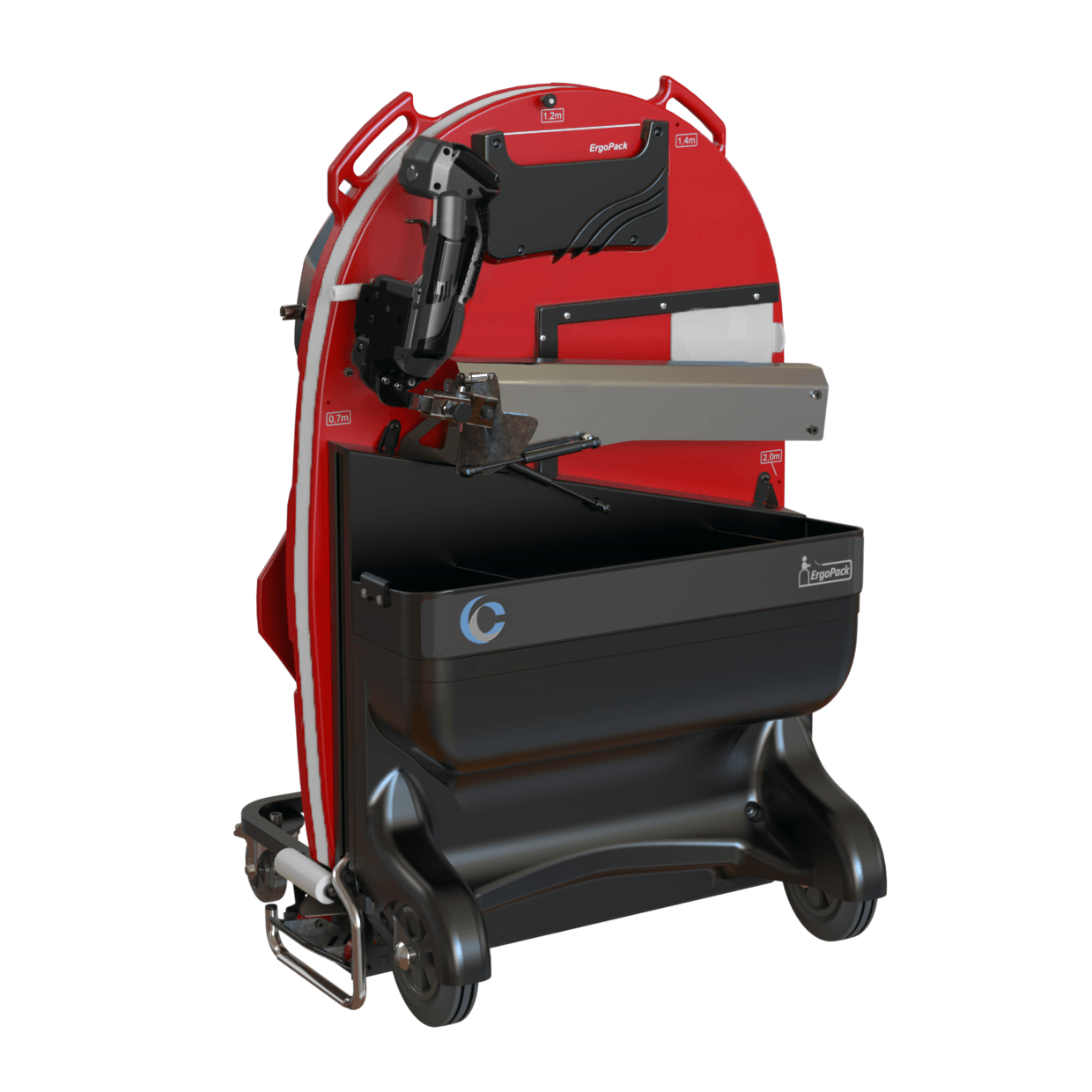
Automating it with a mobile ErgoPack machine cuts the step to under 40 seconds with one operator, lifting throughput at the exact constraint — so the whole dispatch line speeds up and you ship more without adding headcount. Then the next-slowest step becomes the new bottleneck; measure and repeat.
- Output is capped by the slowest step — find it first.
- Manual securing is usually the dispatch constraint.
- Automating it: ~120s → <40s, two operators → one.
- Throughput rises with no new headcount; then target the next constraint.
Throughput gains compound with consistency
Automated securing not only speeds the step but stabilises it — calibrated tension removes the re-work and rejected loads that send pallets back through the dock and quietly eat throughput. Faster and more consistent together give a larger, more reliable throughput gain than speed alone.
Frequently asked questions
- How do I increase throughput without hiring more people?
- Clear the bottleneck. Output is capped by the slowest step, so adding people elsewhere does nothing. On most Indian dispatch floors the bottleneck is manual pallet securing; automating it (from ~120 seconds to under 40 with one operator) lifts throughput at the constraint, so you ship more with the same or fewer people.
- How do I find my throughput bottleneck?
- Walk the dock and see where pallets pile up — work-in-progress builds in front of the constraint. Then time each step (palletise, secure, wrap, label, load); the slowest, most labour-heavy step is the bottleneck. It is usually manual securing, which is also the fastest and lowest-disruption step to automate.
- How much throughput does securing automation add?
- On the secured step it roughly triples speed (~120s to under 40s) and frees an operator, and because it also removes re-work and rejected loads, the dispatch line gains both speed and consistency. The result is a markedly higher, more reliable shipping rate without new headcount — typically alongside a ~₹25 lakh/year saving.
- I’ve already optimised picking and slotting — why is throughput still capped?
- Because picking and slotting are upstream of dispatch. Optimising them — golden-zone slotting, batch picking, a WMS — speeds how fast goods reach the dock, but if the dock then secures pallets manually at ~120 seconds with two people, that final step caps how fast anything actually ships. Faster picking just makes pallets queue sooner behind manual securing. Once the upstream is optimised, the securing step is usually the binding constraint, and automating it is what converts your picking gains into real shipped throughput.
- Do I need conveyors to increase dispatch throughput?
- Not to clear the most common bottleneck. Conveyors help move goods between zones, but the binding constraint at dispatch is usually the manual securing step — and that is cleared with a mobile machine wheeled to the pallet, no conveyors or rebuild required. Start there: it lifts throughput at the constraint for a fraction of the cost and disruption of a conveyor project.