guides
Rice & Agricultural Export Packaging: Bagging, Palletising and Securing for Shipment
How Indian rice and agri exporters bag, palletise and secure shipments — bag types, pallet stacking, moisture and pest control, and strapping bagged loads that settle in transit.
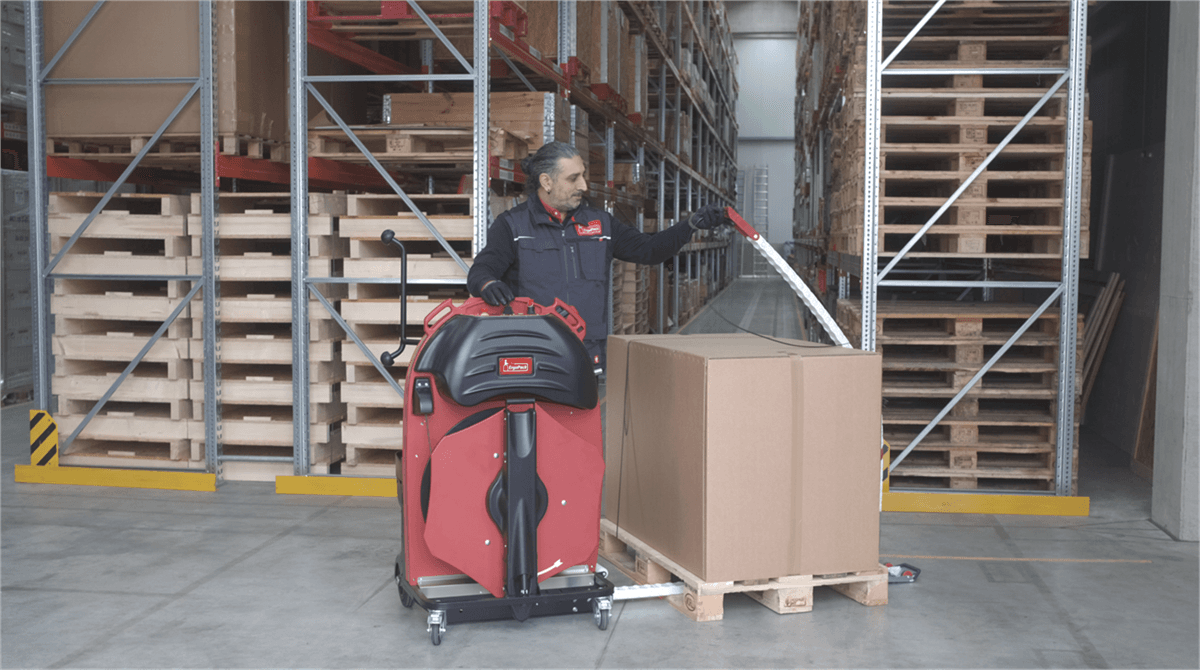
India is the world's largest rice exporter, and rice — like most bagged agricultural produce — is a deceptively difficult load to ship. Bags are heavy, they settle and slump, they attract pests and moisture, and a sea voyage punishes all three. Getting the bagging, palletising and securing right is what keeps a container of rice saleable on arrival. Here is the method.
What makes bagged agri loads difficult
- They settle and slump — bags compress and shift, so a pallet tight at dispatch goes loose, and a slumped stack topples.
- Moisture-sensitive — grain absorbs humidity, risking mould and spoilage.
- Pest risk — agricultural cargo is a target for infestation, with strict phytosanitary rules.
- Heavy, repetitive volume — exporters bag and palletise enormous quantities under time pressure.
Bagging
- Use the right bag (woven PP, jute, or multi-wall paper) for the grain and the market's requirements.
- Fill to a consistent weight so pallets build evenly.
- Consider liners or treated bags for moisture and pest protection where required.
Palletising bagged goods
Bagged loads need a stacking pattern that stays stable as bags settle:
- Interlocking (cross/brick) stacking binds the layers so the stack holds together as bags compress — the standard for bagged goods.
- Keep the load square and even; avoid overhang.
- Use ISPM-15 heat-treated pallets for export wood, or plastic pallets for hygiene and moisture resistance.
Securing bags that settle — the strapping challenge
This is where bagged loads are won or lost. Because bags settle and lose height in transit, a strap that was tight at the dock goes slack — and a slack strap on a heavy bagged pallet means a slumping, toppling load. The fixes:
- PET strap, which recovers tension as the load settles, keeping the pallet tight from warehouse to destination — where steel and even hand-tensioned PP go slack. (See PP vs PET vs steel strapping.)
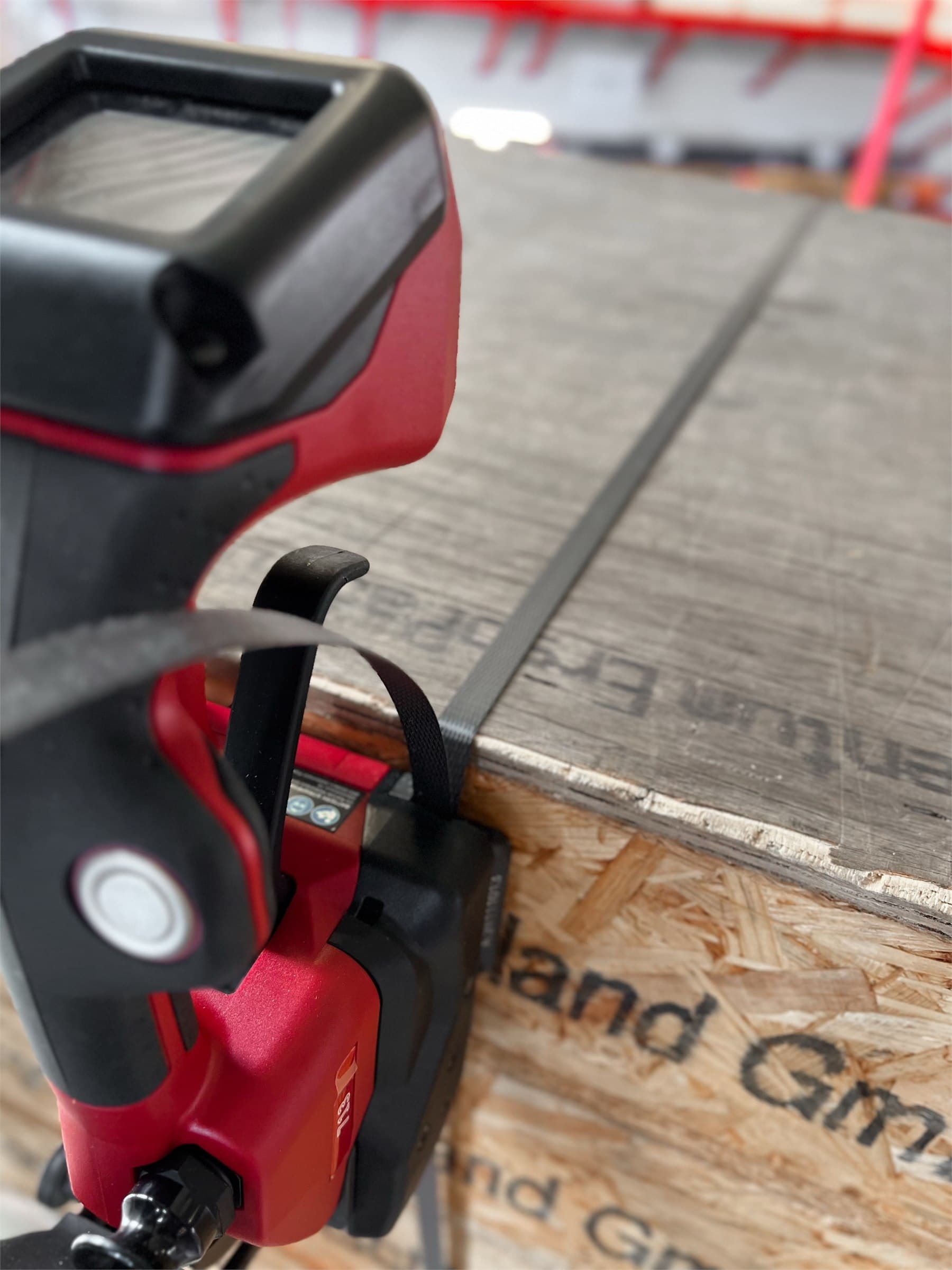
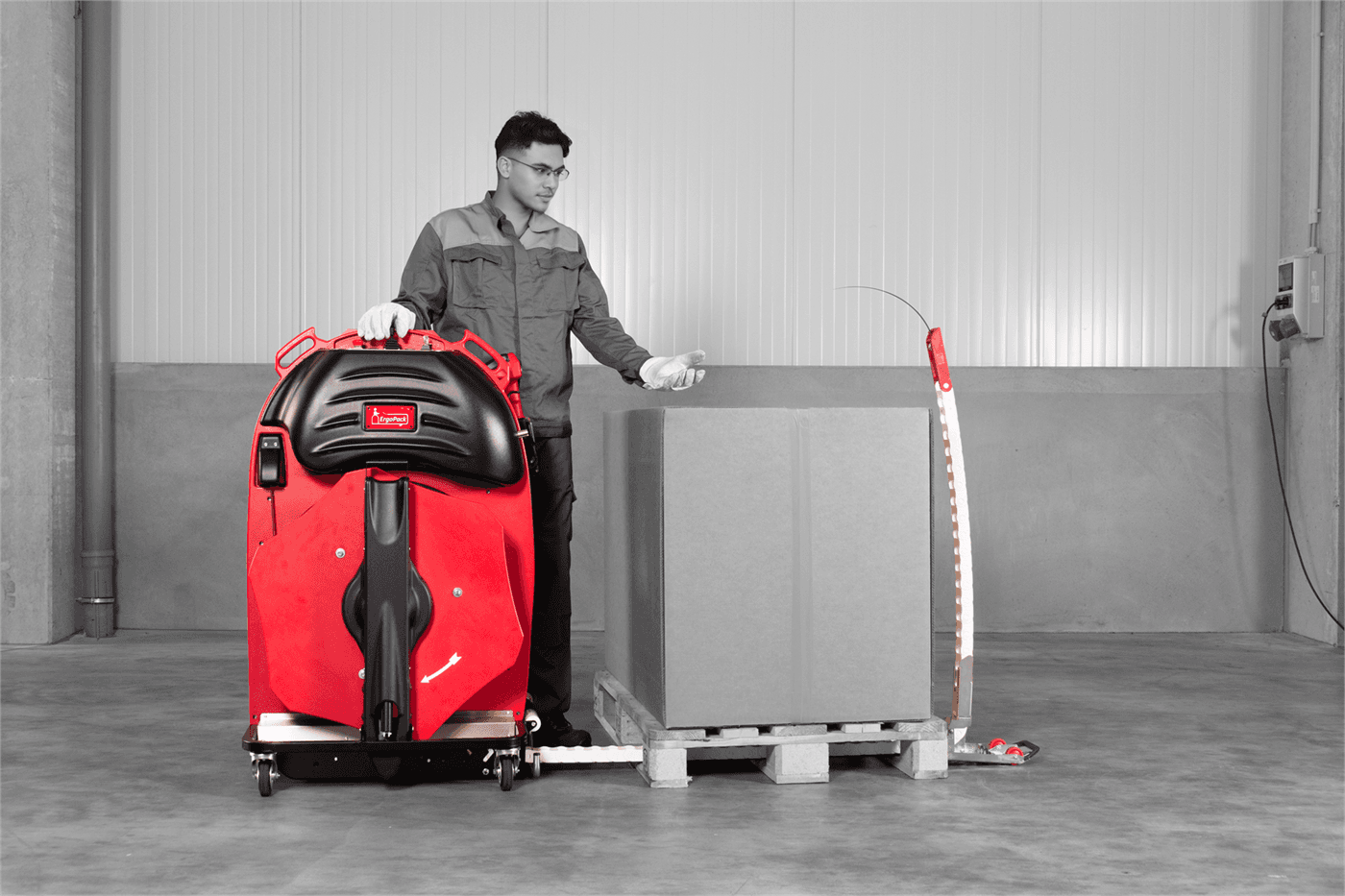
- Consistent, calibrated tension on every pallet so no unit in the batch is the weak one. A machine such as the ErgoPack 726X applies repeatable tension and routes the strap under the pallet automatically; the GO and 700 automate routing with your own tools.
- Edge protection and corner support so the strap holds the slumping bags without cutting in.
Moisture and pest control for the voyage
- Desiccants and ventilation to control humidity (container rain).
- Fumigation / phytosanitary certification as required by the destination — and ISPM-15 on all wood, including dunnage (ISPM-15 explained).
- Dry pallets, dry dunnage, and moisture barriers loaded in.
Rice / agri export checklist
- Correct bag type, consistent fill weight
- Interlocking stack that holds as bags settle
- ISPM-15 wood or plastic pallets
- PET strap (recovers tension as load settles) at consistent tension
- Edge protection so the strap doesn't cut into bags
- Desiccant + ventilation; condensation managed
- Phytosanitary / fumigation certification as required
- Dry pallets and dunnage; moisture barriers in
Bag, palletise and strap to this standard — especially with PET that holds tension as the bags settle — and a container of rice leaves a humid Indian port and arrives dry, intact and saleable.
Talk to a pallet strapping engineer
BENZ Packaging and ErgoPack India engineers support installations and service anywhere in India. Tell us your pallet setup and we’ll recommend the right machine — and send pricing.
Related Reading
Continue with the next guide
guides
PP vs PET Strapping: Which Should You Use, and When?
PP and PET strap suit very different loads. A clear guide to when polypropylene is enough and when polyester is essential — by load weight, settling, and export exposure.

guides
Strapping Machine AMC, Spares and Uptime: What to Check Before You Buy
A strapping machine is only as good as its uptime. What to check on service, spare parts and AMC before you buy — so the machine that saves you ₹25 lakh a year actually keeps running.
guides
Pallet Strapping Machine Buying Checklist: 10 Questions Before You Decide
Before you buy a pallet strapping machine, run through these ten questions. They cover loads, volume, power, tension, service and ROI — so you choose the right machine, not just the cheapest.