Automation Hub · Spoke
How to Reduce Shipment Rejections and Transit Damage
Most shipment rejections trace back to loose, inconsistently secured pallets that shift and collapse in transit. The fix is calibrated, repeatable securing tension — automated pallet securing applies the same correct tension to every load, cutting the transit damage and rejections that hand-strapping causes.
A rejected shipment is one of the most expensive failures in dispatch — a whole consignment or container turned back, plus claims and lost buyer confidence. And most rejections share one root cause: a pallet that was not secured tightly or consistently, so it settled, shifted or collapsed in transit.
This guide explains why manual securing causes rejections and how automating it removes the root cause.
The root cause is inconsistent tension
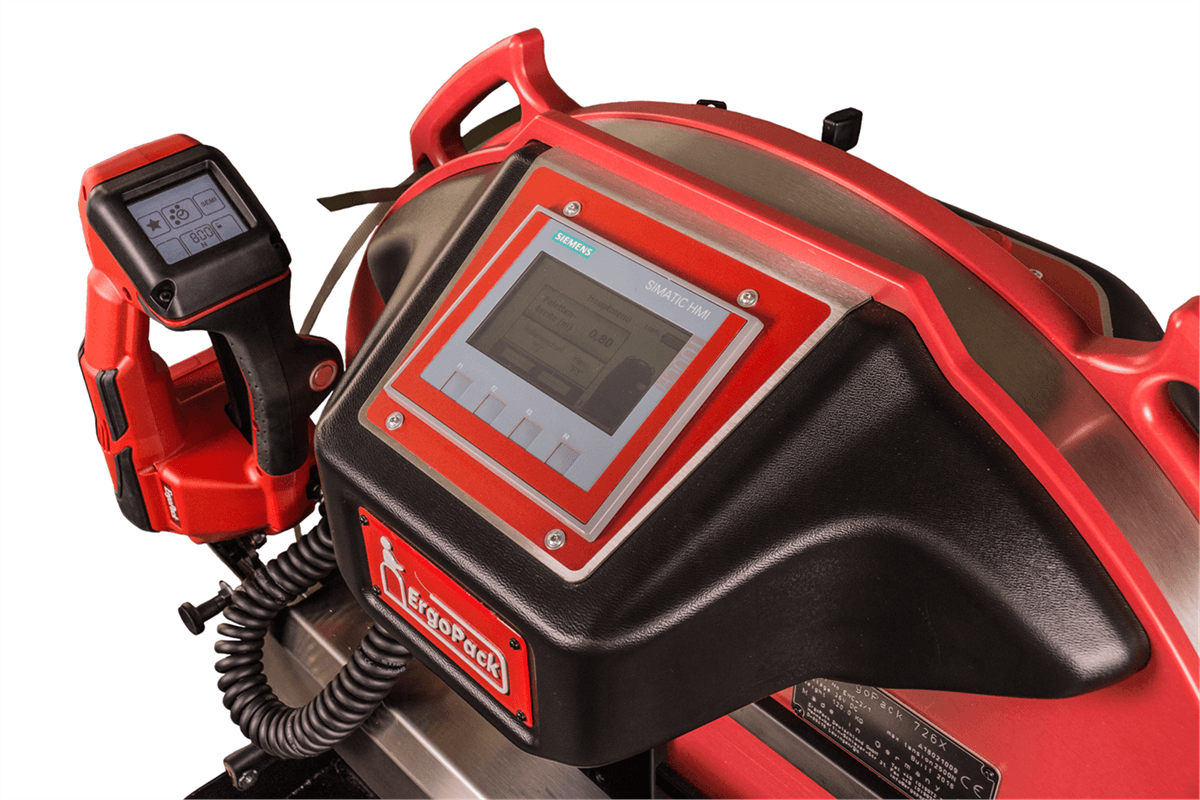
Hand-strapping applies tension by feel, so it varies pallet to pallet, operator to operator and shift to shift. The loose pallet is the one that shifts and damages itself and its neighbours; the one that gets rejected. Automating securing applies calibrated, repeatable tension — up to 2500N on the ErgoPack 726X — to every load, so consistency replaces guesswork.
A sealless friction weld removes the slipping clip-seals that fail in transit, and PET strap recovers tension as loads settle and resists rust through humid sea transit — together keeping the load tight and clean from the floor to the destination.
- Manual tension varies by person, pallet and shift — the loose one fails.
- Calibrated automation applies the same correct tension every time.
- Sealless friction weld removes slipping seals.
- PET recovers tension on settling loads and resists rust.
Consistency protects the whole shipment
Because rejections are driven by the worst-secured pallet, removing the variability — not just raising average tension — is what cuts them. Automated securing does exactly that: every pallet leaves at the correct, repeatable tension, so the shipment arrives intact and the rejection that costs more than a year of savings is avoided.
The full rejection-prevention checklist (not just securing)
Consistent securing tension is the single biggest controllable factor, but a container rejection can come from any weak link, so the complete checklist matters. For Indian exporters the essentials are: ISPM-15 heat-treated, stamped pallets (non-compliant wood is quarantined or rejected at many borders); sound pallets inspected for cracked boards, missing stringers and protruding nails before loading; calibrated, consistent strap tension with rust-free PET on every pallet; and proper blocking-and-bracing inside the container so there is no empty space for loads to shift.
Get the securing right and you remove the most common cause; complete the rest of the checklist and you close the remaining gaps. Automation makes the securing line of that checklist repeatable and documented — which is also what international buyers increasingly ask exporters to demonstrate.
- ISPM-15 heat-treated, stamped pallets — or the container is rejected at the border.
- Inspect every pallet — no cracked boards, missing stringers or protruding nails.
- Calibrated, consistent tension with rust-free PET on every pallet.
- Block-and-brace inside the container — no empty space for loads to shift.
Frequently asked questions
- What causes most shipment rejections?
- Loose, inconsistently secured pallets. Hand-strapping applies tension by feel, so it varies; the loosest pallet settles, shifts or collapses in transit and gets the load rejected. The fix is calibrated, repeatable securing tension applied to every pallet — which removes the variability that drives rejections.
- How does automated securing reduce transit damage?
- It applies the same calibrated tension (up to 2500N) to every pallet via a sealless friction weld, and runs PET strap that recovers tension as loads settle and resists rust. Consistent tension, no slipping seals and rust-free strap keep the load tight and clean through road and sea transit — removing the loose-load shifting that causes damage and rejections.
- Why is PET strap better for reducing export rejections?
- Steel strap rusts in container humidity and can stain or corrode the cargo, and it does not recover tension as loads settle — so the load loosens and shifts at sea. PET resists rust, absorbs shock and recovers tension, keeping export pallets tight and clean for the full voyage, which is why it is the seaworthy choice for reducing export rejections.
- Besides strapping, what else prevents export container rejections?
- Four things together. First, ISPM-15 heat-treated and stamped pallets — non-compliant wood is quarantined or rejected at many borders. Second, inspect every pallet for cracked boards, missing stringers and protruding nails before loading. Third, calibrated, consistent strap tension with rust-free PET on every pallet (the biggest controllable factor). Fourth, block-and-brace inside the container so there is no empty space for loads to shift. Consistent securing removes the most common cause; the full checklist closes the rest.
- Why do US/global transit-damage guides not fully fit Indian exporters?
- Most transit-damage guides emphasise stretch wrapping and Western freight practices, and underplay the role of consistent strap tension as the root cause of load shift. For Indian exporters shipping by sea through Mundra, JNPT, Chennai and other ports, the decisive factors are calibrated, repeatable securing tension and rust-free PET that survives humid container transit — combined with ISPM-15 pallets and proper bracing. Strapping tension consistency, not more wrap, is what removes the loose-load failure that causes most rejections.