01
Container freight stations, export consolidation
Nhava Sheva & Uran
CFS and consolidation yards around the port handle mixed export pallets that must reach seaworthy standard before stuffing — a strong calibrated-tension case.
Container Port Export Hub Page
JNPT (Nhava Sheva) is India’s largest container port, handling a huge share of the country’s containerised exports. Cargo moving through it faces long sea transit, humidity and rough handling — so loads must be palletised and strapped to seaworthy standard before they reach the gate.
Why This Hub Matters
JNPT / Nhava Sheva handles the largest volume of containerised cargo in India, drawing exporters from across Maharashtra, Gujarat and beyond. The loads that pass through it endure weeks of sea transit, container condensation, vibration and rough crane and truck handling — the exact conditions that expose weak securing.
A pallet that is loosely strapped at the factory is a pallet that shifts, collapses or rusts in the container. The cost is not just damaged goods — it is rejected consignments, claims and lost buyer confidence. Seaworthy securing means calibrated, repeatable tension that holds as loads settle, with PET strap that resists rust through a humid voyage.
For JNPT exporters the strongest positioning is high, consistent, rust-free tension for container-ready palletising — the 726X with PET — backed by mobile flexibility (GO) for mixed export loads across multiple staging bays.
Industrial Zones
These are the JNPT-area export clusters where securing intent is strongest and where seaworthy detail adds real value.
Container freight stations, export consolidation
CFS and consolidation yards around the port handle mixed export pallets that must reach seaworthy standard before stuffing — a strong calibrated-tension case.
Export-oriented manufacturing
Export units in the JNPT SEZ and Dronagiri node ship engineered and consumer goods needing rust-free PET securing for long sea transit.
Engineering, chemicals, consumer goods
Navi Mumbai’s industrial base feeds the port with dense engineered and packaged loads where consistent tension prevents in-container shifting.
Chemicals, pharma, process goods
Upstream chemical and pharma clusters route exports through JNPT, needing secure, compliant palletising for hazardous and high-value cargo.
Workflow Fit
Cargo leaving JNPT may spend weeks at sea. Inside a steel container, day-night temperature swings drive condensation (container rain), the ship vibrates and rolls constantly, and crane and truck handling delivers sudden shocks. A pallet strapped by hand to inconsistent tension loosens as the load settles, then shifts — and a shifted load in a container damages itself and everything stacked with it.
The ErgoPack 726X applies digital tension up to 2500N with a sealless friction weld and runs PET strap. PET absorbs shock and recovers tension as loads settle, and unlike steel it does not rust onto the cargo through a humid voyage — the core of seaworthy securing. For mixed export loads staged across bays, the GO brings the same calibrated securing on wheels.
So the JNPT decision centres on consistent, rust-free, seaworthy tension: 726X with PET for the export core, GO for mixed-load flexibility.
Industries Served
Dense, heavy engineered exports need high, consistent tension and rust-free PET to stay secured through weeks of container transit and handling — the clearest 726X case for JNPT shippers.
Drummed and bagged chemical exports from the Taloja–Patalganga belt route through JNPT and need compliant, consistent securing that holds as loads settle in the container.
Cartoned consumer-goods exports need tight, repeatable strapping so stacks stay square through stuffing, sea transit and destination handling — a mix of GO flexibility and high-tension securing.
Recommended Machines
All three machines should appear on the JNPT page, led by the seaworthy export securing case.
Automatic pallet strapping for higher-utilization dispatch
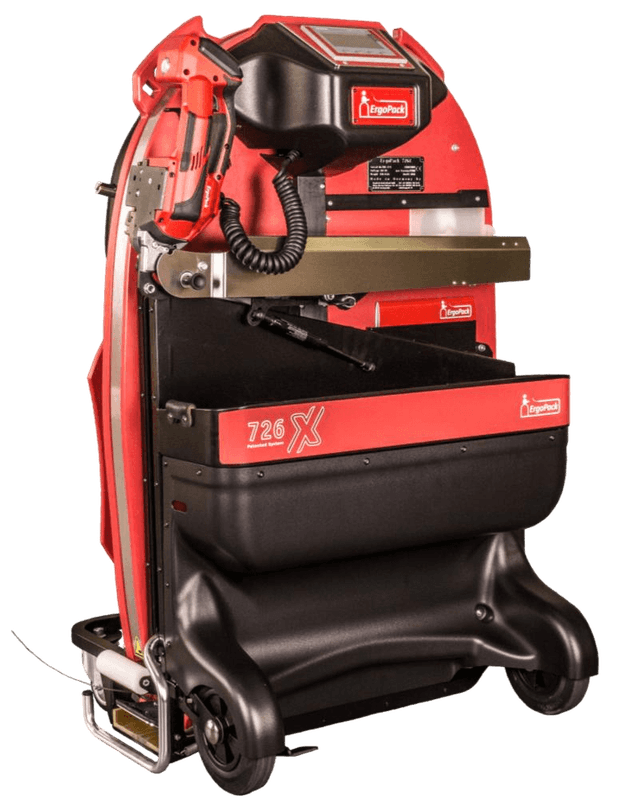
Lead with the ErgoPack 726X for container-ready seaworthy securing — digital tension to 2500N, sealless friction weld, rust-free PET for long humid sea transit.
Portable pallet strapping for flexible warehouse layouts
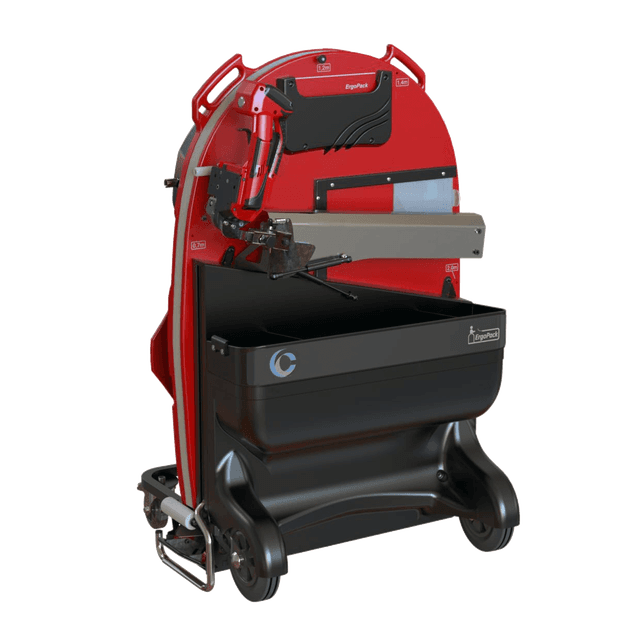
Use the ErgoPack GO for mixed export dispatch — mobile, flexible across cartons, bags and drums staged at multiple bays before stuffing.
Manual ergonomic pallet strapping with zero charging dependence
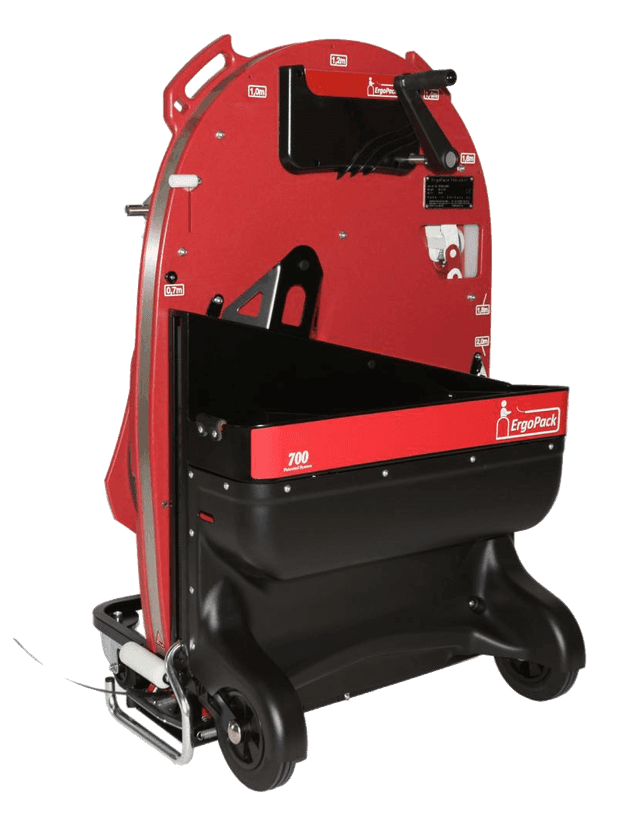
Keep the ErgoPack 700 visible for lower-volume export cells and sites wanting reliable securing with zero charging dependence.
FAQs
Cargo leaving JNPT can spend weeks at sea, exposed to container condensation, constant vibration and rough crane and truck handling. Loose or inconsistent securing lets loads settle and shift, causing damage, collapsed stacks and rejected consignments. Seaworthy strapping means calibrated, repeatable tension with rust-free PET that holds the load tight from the factory floor to the destination port.
For container-ready export securing the ErgoPack 726X is the lead recommendation — digital tension up to 2500N, sealless friction weld and PET strap that absorbs shock and resists rust through a humid voyage. For mixed export loads staged across bays, the GO brings the same calibrated securing on wheels.
Steel strap rusts in container humidity and can stain or corrode onto the cargo it was meant to secure, and it does not recover tension as loads settle. PET strap resists rust, absorbs shock and recovers tension — keeping the load tight and clean through weeks of sea transit. That is why PET is the seaworthy choice for JNPT exports.
Prices range from manual tools (₹25,000–₹35,000) and table-top semi-automatic machines (₹35,000–₹85,000, not for loaded pallets) to mobile and inline systems (₹1,75,000 and up). ErgoPack quotes against your export volume and loads and serves the JNPT belt through Benz Packaging — request a quote for pricing and an on-site demo.
Yes. ErgoPack India, through Benz Packaging, provides on-site installation, operator training, service and genuine spare parts across the JNPT, Navi Mumbai, Uran and Dronagiri belt — keeping export dispatch running.