guides
Automotive Parts Export Packaging: How to Crate, Protect and Secure Heavy Components
A practical guide to packaging automotive parts for export from India — crating heavy components, VCI rust protection, ISPM-15, and securing irregular castings so they survive sea freight.
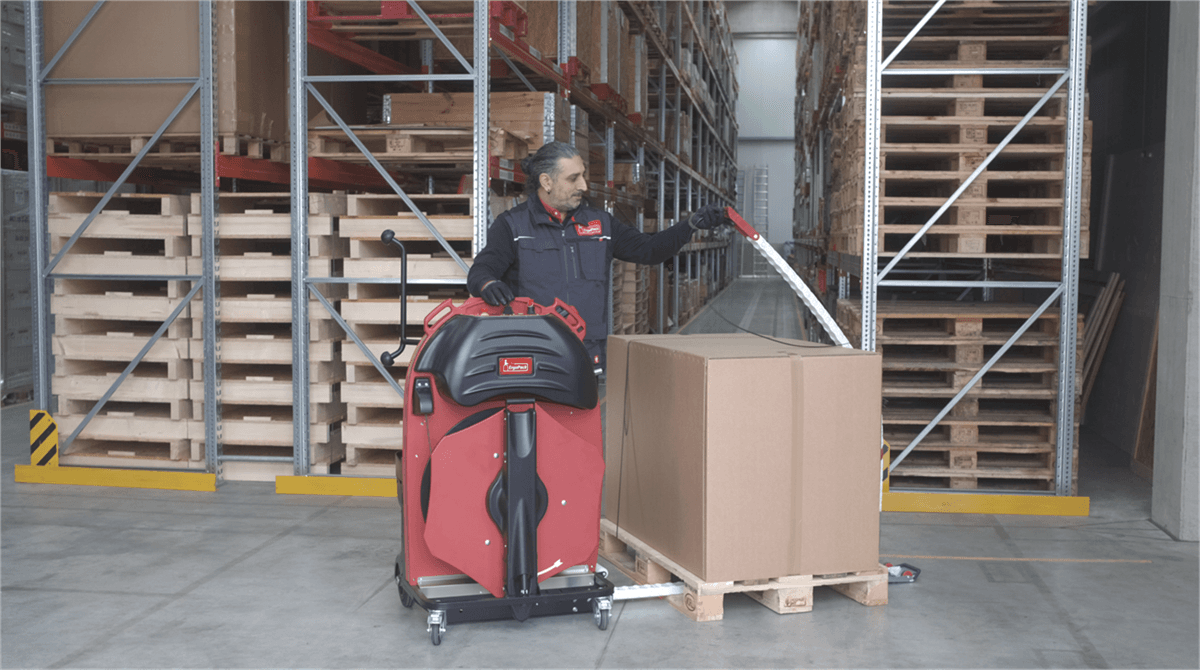
An engine block, a casting or a transmission housing is heavy, dense, irregular and expensive — and it is going on a multi-week sea voyage from Chennai, Pune or Gurugram to a customer who will reject the whole shipment if one part arrives rusted or shifted. Automotive export packaging is where generic "wrap it and ship it" advice fails. Here is how heavy auto parts are actually packed to arrive intact.
Why automotive export packaging is different
Automotive components combine four hard problems at once:
- Concentrated weight — a small part can be very heavy, so the load is dense and unforgiving.
- Irregular shape — castings and housings do not sit neatly on a square pallet.
- Corrosion risk — ferrous parts rust in ocean humidity, and a rusted surface is a rejected part.
- High value and zero tolerance — the customer's line stops if the part is damaged, so quality standards are absolute.
Step 1 — Choose the right base: crate or reinforced pallet
Heavy automotive parts usually need more than a plain pallet:
- Wooden crates or pallets reinforced with metal brackets for engine blocks, transmissions and heavy castings.
- Custom crating for delicate, rare or intricately shaped components — built to the exact dimensions of the part so it cannot move.
- For export, the wood must be ISPM-15 heat-treated and stamped (see ISPM-15 explained).
Step 2 — Protect against corrosion
Rust is the silent killer of metal exports:
- VCI (vapour corrosion inhibitor) films, papers or emitters keep ferrous parts rust-free without messy oils — the modern standard for metal export.
- Keep parts and packaging dry; pair with desiccants and manage container condensation for the sea leg.
Step 3 — Secure the part so it cannot move
This is where heavy, irregular parts are won or lost. A part that shifts inside its crate damages itself and the crate:
- Block and brace the part within the crate so it cannot slide.
- Strap heavy and irregular parts down to the pallet or crate base with high, consistent tension so they are locked as a single unit.
- Use PET strap, not steel — it absorbs the shock of sea movement and does not rust onto the part. Steel snaps under maritime jolts and corrodes onto the finish. See PP vs PET vs steel strapping.
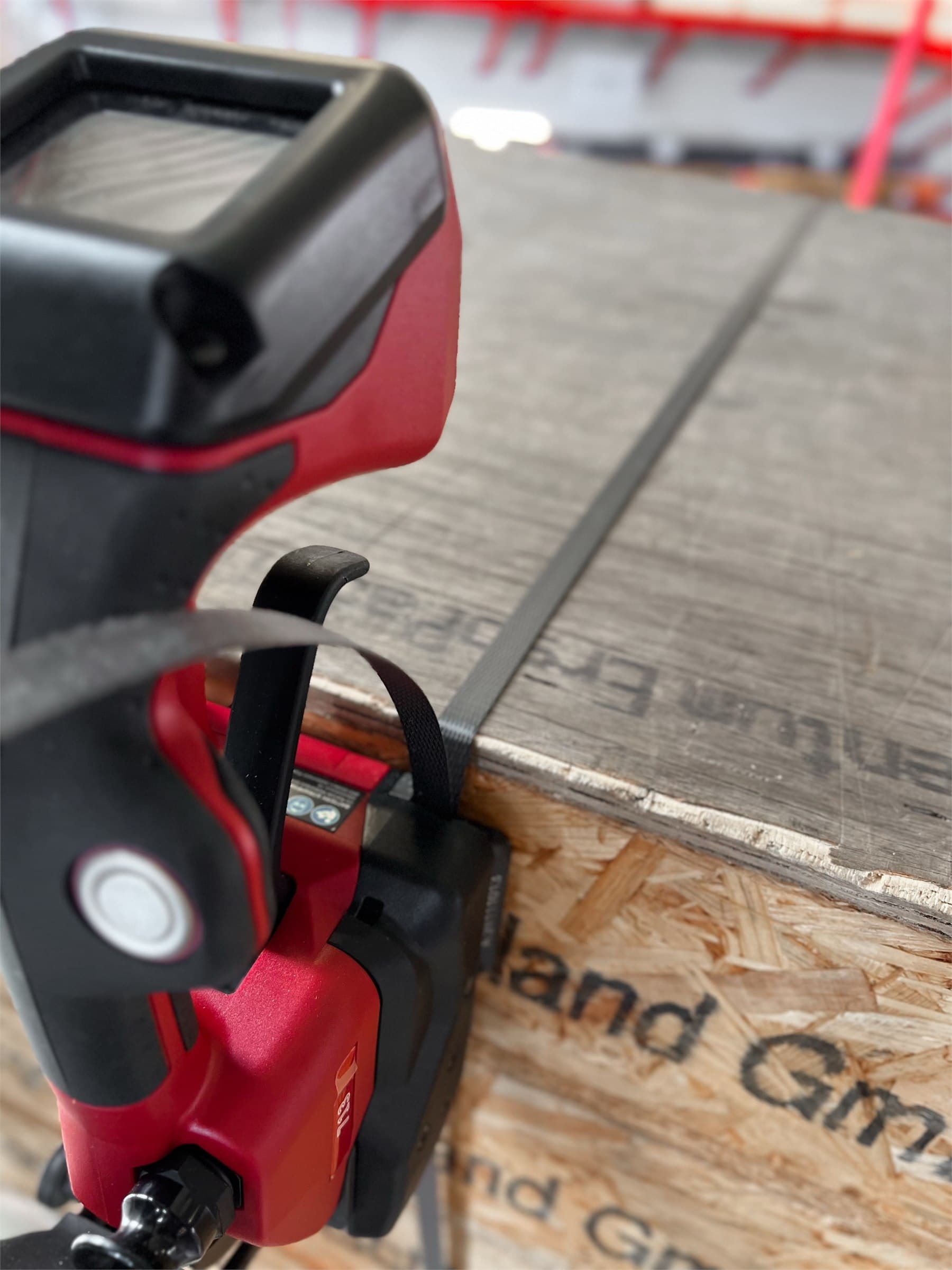
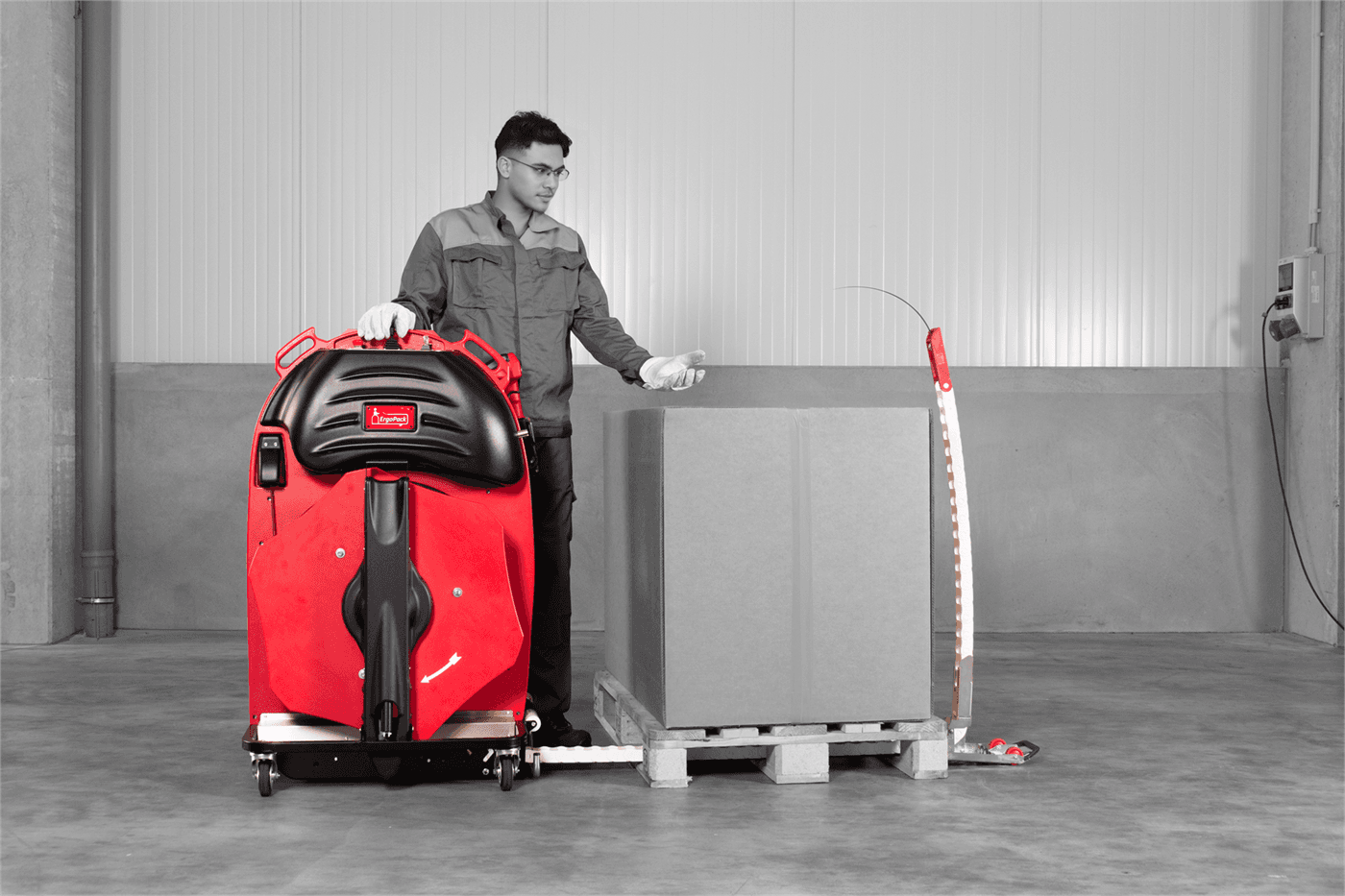
For dense, non-compressible auto parts, tension matters: a calibrated machine such as the ErgoPack 726X applies up to 2,500N repeatably and its Triplex-Tool-Lift reaches over awkward castings to seal the side and top — exactly the case made in our best pallet strapping machine for heavy loads guide. The ErgoPack GO and 700 automate the strap routing for facilities using their own heavy-duty sealing tools.
Step 4 — Label, document and comply
- Mark crates with weight, handling and orientation symbols.
- Include export documentation and the packing list.
- Confirm ISPM-15 compliance on all wood, including dunnage.
Common automotive export packaging mistakes
- Steel strap on sea freight — rusts onto the part and snaps under shock.
- Under-secured castings — irregular parts shift and self-damage.
- No corrosion protection — ferrous parts arrive rusted and rejected.
- Untreated wood — ISPM-15 hold at the destination port.
- Inconsistent tension — the loose unit in the batch is the one that fails.
Automotive export packaging checklist
- Crate or metal-reinforced pallet sized to the part
- ISPM-15 heat-treated, stamped wood (and dunnage)
- VCI corrosion protection on ferrous parts
- Part blocked, braced and strapped to the base
- PET strap at high, consistent tension (not steel)
- Container condensation managed for the voyage
- Weight, handling, orientation marks + documents
India's automotive export hubs — Chennai, Pune, the NCR belt — run on schedules that cannot absorb a rejected container. Pack the part to this standard and it arrives the way it left the line.
Talk to a pallet strapping engineer
BENZ Packaging and ErgoPack India engineers support installations and service anywhere in India. Tell us your pallet setup and we’ll recommend the right machine — and send pricing.
Related Reading
Continue with the next guide
guides
PP vs PET Strapping: Which Should You Use, and When?
PP and PET strap suit very different loads. A clear guide to when polypropylene is enough and when polyester is essential — by load weight, settling, and export exposure.
guides
Strapping Machine AMC, Spares and Uptime: What to Check Before You Buy
A strapping machine is only as good as its uptime. What to check on service, spare parts and AMC before you buy — so the machine that saves you ₹25 lakh a year actually keeps running.
guides
Pallet Strapping Machine Buying Checklist: 10 Questions Before You Decide
Before you buy a pallet strapping machine, run through these ten questions. They cover loads, volume, power, tension, service and ROI — so you choose the right machine, not just the cheapest.