Automation Hub · Spoke
Improve Worker Safety at the Dispatch Dock
Manual pallet strapping is a leading source of dock injuries — repetitive bending, hand-tensioning strain and the risk of a loose, shifting load. Automating securing removes the bending and manual tensioning and keeps loads tight, cutting the musculoskeletal and load-shift risks that hand-strapping creates.
The dispatch dock is one of the higher-injury areas of a factory or warehouse, and manual pallet strapping is a big reason why. It combines repetitive bending, forceful hand-tensioning and the hazard of handling heavy, sometimes unstable loads. Automating securing addresses all three.
This guide explains the safety risks of manual strapping and how automation reduces them — a genuine benefit alongside the productivity gains.
The safety risks of manual strapping
Hand-strapping a loaded pallet means an operator bends repeatedly to thread strap under the pallet, then applies forceful tension by hand with a tool — a classic recipe for back, shoulder and wrist musculoskeletal injuries over time. And because manual tension is inconsistent, the loose, shifting load it produces is itself a handling hazard.
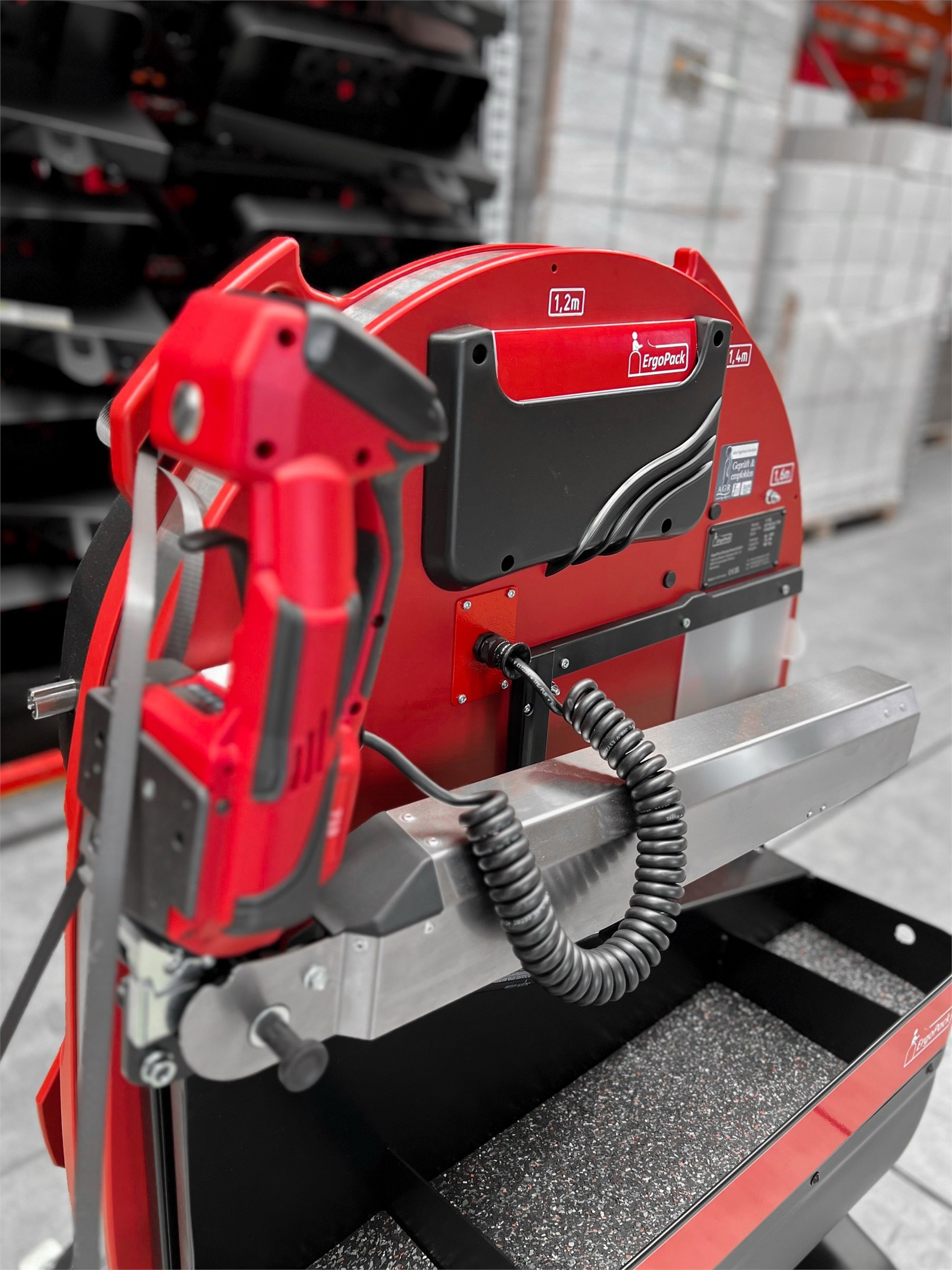
A mobile ErgoPack machine removes these risks: its ChainLance feeds the strap under the pallet automatically (no bending), the machine applies calibrated tension (no hand-tensioning strain), and consistent tension keeps the load stable (no shifting hazard). The operator works standing, running the cycle with low physical effort.
- No repetitive bending — the machine feeds the strap under the pallet.
- No forceful hand-tensioning — the machine applies calibrated tension.
- Stable loads — consistent tension removes the shifting hazard.
- Operator works standing, with low physical effort.
Safety and productivity together
Improving safety here is not a trade-off against output — the same automation that removes the injury risks also cuts the cycle to under 40 seconds with one operator. Fewer injuries mean less downtime, lower compliance risk and better retention, alongside the labour and throughput gains. Safety and productivity move together.
Frequently asked questions
- Why is manual pallet strapping a safety risk?
- It combines repetitive bending to thread strap under the pallet, forceful hand-tensioning that strains the back, shoulders and wrists over time, and the hazard of a loose, inconsistently tensioned load that can shift during handling. These make manual strapping a leading source of dispatch-dock injuries.
- How does automation improve dock worker safety?
- A mobile machine feeds the strap under the pallet automatically (no bending), applies calibrated tension (no hand-tensioning strain) and keeps loads stable through consistent tension (no shifting hazard). The operator works standing with low effort — removing the main musculoskeletal and load-shift risks of manual strapping.
- Does improving safety mean sacrificing productivity?
- No — they move together. The same automation that removes the injury risks also cuts the securing cycle to under 40 seconds with one operator. You gain safer work, less injury-related downtime and better retention alongside the labour and throughput gains.