Automation Hub · Spoke
How to Reduce Overtime at the Dispatch Dock
Dispatch overtime usually comes from a slow securing step that pushes loading past the shift. Automating pallet securing — from ~120 seconds with two operators to under 40 with one — clears the backlog inside the shift, cutting the overtime hours a manual dock racks up to get trucks out on time.
Overtime at the dispatch dock is one of the most visible — and most avoidable — costs in dispatch. It usually means the day’s loads could not be secured and shipped inside the shift, so people stay late to clear the backlog and get trucks out. Fix the step causing the backlog and the overtime goes with it.
This guide explains why the securing step drives dispatch overtime and how automating it clears the work inside the shift.
Overtime is a symptom of the securing bottleneck
When dispatch runs late, the cause is usually the slowest step backing up — manual securing, at two operators and ~120 seconds per pallet. As the day’s volume queues behind it, loading slips past the shift end and people stay on overtime to clear it. The overtime is the bottleneck made visible in hours and rupees.
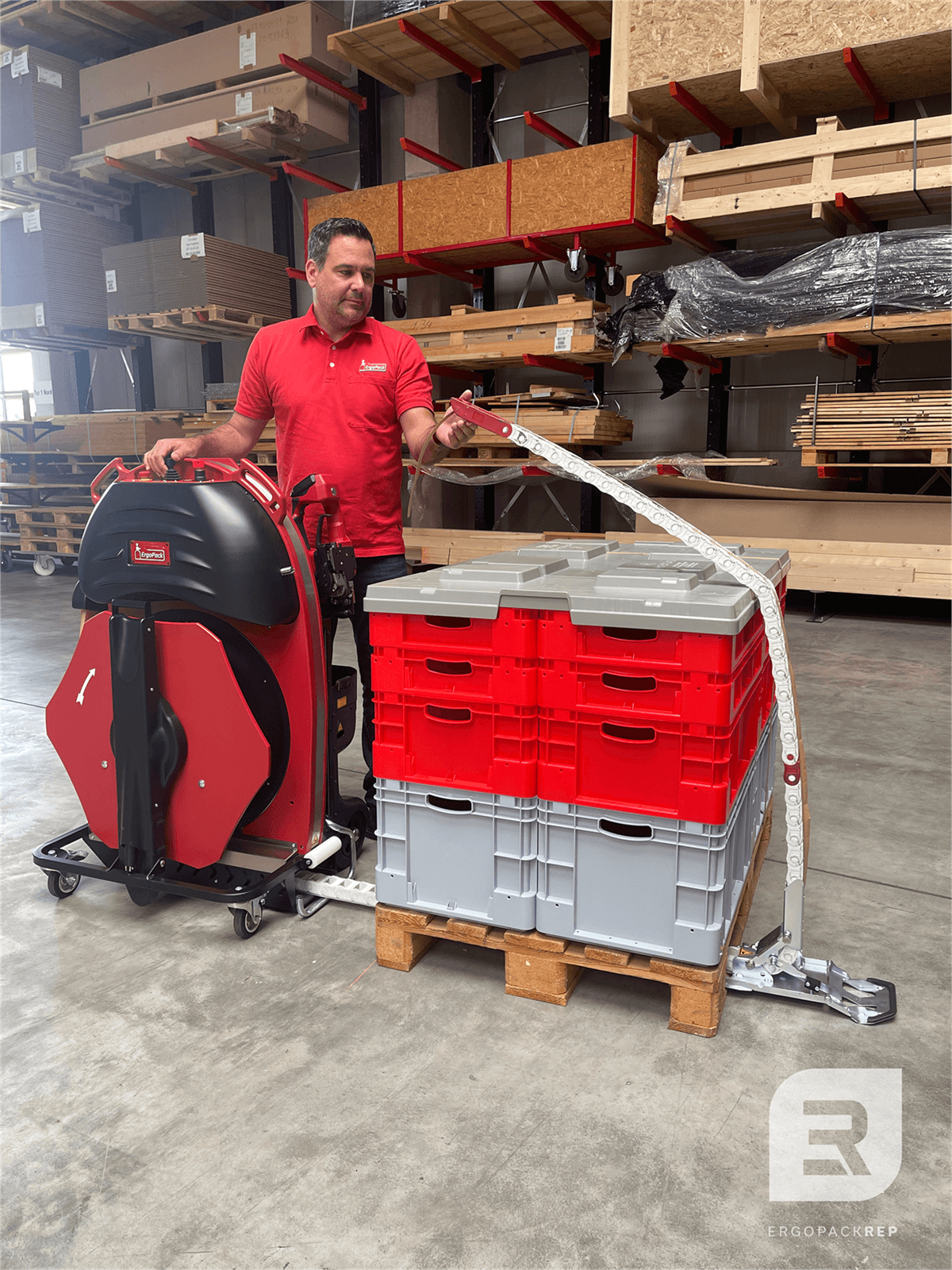
Automating securing with a mobile ErgoPack machine cuts the step to under 40 seconds with one operator, so the same volume clears inside the shift. The backlog that forced overtime disappears, and the cost stops recurring every busy day.
- Overtime usually = the securing backlog spilling past the shift.
- Manual securing is the slow step that creates the backlog.
- Automating it: ~120s → <40s, two operators → one.
- Loads clear in-shift; recurring overtime stops.
A one-time cost that stops a recurring one
Overtime is a permanent, recurring cost that rises with wages and worsens with volume. A mobile securing machine is a one-time cost that pays back in 6–18 months and then keeps clearing the dock in-shift. Removing the overtime driver is usually far cheaper than paying the overtime indefinitely.
Frequently asked questions
- What causes dispatch overtime?
- Usually a slow securing step. Manual pallet securing — two operators at ~120 seconds per pallet — backs up as the day’s volume queues behind it, so loading slips past the shift and people stay on overtime to get trucks out. The overtime is the securing bottleneck made visible in hours and cost.
- How does automation reduce dispatch overtime?
- By clearing the backlog inside the shift. Automating securing cuts the step from ~120 seconds with two operators to under 40 with one, so the same volume is secured and shipped before the shift ends. The backlog that forced overtime disappears, and the recurring overtime cost stops.
- Is buying a machine cheaper than paying overtime?
- Almost always. Overtime is a recurring cost that rises with wages and worsens as volume grows. A mobile securing machine is a one-time cost that pays back in 6–18 months and then keeps the dock clearing in-shift — removing the overtime driver rather than paying it indefinitely.