Automation Hub · Spoke
How to Automate Pallet Strapping (and What It Saves)
To automate pallet strapping, replace manual hand-strapping with a mobile machine that feeds its own strap under and around the loaded pallet, applies calibrated tension and friction-welds the seal. This cuts the step from two operators at ~120 seconds to one at under 40, saves around ₹25 lakh a year, and pays back in 6–18 months.
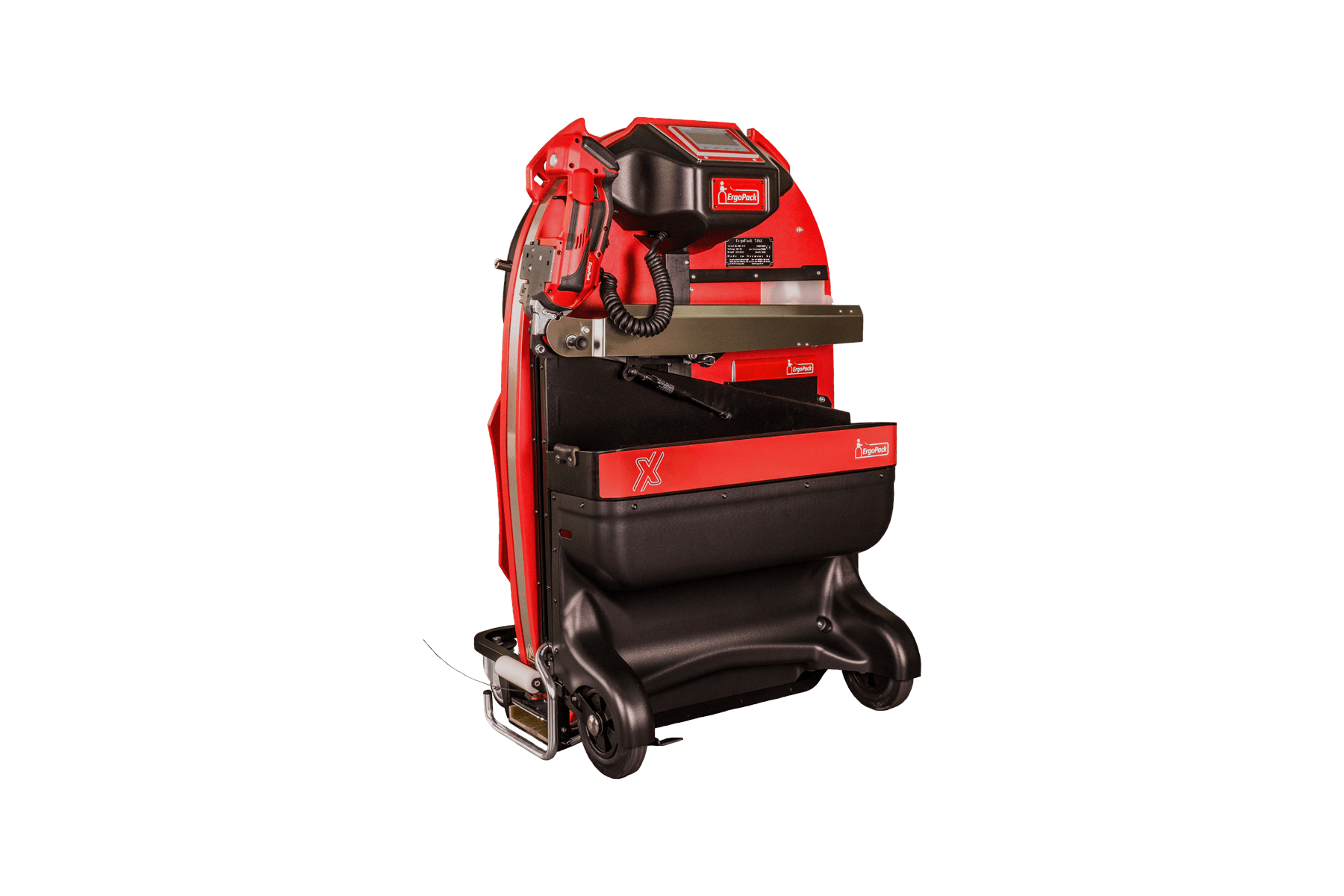
Pallet strapping is the most automatable step in dispatch — and the one that gives the biggest single saving when you do it. Manual hand-strapping is slow, inconsistent and labour-heavy; a mobile strapping machine removes all three problems at once.
This guide explains exactly how pallet strapping is automated, what changes on the floor, and what it saves.
How automated pallet strapping works
A mobile strapping machine is wheeled to the loaded pallet. Its patented ChainLance routes the strap automatically under and around the pallet — no bending, no manual threading — then applies calibrated, digitally-set tension and seals with a sealless friction weld. One operator runs the full cycle in under 40 seconds, versus two operators and ~120 seconds by hand.
There is no conveyor, no civil work and no line rebuild — the machine fits any dock. The 726X handles high-tension and export loads (digital tension to 2500N, PET), the GO covers high-volume mixed dispatch and multi-material strap, and the 700 straps without power for off-grid sites.
- ChainLance self-feeds the strap under the pallet — no manual threading.
- Calibrated, digitally-set tension up to 2500N — consistent every time.
- Sealless friction weld — no clips or seals to slip or buy.
- One operator, under 40 seconds, at any dock — no rebuild.
What automating strapping saves
The saving comes in four streams: labour (two operators to one), strap waste (~12% less through calibrated tension), damage and rejections (consistent tension keeps loads tight), and throughput (the dispatch bottleneck clears). On a typical floor that totals around ₹25 lakh a year, recovering the machine in 6–18 months — after which it keeps saving while manual cost rises with wages.
Manual vs automated pallet strapping
| Factor | Manual hand-strapping | Automated (mobile) |
|---|---|---|
| Operators | 2 | 1 |
| Time per pallet | ~120 seconds | Under 40 seconds |
| Tension | By feel — varies | Calibrated to 2500N |
| Seal | Clips (can slip) | Sealless friction weld |
| Strap waste | Higher | ~12% lower |
Frequently asked questions
- How is pallet strapping automated?
- A mobile strapping machine is wheeled to the loaded pallet; its ChainLance routes the strap automatically under and around the pallet, applies calibrated digital tension (up to 2500N) and seals with a sealless friction weld. One operator runs it in under 40 seconds — versus two operators and ~120 seconds by hand — with no conveyors or line rebuild.
- What does automating pallet strapping cost and save?
- Mobile machines that strap loaded pallets start around ₹1,75,000, quoted to your volume and loads. They save across four streams — labour, strap waste (~12%), damage/rejections and throughput — totalling around ₹25 lakh a year on a typical floor, recovering the machine in 6–18 months.
- Which strapping machine should I automate with?
- The 726X for high-tension, heavy and export loads (digital tension to 2500N, PET); the GO for high-volume mixed dispatch and multi-material strap; the 700 for off-grid sites with no power. The right one depends on your pallet volume, loads and power — request a free on-site demo on your heaviest pallet.