guides
Ceramic Tile Export Packaging: How to Pack and Strap Tiles That Arrive Unbroken
How India’s tile exporters pack and strap ceramic tiles for sea freight — box securing, pallet loads, horizontal and vertical strapping, ISPM-15 and moisture protection to stop breakage.
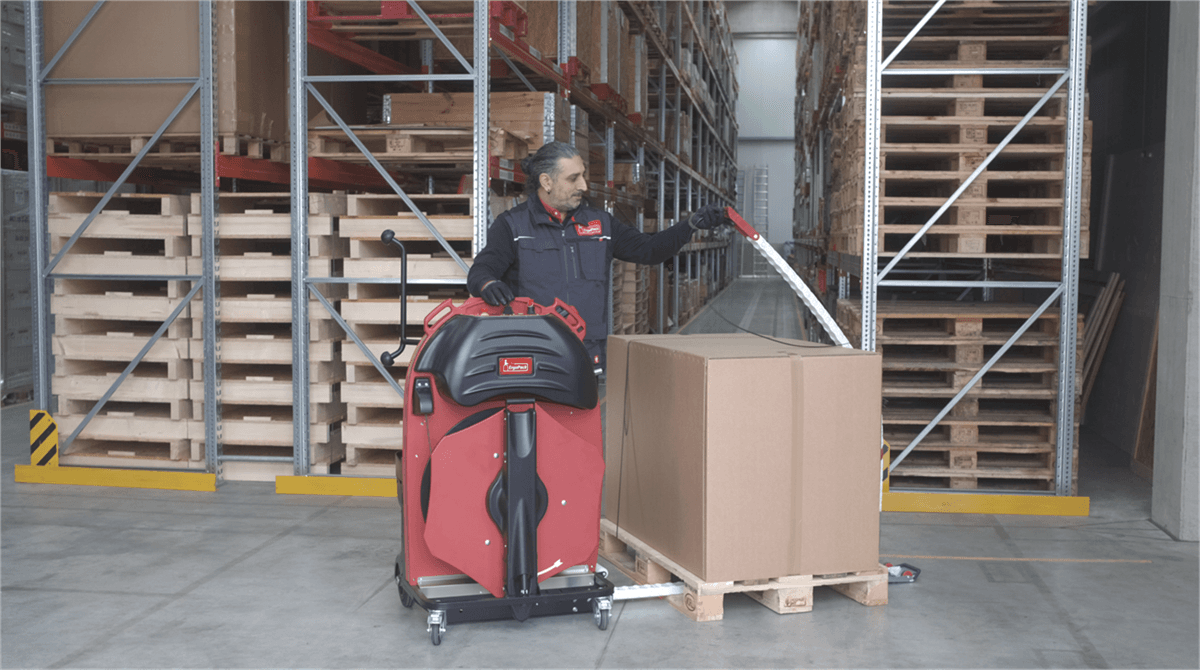
Ceramic tiles are heavy, dense, brittle and shipped by the container-load from clusters like Morbi to buyers worldwide. A tile that arrives chipped or cracked is a rejected tile — and on a full pallet, a shifted load can crack hundreds. Tile export packaging is unforgiving, and strapping is central to it. Here is how it is done.
Why tiles are hard to ship
- Heavy and dense — pallet loads run high, stressing the pallet and the strap.
- Brittle — chips and cracks from movement, rubbing and edge impact.
- Long sea voyages — weeks of vibration and humidity from Indian ports.
- Tight tolerance — buyers reject damaged or off-spec tiles outright.
Inside the box
Damage prevention starts at the box:
- Tiles packed tight, with no internal movement — tiles that rub crack each other.
- Foam sheets or corrugated board between layers to cushion and separate, preventing scratches and edge chipping.
- Boxes strapped with industrial-grade strap so tiles stay immobile inside the box.
Building the pallet
- High-quality, heat-treated (ISPM-15) wooden pallets capable of bearing the load without splintering.
- Keep pallet loads to ~800–1,200 kg — excess weight collapses the pallet and cracks tiles at the bottom.
- Stack square, even, no overhang.
- Moisture barriers for the humid sea leg (and manage container condensation).
Strapping: horizontal AND vertical
Tile pallets are the textbook case for using both strapping directions (horizontal vs vertical strapping):
- Horizontal strapping holds the load together around its girth, stopping the boxes from spreading.
- Vertical strapping passes under the pallet and over the load, anchoring the heavy stack to the pallet base so it cannot shift — essential on a dense, valuable tile load.
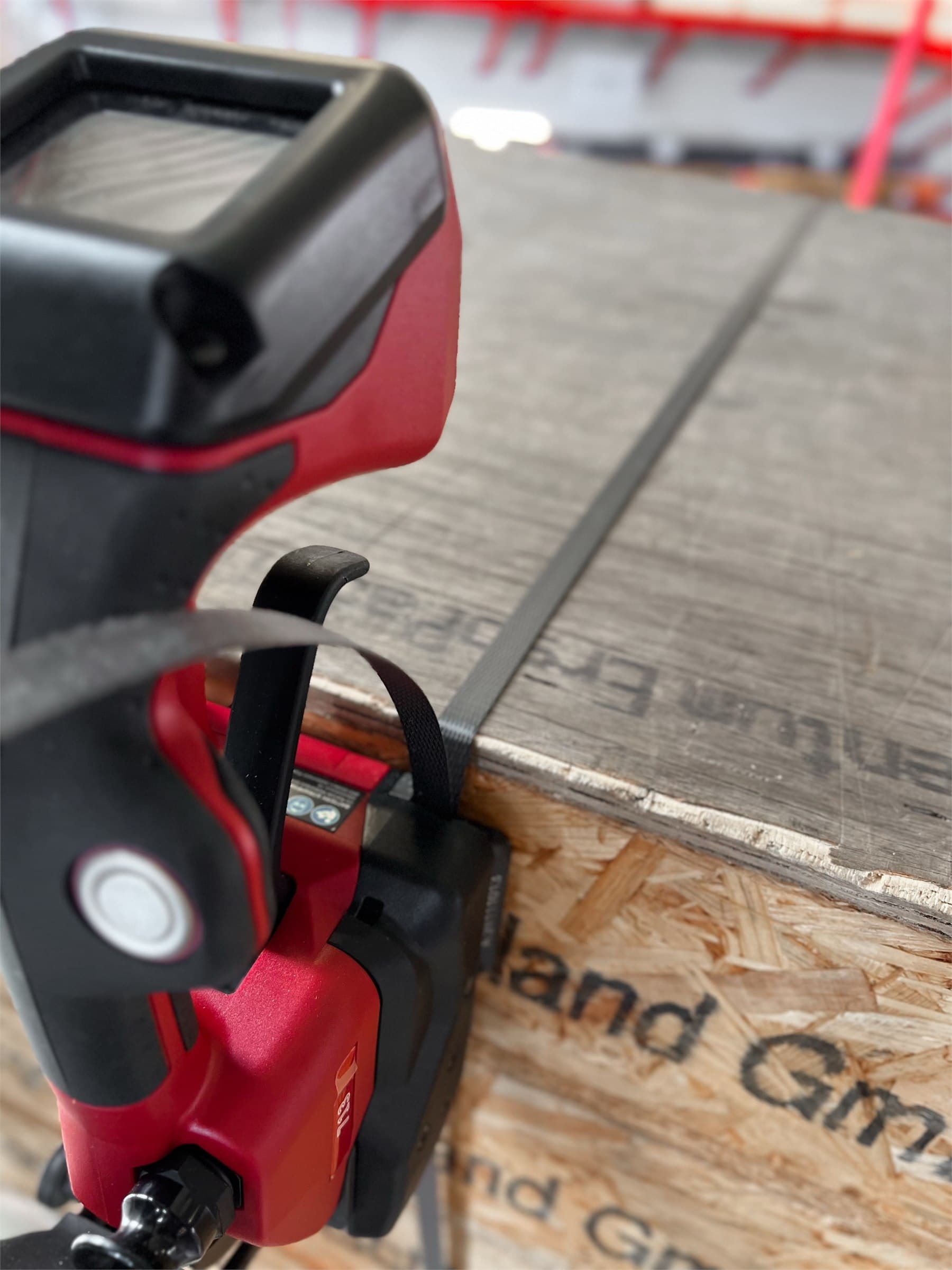
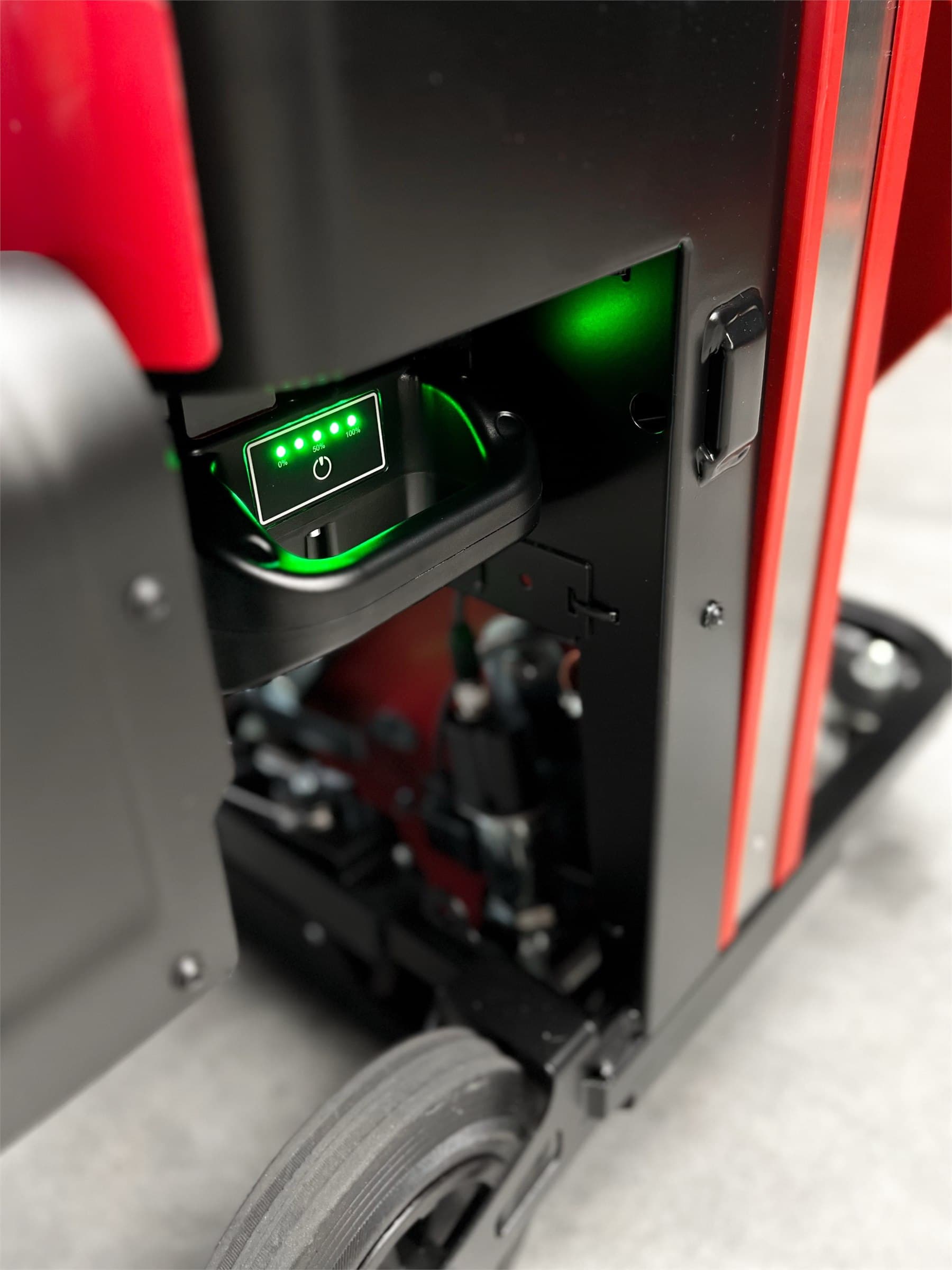
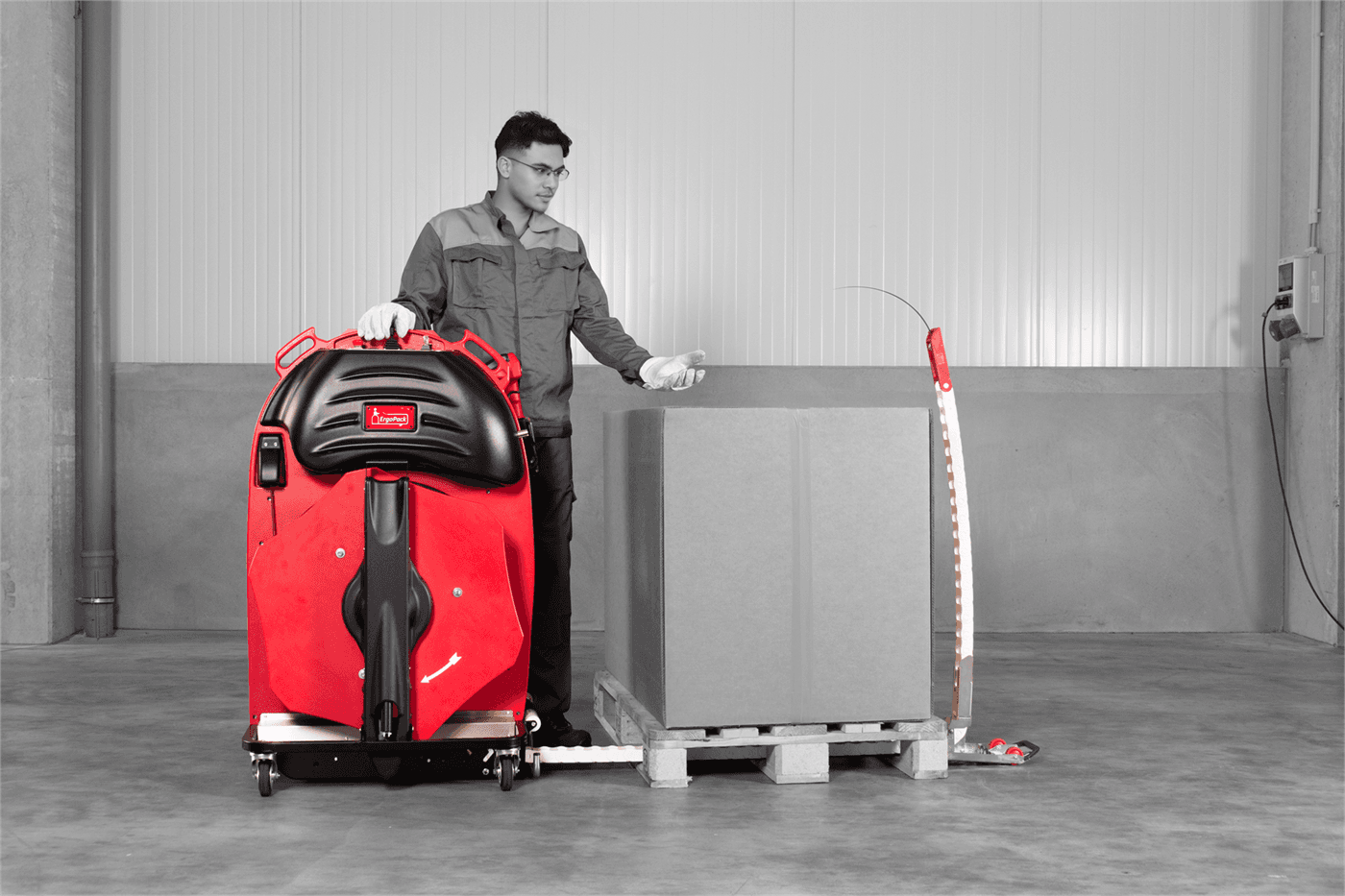
Combine both for maximum protection. And because tile loads are heavy and dense, the tension must be high and consistent — a loose strap on a 1,000 kg tile pallet means a shifting load and cracked tiles. A calibrated machine such as the ErgoPack 726X applies repeatable tension up to 2,500N and routes the strap under the pallet automatically; the GO and 700 automate routing for facilities using their own sealing tools. See best machine for heavy loads.
Finish the pallet
- Shrink or stretch wrap over the strapping for dust and moisture (shrink vs stretch).
- Corner protection where straps bear.
- Clear handling and fragile marks; documentation and ISPM-15 compliance.
Tile export packaging checklist
- Tiles packed tight in boxes; foam/board between layers
- Boxes strapped so tiles cannot move inside
- ISPM-15 heat-treated pallet, rated for the load
- Pallet load kept to ~800–1,200 kg
- Horizontal + vertical strapping at high, consistent tension
- Corner protection where straps bear
- Wrap + moisture barrier; condensation managed for sea freight
- Fragile/handling marks and export documents
Pack and strap tiles to this standard and a dense, brittle, valuable load survives weeks at sea and arrives unbroken — and unrejected.
Talk to a pallet strapping engineer
BENZ Packaging and ErgoPack India engineers support installations and service anywhere in India. Tell us your pallet setup and we’ll recommend the right machine — and send pricing.
Related Reading
Continue with the next guide
guides
PP vs PET Strapping: Which Should You Use, and When?
PP and PET strap suit very different loads. A clear guide to when polypropylene is enough and when polyester is essential — by load weight, settling, and export exposure.
guides
Strapping Machine AMC, Spares and Uptime: What to Check Before You Buy
A strapping machine is only as good as its uptime. What to check on service, spare parts and AMC before you buy — so the machine that saves you ₹25 lakh a year actually keeps running.
guides
Pallet Strapping Machine Buying Checklist: 10 Questions Before You Decide
Before you buy a pallet strapping machine, run through these ten questions. They cover loads, volume, power, tension, service and ROI — so you choose the right machine, not just the cheapest.