guides
How to Speed Up Container Stuffing (Without Risking the Load)
Container stuffing is a common export bottleneck. How to speed it up safely — palletise and pre-secure to seaworthy standard so the container fills fast and arrives intact.
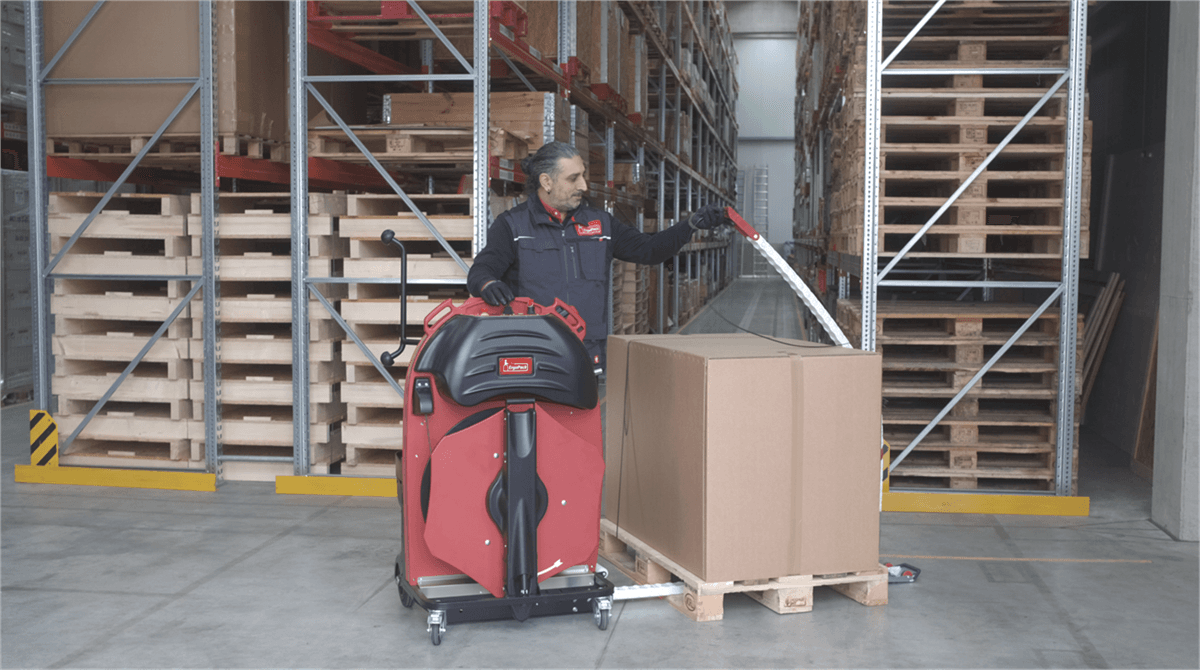
Container stuffing — getting goods into the box, secured, and the doors closed — is a frequent export bottleneck. Rush it and you get a loose, shifting load that's rejected at the destination; slow it down and the dock backs up. The fix is to do the securing work before the container arrives. Here is how to speed up stuffing without risking the load.
Why stuffing is a bottleneck
- The container is a fixed slot — it must leave on time.
- Manual securing inside the box is slow, awkward and inconsistent.
- A loose stuff causes in-container shifting and rejections — the expensive failure.
- Everything queues behind the slowest stuffing bay.
The principle: pre-secure on the dock, stuff fast
The fastest, safest stuffing happens when each pallet is already strapped to seaworthy standard before it reaches the container. Then stuffing is just placing secured pallets — quick and consistent — instead of securing loose goods inside a cramped box.
- Palletise and pre-secure at the dock, not in the container.
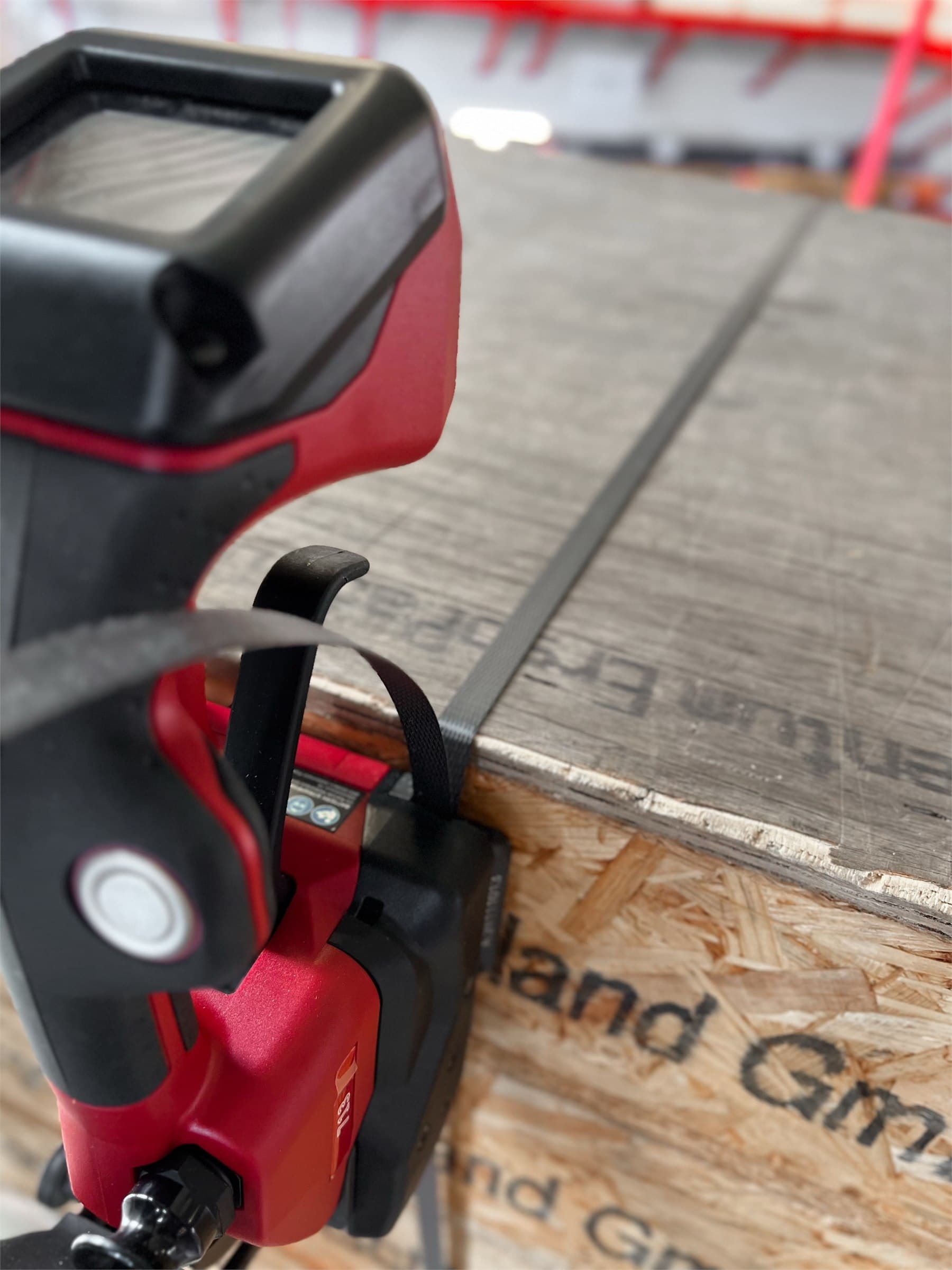
- Use calibrated, repeatable tension with PET so each pallet is seaworthy and rust-free (seaworthy palletising).
- The container fills with uniform, square, pre-secured units that block-and-brace cleanly.
Speed the securing step itself
If pre-securing is the answer, the securing step must be fast and consistent — which manual strapping is not (~120 seconds, two people, by-feel tension). Mobile automation:
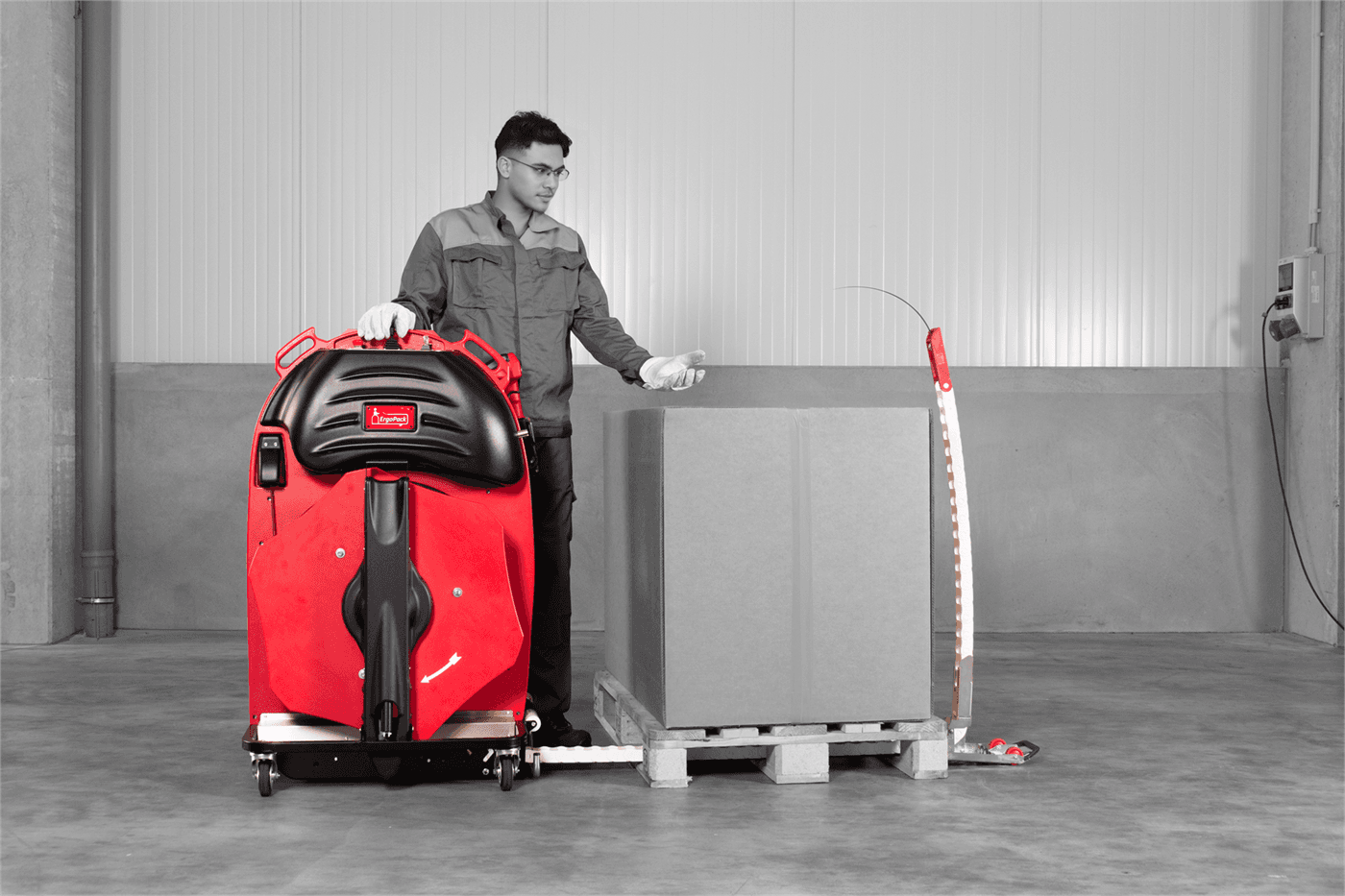
- Straps a pallet in under 40 seconds with one operator (end-of-line automation).
- Applies consistent, seaworthy tension every time — no loose pallets to redo.
- Is wheeled to any dock (ErgoPack GO / 726X) — no conveyors, fits any export floor.
So the dock pre-secures fast and consistently, and stuffing becomes a quick, safe placement step.
Don't trade safety for speed
The whole point is that faster stuffing must not raise the rejection rate:
- Seaworthy tension and PET on every pallet (seaworthy packaging).
- Moisture/corrosion protection for the voyage (VCI guide).
- Block-and-brace the pre-secured units cleanly inside the box.
Faster-stuffing checklist
- Pallets pre-secured to seaworthy standard on the dock
- Securing step fast and consistent (automated, <40s)
- PET + calibrated tension on every pallet
- Moisture/corrosion protection applied
- Container filled with uniform, pre-secured units
- Block-and-brace done cleanly
- Throughput gain modelled in ROI calculator
Speed up container stuffing by moving the securing work to the dock — pre-secure each pallet fast and to seaworthy standard, then stuff uniform units quickly and safely. Model the gain or request a quote.
Talk to a pallet strapping engineer
BENZ Packaging and ErgoPack India engineers support installations and service anywhere in India. Tell us your pallet setup and we’ll recommend the right machine — and send pricing.
Related Reading
Continue with the next guide
guides
PP vs PET Strapping: Which Should You Use, and When?
PP and PET strap suit very different loads. A clear guide to when polypropylene is enough and when polyester is essential — by load weight, settling, and export exposure.

guides
Strapping Machine AMC, Spares and Uptime: What to Check Before You Buy
A strapping machine is only as good as its uptime. What to check on service, spare parts and AMC before you buy — so the machine that saves you ₹25 lakh a year actually keeps running.
guides
Pallet Strapping Machine Buying Checklist: 10 Questions Before You Decide
Before you buy a pallet strapping machine, run through these ten questions. They cover loads, volume, power, tension, service and ROI — so you choose the right machine, not just the cheapest.