guides
Seaworthy Palletising & Securing: How to Build Export Pallets That Survive the Sea
How to palletise and secure loads for sea export — pallet choice, stacking, moisture and corrosion control, and the high-tension PET securing and lashing that keep export pallets intact across the voyage.
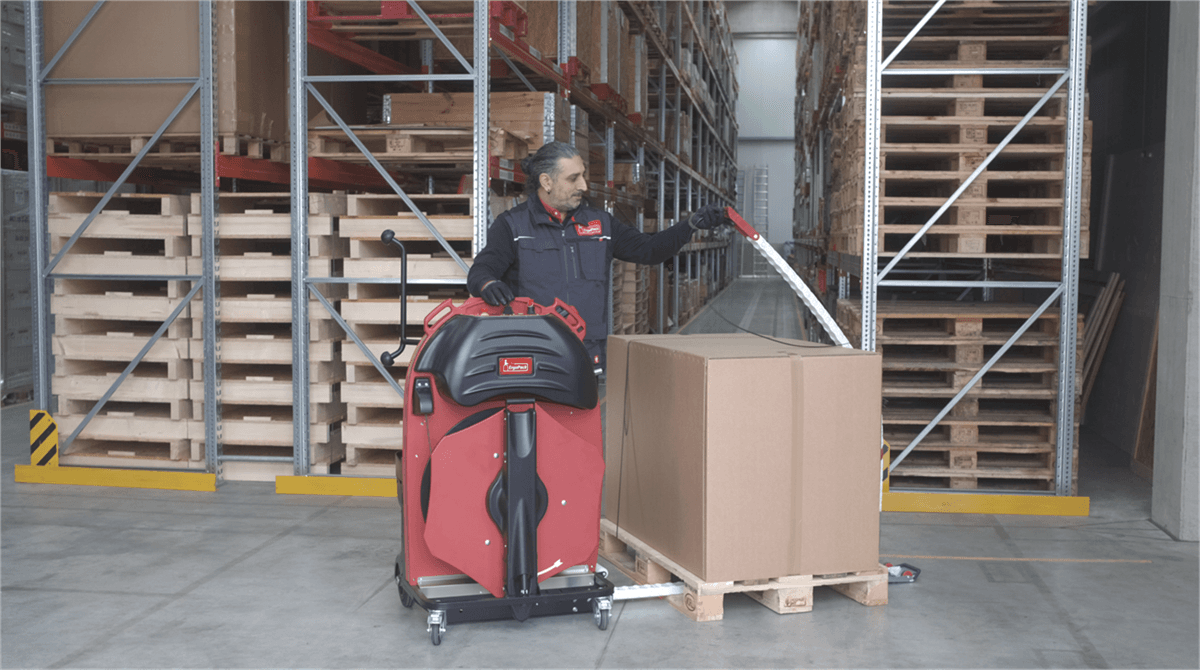
Seaworthy packaging gets a lot of attention at the crate and barrier level — but most export cargo travels on pallets, and a pallet that comes apart at sea undoes every other protection. Seaworthy palletising is the discipline of building and securing an export pallet so it survives weeks of ocean movement as one solid, rust-free unit. Here is how.
Why export pallets fail at sea
A pallet that is fine for a short domestic truck run can fail on a sea voyage because the sea is relentless:
- Constant motion — the ship rolls and pitches for weeks; any loose load shifts and topples.
- Settling — loads compress and slump over a long voyage, loosening hand-applied straps.
- Humidity and salt — moisture rusts steel strap and metal cargo; cartons soften.
- Repeated handling — port-to-port transfers add shock and forklift impact.
Seaworthy palletising defends against all of these at the pallet level.
1. The right pallet
- ISPM-15 heat-treated, stamped wooden pallets for export, or plastic pallets (moisture-proof, hygienic, no treatment needed) — see standard pallet sizes.
- Rated for the load; sound condition (a cracked stringer fails under sea stress).
2. Build a stable, square unit load
- Square, even stack, no overhang, heaviest at the bottom.
- The right pattern — column for strength, interlock for binding bagged/settling loads.
- Edge and corner protection so straps secure without crushing.
- Cushioning and void fill so nothing moves (dunnage types).
3. Moisture and corrosion control
- Moisture barrier over the load; desiccant sized to cargo and route.
- VCI for metal goods on the pallet.
- Dry pallets, dry dunnage; manage container condensation.
4. Secure with high-tension PET — the heart of seaworthy palletising
This is where seaworthy palletising is won. The load must be anchored to the pallet base as one rigid unit, with a strap that survives the sea:
- PET strap, never steel. PET elongates to absorb the shock of ocean movement and recovers tension as the load settles — staying tight for the whole voyage. Steel snaps under shock, goes slack as the load settles, and rusts onto the cargo. This single choice prevents both load shift and corrosion. See PP vs PET vs steel strapping.
- Vertical strapping under the pallet and over the load anchors the stack to the base — the shift that horizontal stretch film cannot stop.
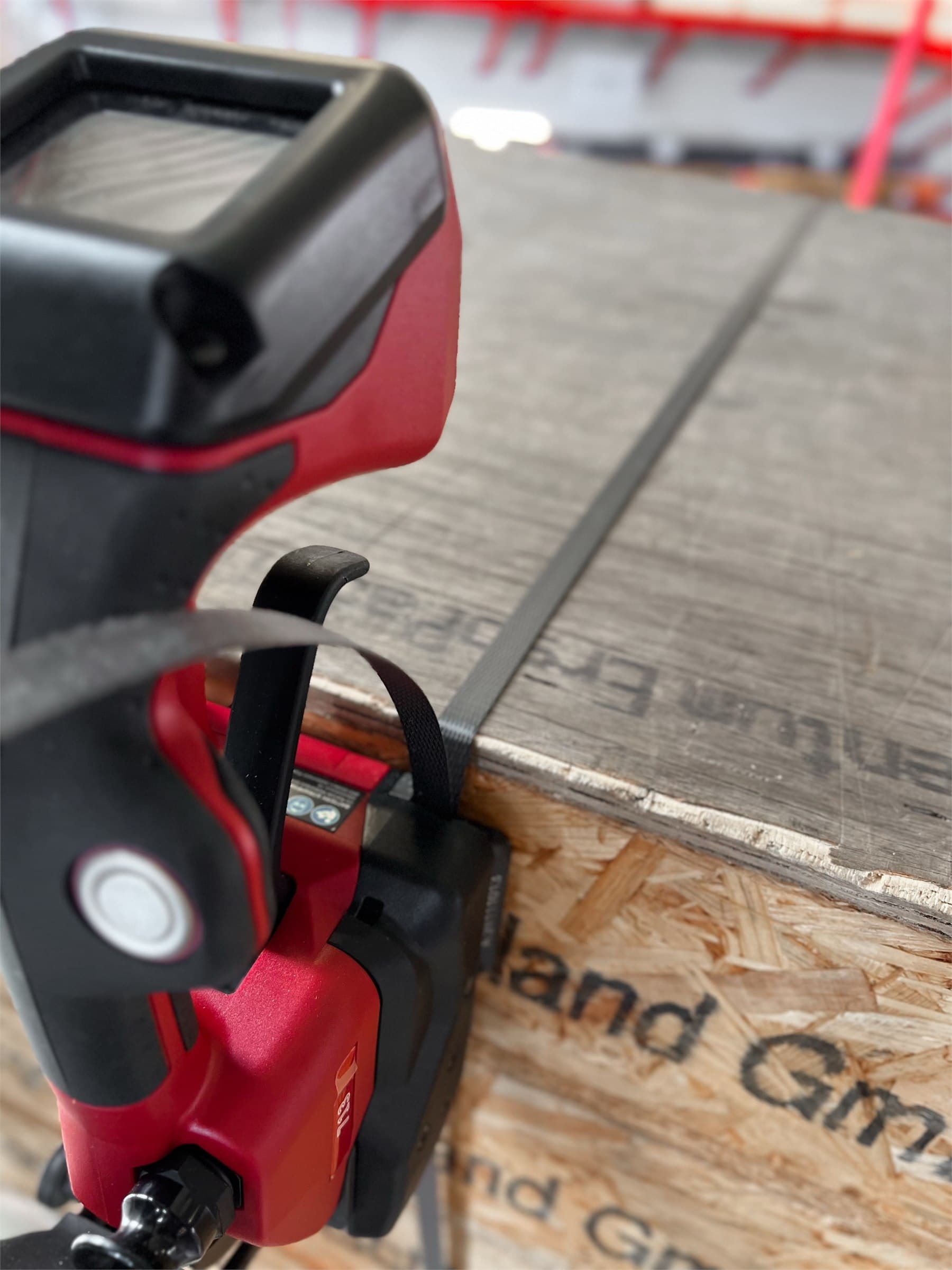
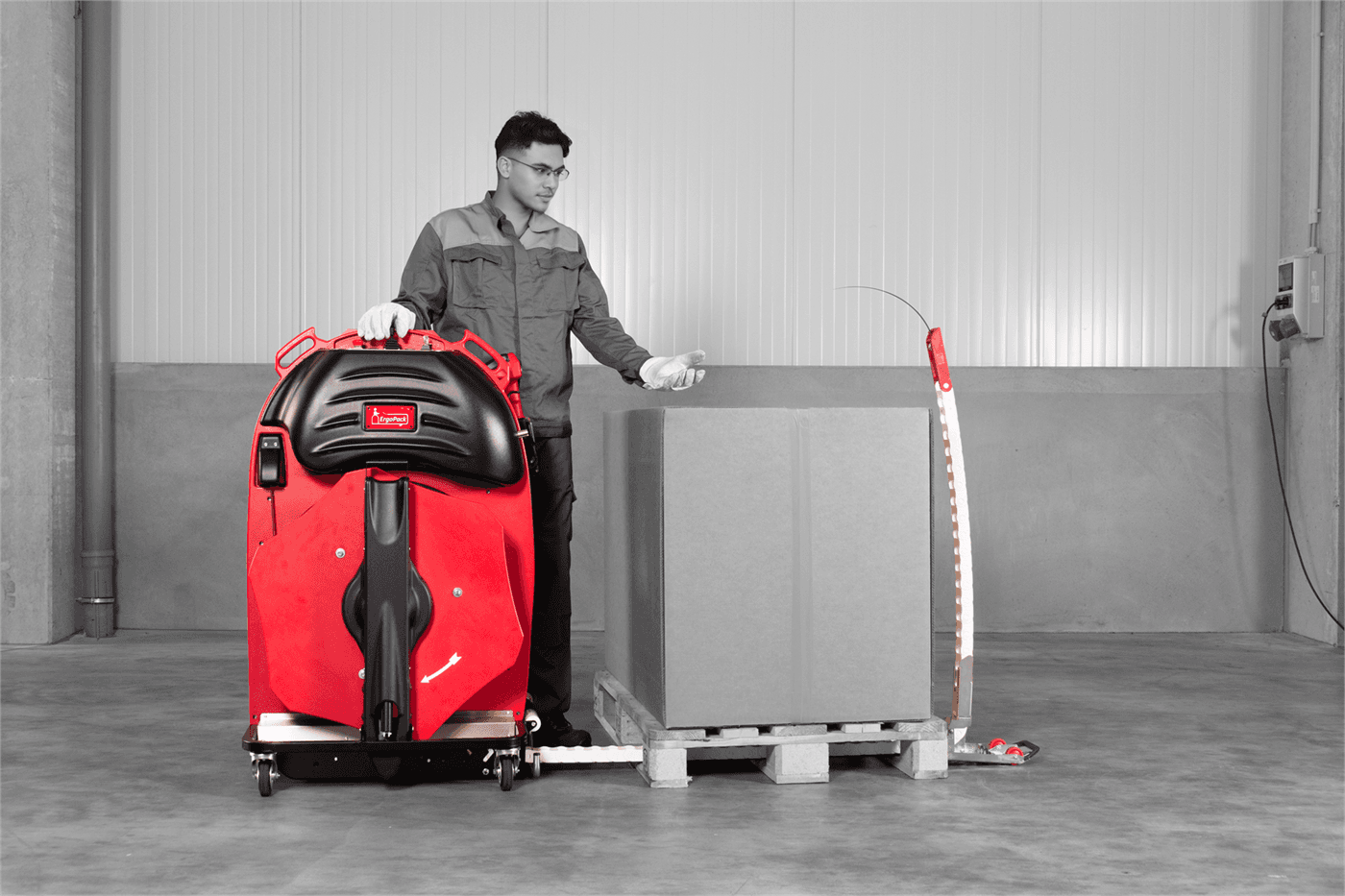
- Consistent, calibrated tension on every pallet so there is no weak unit in the container. Hand tension drifts; a calibrated machine such as the ErgoPack 726X (digital tension to 2500N, sealless friction weld), GO or 700 applies the same tension to every pallet and routes the strap under it automatically.
5. Lash and block in the container
Once each pallet is a solid unit, the units are lashed, blocked and choked in the container so they cannot move at sea (cargo lashing methods, how to load a shipping container). Securing is layered: solid pallets first, then secured to the container.
Seaworthy palletising checklist
- ISPM-15 wood or plastic pallet, rated and sound
- Stable square stack, no overhang, right pattern
- Edge/corner protection; voids filled
- Moisture barrier, desiccant, VCI for metal
- Load strapped to the pallet with PET (not steel) at consistent tension
- Sealless friction weld — no rust, no metal-clip failure
- Pallets lashed, blocked and choked in the container
- Condensation managed; documents and ISPM-15 visible
Build export pallets to this standard — sound pallet, stable load, moisture and corrosion controlled, and anchored with consistent PET tension that holds through the voyage — and every pallet in the container arrives as one solid, rust-free, intact unit. For the securing machine, request a quote and demo.
Talk to a pallet strapping engineer
BENZ Packaging and ErgoPack India engineers support installations and service anywhere in India. Tell us your pallet setup and we’ll recommend the right machine — and send pricing.
Related Reading
Continue with the next guide
guides
PP vs PET Strapping: Which Should You Use, and When?
PP and PET strap suit very different loads. A clear guide to when polypropylene is enough and when polyester is essential — by load weight, settling, and export exposure.

guides
Strapping Machine AMC, Spares and Uptime: What to Check Before You Buy
A strapping machine is only as good as its uptime. What to check on service, spare parts and AMC before you buy — so the machine that saves you ₹25 lakh a year actually keeps running.
guides
Pallet Strapping Machine Buying Checklist: 10 Questions Before You Decide
Before you buy a pallet strapping machine, run through these ten questions. They cover loads, volume, power, tension, service and ROI — so you choose the right machine, not just the cheapest.