guides
How to Load a Shipping Container: Weight Distribution & Securing (India Export Guide)
A step-by-step guide to loading an export container from India — weight distribution rules, centre of gravity, securing and lashing, dunnage, condensation, and why each pallet must be strapped before it ever reaches the container.
A container that arrives with shifted, crushed or rusted cargo almost always failed before it left the country — in how it was loaded and how each pallet inside it was secured. For Indian exporters, where the load passes through a CFS or ICD, sits in monsoon humidity, and crosses weeks of ocean swell, "load it tight and shut the doors" is not a plan. This is the method that actually protects the cargo.
The 8 steps to load an export container
- Inspect the container before anything goes in.
- Plan the stow — weight distribution and unloading order.
- Load heaviest at the bottom and over the container's strong points.
- Keep the centre of gravity central.
- Fill voids with dunnage so nothing can move.
- Secure and lash the load against shifting.
- Manage condensation for the sea leg.
- Make sure every pallet was strapped before it was loaded.
Step 1 — Inspect the container first
Reject a container that fails any of these: holes or daylight visible from inside, a wet or damaged floor, broken door seals, lingering odour, or previous-cargo residue. A single pinhole in the roof lets monsoon and sea spray ruin a full load. Confirm it is clean, dry, structurally sound and that the doors seal fully.
Step 2 — Plan the stow before you load
Make a simple stow plan — even a sketch — before the first pallet goes in. It should account for:
- Weight distribution along the length and width.
- Centre of gravity, kept central.
- Unloading order at the destination (last in, first out).
Loading to a plan, instead of improvising, is the difference between a balanced container and one that is dangerously heavy at one end.
Step 3 & 4 — Weight distribution and centre of gravity
This is where most overweight-axle fines and tip-overs come from.
- Place heavier, denser cargo on the bottom, lighter on top.
- Spread weight evenly across the floor — do not concentrate it in one half. A common rule: no more than ~60% of the cargo weight should sit on either 50% of the container's length.
- Keep the centre of gravity central — laterally and longitudinally — ideally within about ±5% of the mid-point. An off-centre load makes the container unstable on the chassis and on the ship.
Step 5 — Fill voids with dunnage
Empty space is movement waiting to happen. Fill gaps so cargo cannot slide or topple:
- Inflatable dunnage bags between pallets or rows.
- Wooden beams, foam blocks or cardboard for smaller voids.
- The goal: a tight block of cargo that behaves as one mass, with nothing free to shift when the ship rolls.
Step 6 — Secure and lash the load
Heavy and tall items must be physically restrained:
- Lashing with polyester/textile straps or ratchet straps to the container's lashing points.
- Load bars and bracing across the width to stop forward and backward movement, especially behind the doors.
- Pay special attention to the door end — the last metre is where unsecured cargo falls out when the doors open at destination.
Step 7 — Manage condensation ("container rain")
On a sea voyage, temperature swings make moisture condense inside the roof and drip onto the cargo — "container rain" — a major cause of rust and mould on Indian exports. Mitigate it with:
- Desiccant (container drying bags/poles) sized to the cargo and route.
- Dry dunnage and dry pallets loaded in — never trap moisture inside.
- Moisture-resistant securing: PET strap and plastic or treated wood, not rust-prone steel.
Step 8 — The part that happens before the container: strap every pallet
A container is only as secure as the units inside it. If individual pallets arrive at the CFS already loose — boxes shifting, stretch film stretched but the stack sliding on the pallet — no amount of lashing inside the container fixes it. The load has to be a set of solid, immovable blocks before it is ever stuffed.
That means each pallet is strapped down to its base with consistent tension before it leaves your floor:
- Use PET strap for export — it absorbs the shock of ocean movement and resists rust, where steel snaps and corrodes.
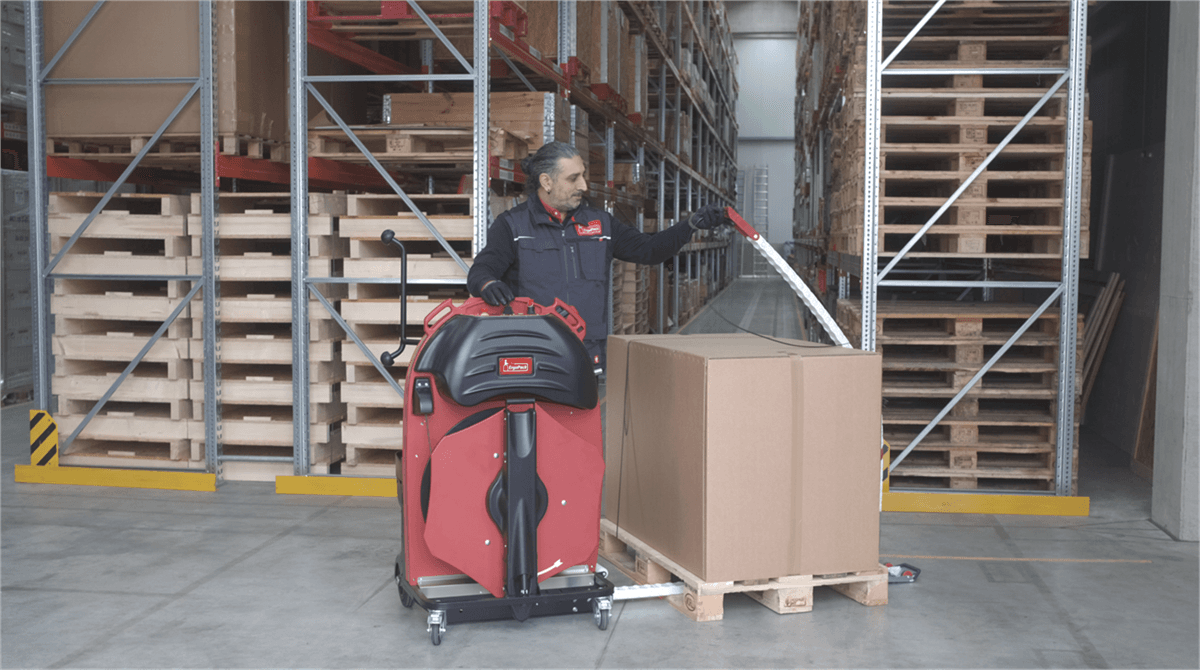
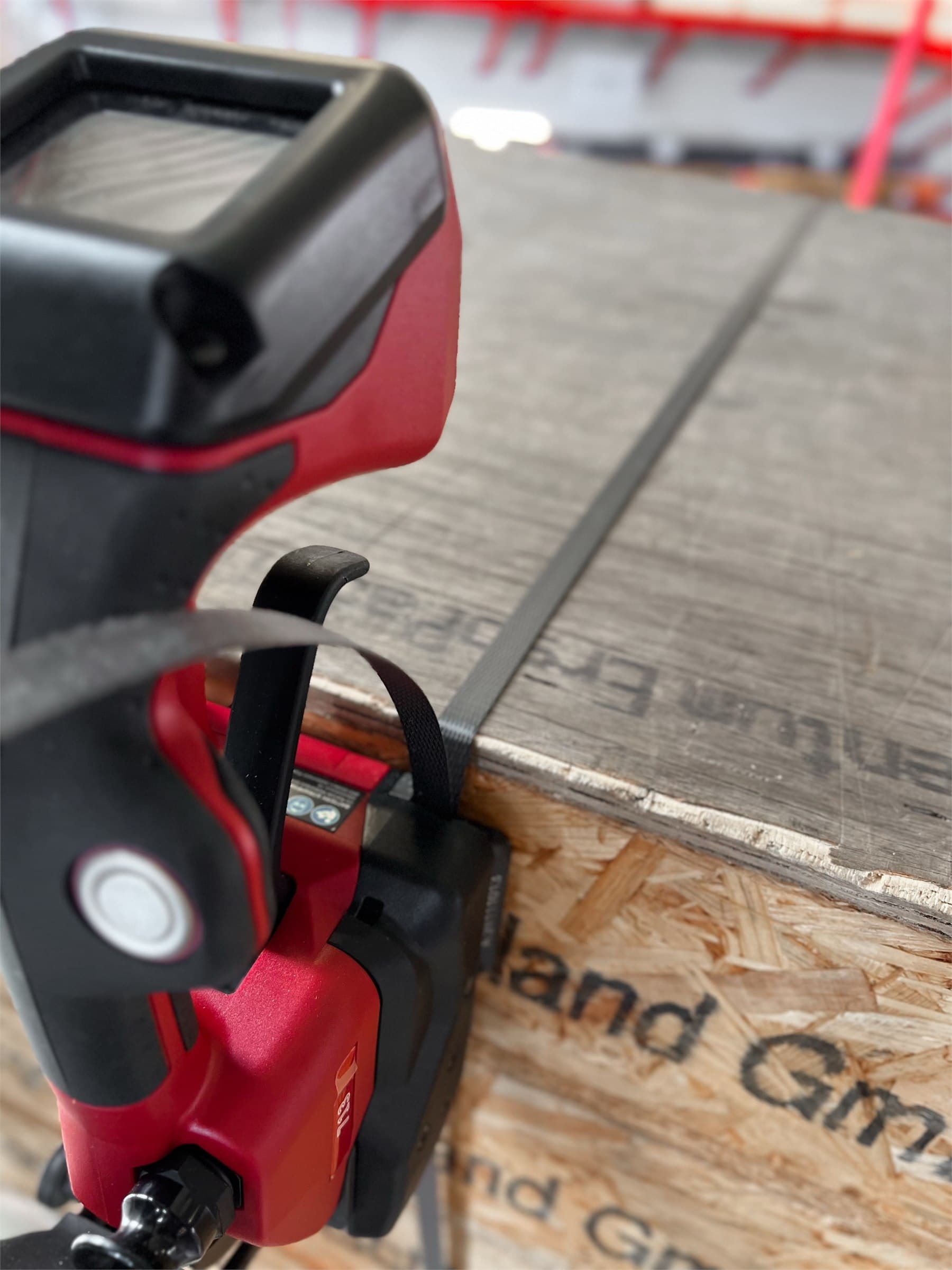
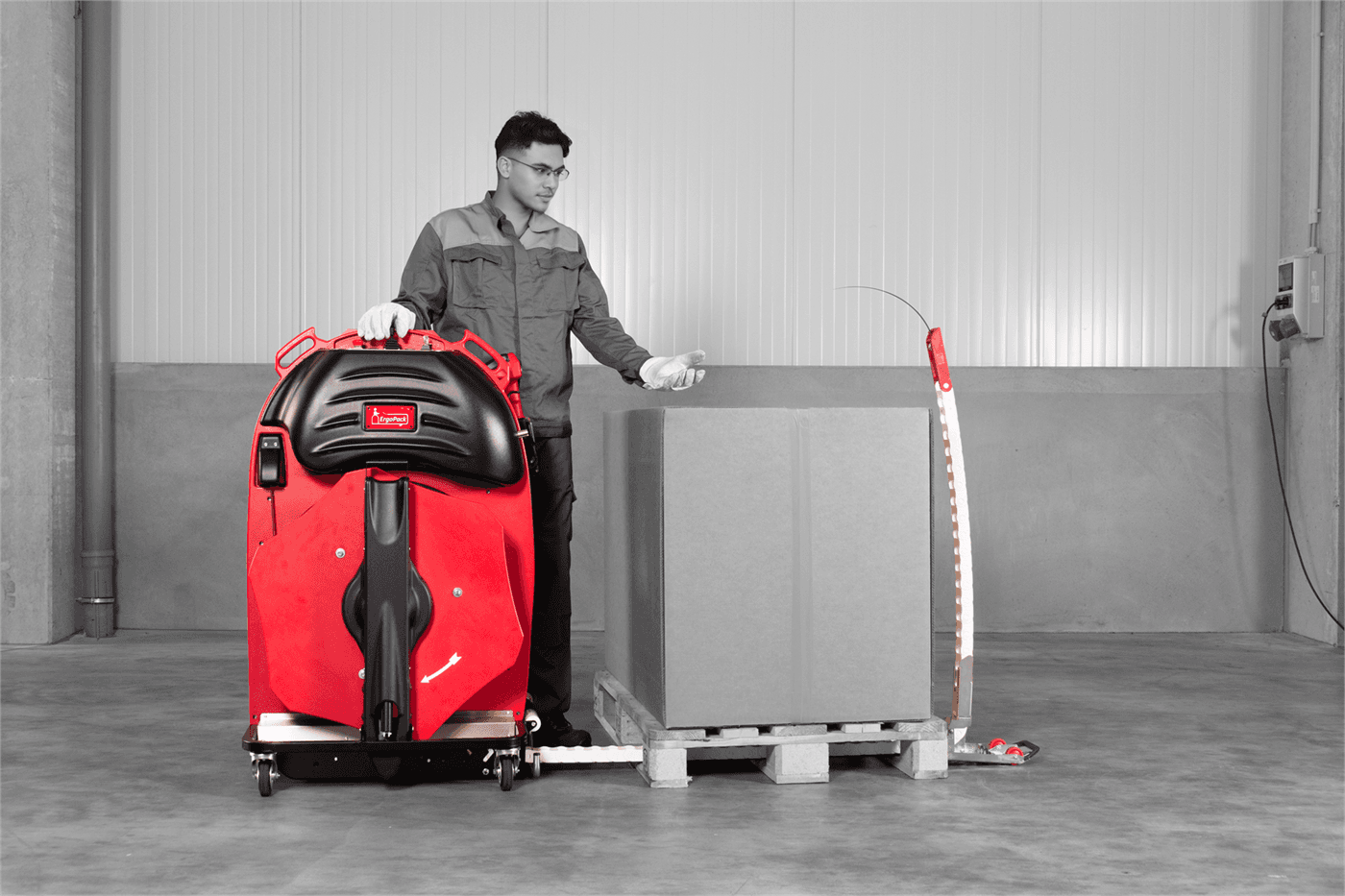
- Apply repeatable tension on every pallet so there is no weak unit in the container. Hand tension drifts; a machine that calibrates digitally does not. Mobile ChainLance systems such as the ErgoPack 726X apply a set tension up to 2,500N and seal sealless, so pallet #1 and pallet #400 going into the container are identical — and the ErgoPack GO and manual-crank ErgoPack 700 automate the strap routing for facilities that keep their own sealing tools.
For the full method on the pallet itself, see how to pack a pallet for shipping and the material choice in PP vs PET vs steel strapping.
Common container-loading mistakes
- Improvising without a stow plan — leads to off-centre, overweight loads.
- Concentrating weight in one half — axle fines and instability.
- Leaving voids unfilled — cargo slides and topples at sea.
- Ignoring the door end — the last metre falls out on opening.
- No condensation control — rust and mould on arrival.
- Loading loose pallets — the container cannot fix a pallet that was never strapped properly.
Container-loading checklist
- Container inspected: clean, dry, sound, sealing doors
- Stow plan drawn, unloading order considered
- Heaviest cargo low; weight spread evenly (≤60% per half)
- Centre of gravity central (±5%)
- Voids filled with dunnage
- Load lashed and braced; door end secured
- Desiccant in; dry dunnage and dry pallets only
- Every pallet strapped to its base with PET at consistent tension
Load to this standard and the container that leaves the ICD is the container that opens — at the destination, with the cargo exactly where you put it.
Talk to a pallet strapping engineer
BENZ Packaging and ErgoPack India engineers support installations and service anywhere in India. Tell us your pallet setup and we’ll recommend the right machine — and send pricing.
Related Reading
Continue with the next guide
guides
PP vs PET Strapping: Which Should You Use, and When?
PP and PET strap suit very different loads. A clear guide to when polypropylene is enough and when polyester is essential — by load weight, settling, and export exposure.

guides
Strapping Machine AMC, Spares and Uptime: What to Check Before You Buy
A strapping machine is only as good as its uptime. What to check on service, spare parts and AMC before you buy — so the machine that saves you ₹25 lakh a year actually keeps running.
guides
Pallet Strapping Machine Buying Checklist: 10 Questions Before You Decide
Before you buy a pallet strapping machine, run through these ten questions. They cover loads, volume, power, tension, service and ROI — so you choose the right machine, not just the cheapest.