guides
Standard Pallet Sizes in India: Dimensions, Types & How to Choose (2026)
The standard pallet sizes used in India — Euro, standard, export and big — with dimensions, wood vs plastic, ISO sizes, container fit, and how to choose the right pallet for your load and machine.
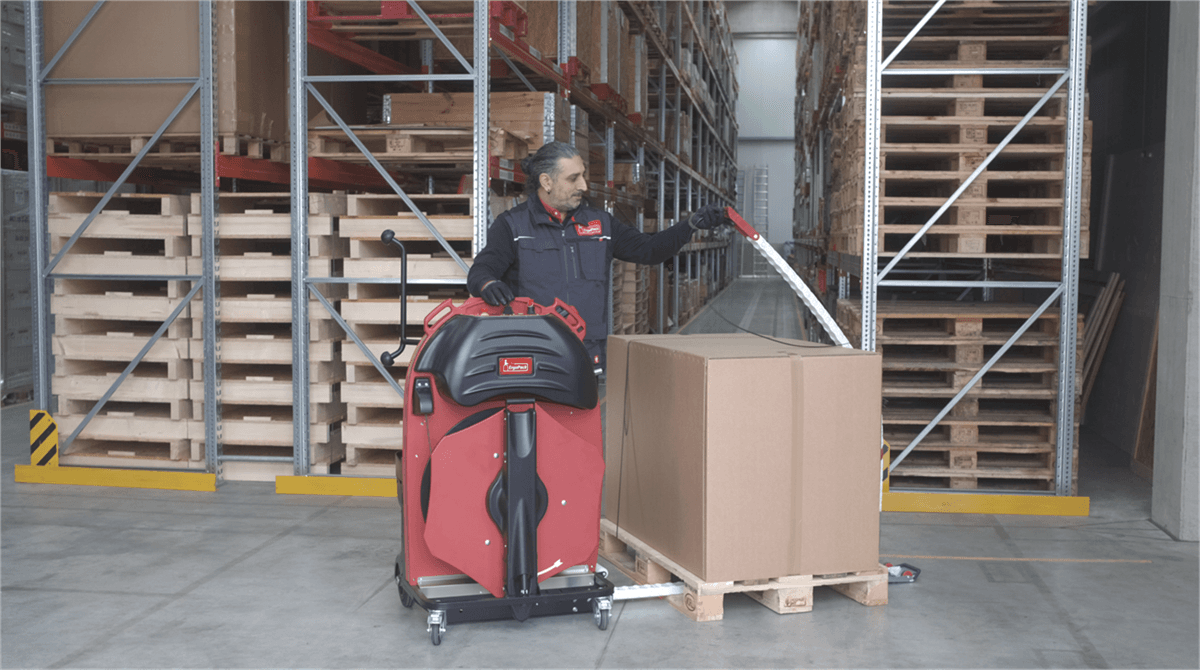
Ask three Indian warehouses what a "standard pallet" is and you will get three answers — because India uses several. Choosing the right size is not a detail: it decides how many pallets fit a container, how stable your load is, and whether your strapping machine can even handle it. This is the reference, with the dimensions and the trade-offs.
The pallet sizes used in India
India does not run on a single national pallet. The four most common footprints are:
| Common name | Dimensions (mm) | Where it is used |
|---|---|---|
| Euro pallet | 1200 × 800 | Very common; aligned with European supply chains |
| Standard pallet | 1200 × 1000 | The general-purpose workhorse; an ISO and GMA size |
| Export pallet | 1100 × 1100 | Optimised for Asian export container stowage |
| Big pallet | 1200 × 1200 | Large or heavy industrial loads |
The 1200 × 1000 mm footprint is one of the six ISO pallet sizes and the basis of the GMA standard, which is why it is the safe default across consumer goods, food, retail, manufacturing and automotive.
Wood vs plastic pallets in India
| Factor | Wooden pallet | Plastic pallet |
|---|---|---|
| Cost | Lower upfront | Higher upfront |
| Lifespan | ~3–5 years | ~10–15 years / ~350 trips |
| Moisture / hygiene | Absorbs moisture; can harbour pests | Moisture-proof; washable |
| Export by sea | Must be ISPM-15 heat-treated & stamped | No treatment required |
| Best for | General domestic use, cost-sensitive | Pharma, food, humid routes, export reuse |
For export by sea, untreated wooden pallets are a compliance risk — they must be ISPM-15 heat-treated and stamped or the shipment can be refused at the destination port. Plastic pallets sidestep this entirely, which is why moisture-sensitive and export-heavy operations often pay the higher upfront cost.
How many pallets fit a container
Pallet choice directly changes your freight economics:
- 20 ft container: ~11 Euro pallets or ~9–10 standard pallets in one tier.
- 40 ft container: ~22–24 Euro pallets or ~20–21 standard pallets in one tier.
If you ship by sea, the pallet footprint that stows most efficiently for your container and cargo can save real money per shipment — which is why exporters often standardise on a size that blocks neatly into the container.
How to choose the right pallet size
- Match the pallet to your carton footprint so boxes sit fully on the deck with no overhang — overhang destroys load strength.
- Match it to your container if you export, to maximise pallets per tier.
- Choose the material for your route: ISPM-15 wood or plastic for sea and humidity.
- Confirm your strapping machine handles the full range — many operations run mixed sizes on the same floor.
The pallet size only matters if your machine can strap it
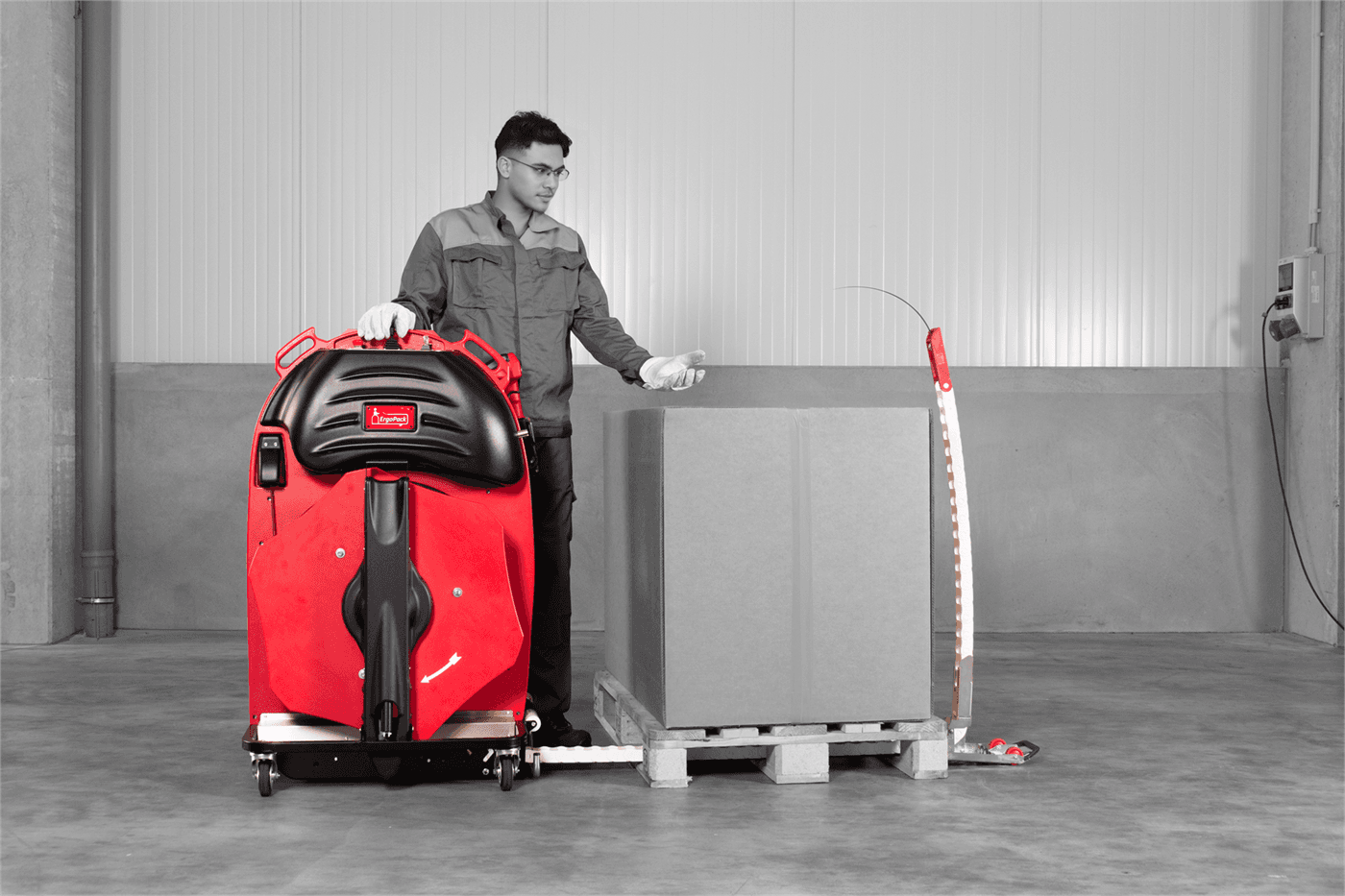
A pallet standard is useless if your end-of-line machine only fits one size. Indian floors rarely run a single footprint — they have narrow parcels, standard pallets, and wide industrial loads on the same shift. A fixed-arch machine forces every load to one size; a mobile machine adjusts to all of them.
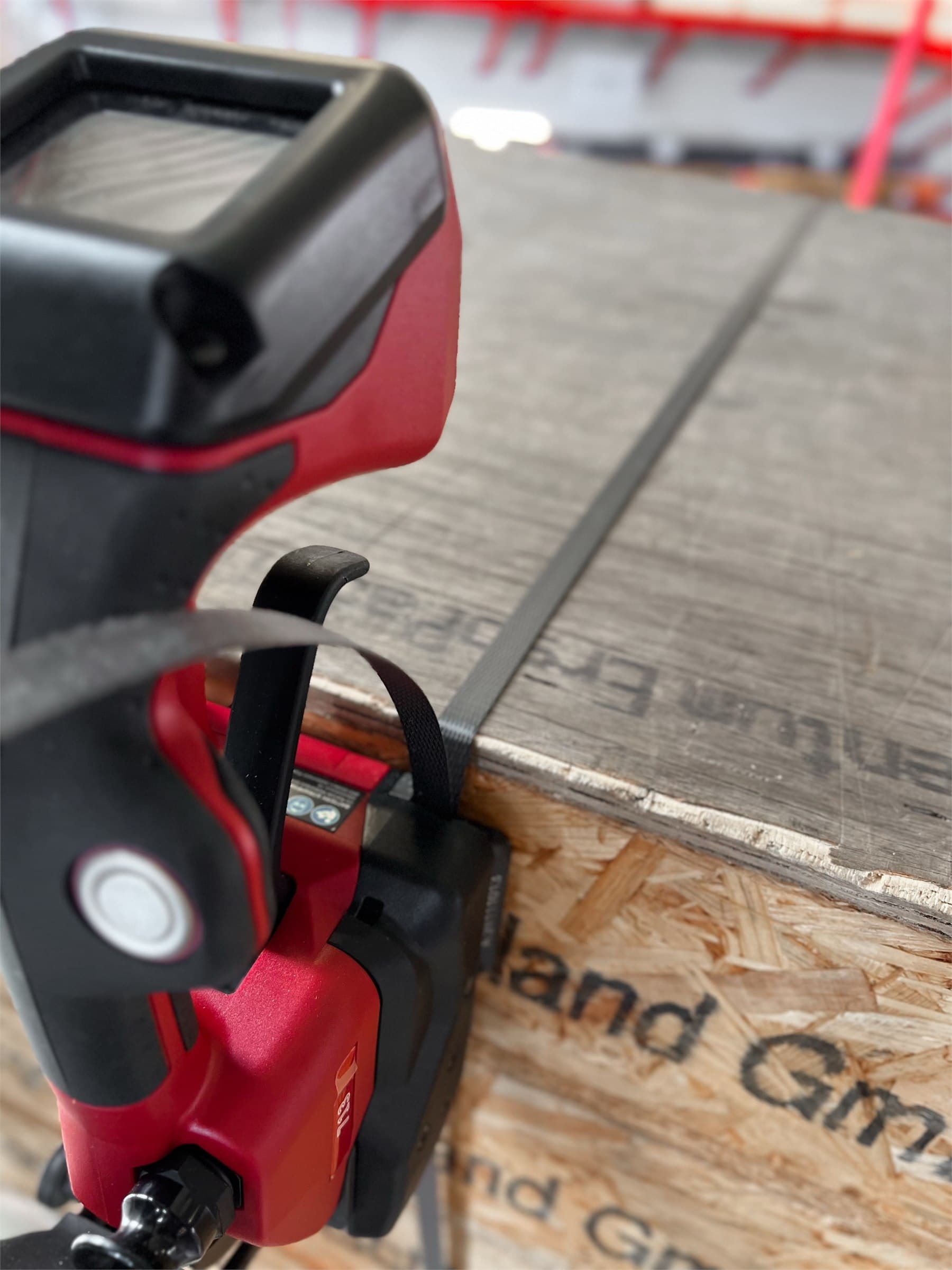
This is where the ChainLance design matters: the ErgoPack 726X handles pallets from 40 cm up to 270 cm wide and the ErgoPack 700 and ErgoPack GO cover the same broad range — so Euro, standard, export and big pallets all run on the same machine, same shift, without reconfiguration. Whatever size you standardise on, the machine adapts to the pallet instead of forcing the pallet to the machine.
For the full packing method, see how to pack a pallet for shipping.
Quick reference
- Most common Indian sizes: 1200×800 (Euro), 1200×1000 (standard/ISO/GMA), 1100×1100 (export), 1200×1200 (big).
- Wood is cheap but ~3–5 yr and needs ISPM-15 for export; plastic lasts ~10–15 yr and needs no treatment.
- 40 ft container: ~22–24 Euro or ~20–21 standard pallets per tier.
- Pick the size your cartons fill with no overhang — and make sure your machine handles your whole size range.
Talk to a pallet strapping engineer
BENZ Packaging and ErgoPack India engineers support installations and service anywhere in India. Tell us your pallet setup and we’ll recommend the right machine — and send pricing.
Related Reading
Continue with the next guide
guides
PP vs PET Strapping: Which Should You Use, and When?
PP and PET strap suit very different loads. A clear guide to when polypropylene is enough and when polyester is essential — by load weight, settling, and export exposure.
guides
Strapping Machine AMC, Spares and Uptime: What to Check Before You Buy
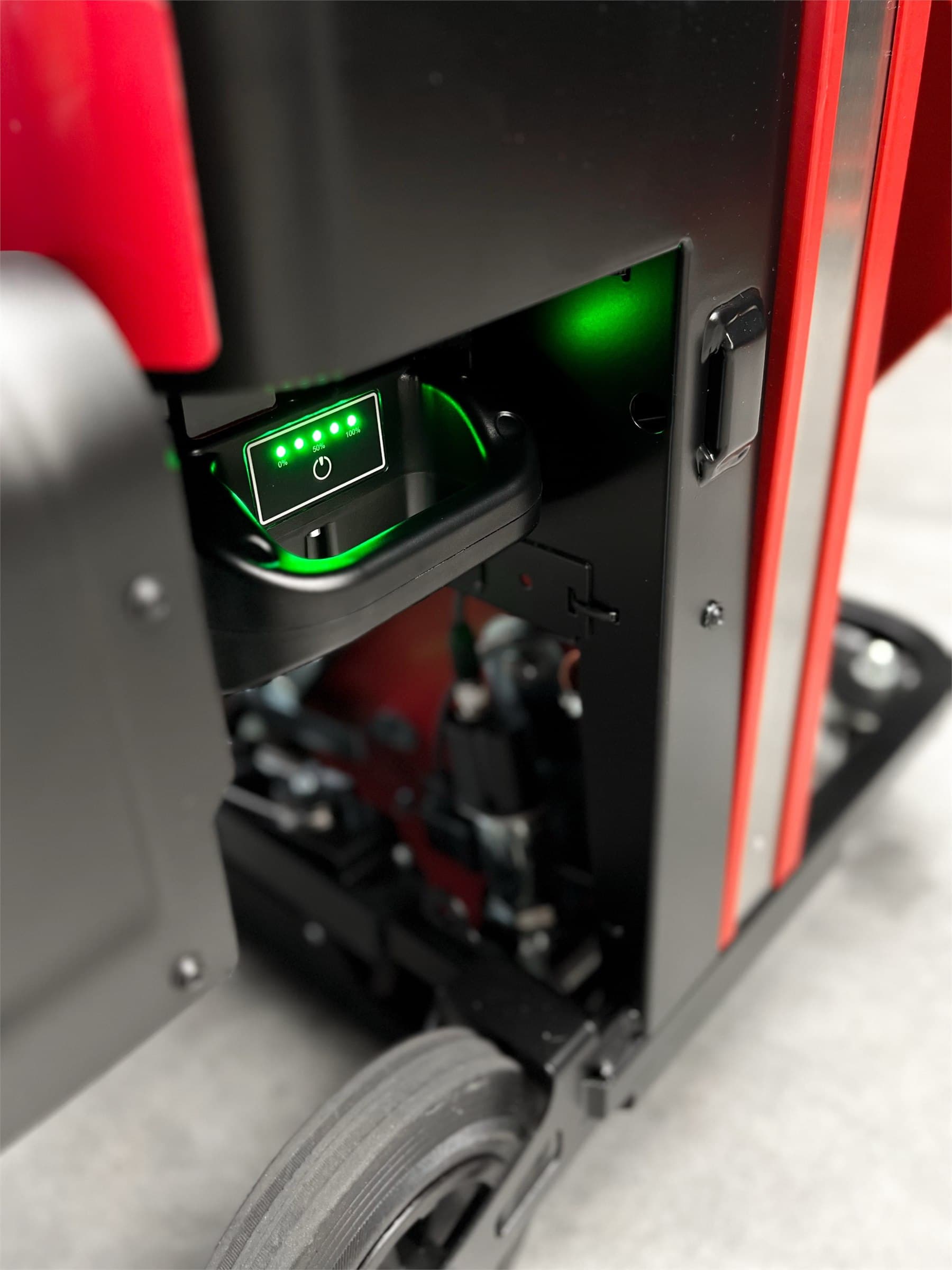
A strapping machine is only as good as its uptime. What to check on service, spare parts and AMC before you buy — so the machine that saves you ₹25 lakh a year actually keeps running.
guides
Pallet Strapping Machine Buying Checklist: 10 Questions Before You Decide
Before you buy a pallet strapping machine, run through these ten questions. They cover loads, volume, power, tension, service and ROI — so you choose the right machine, not just the cheapest.