insights
Warehouse Cost Reduction Strategies: Where the Money Actually Goes
A practical guide to reducing warehouse operating cost — labour, space, inventory, damage and dispatch — with where the biggest, most repeatable savings actually sit.
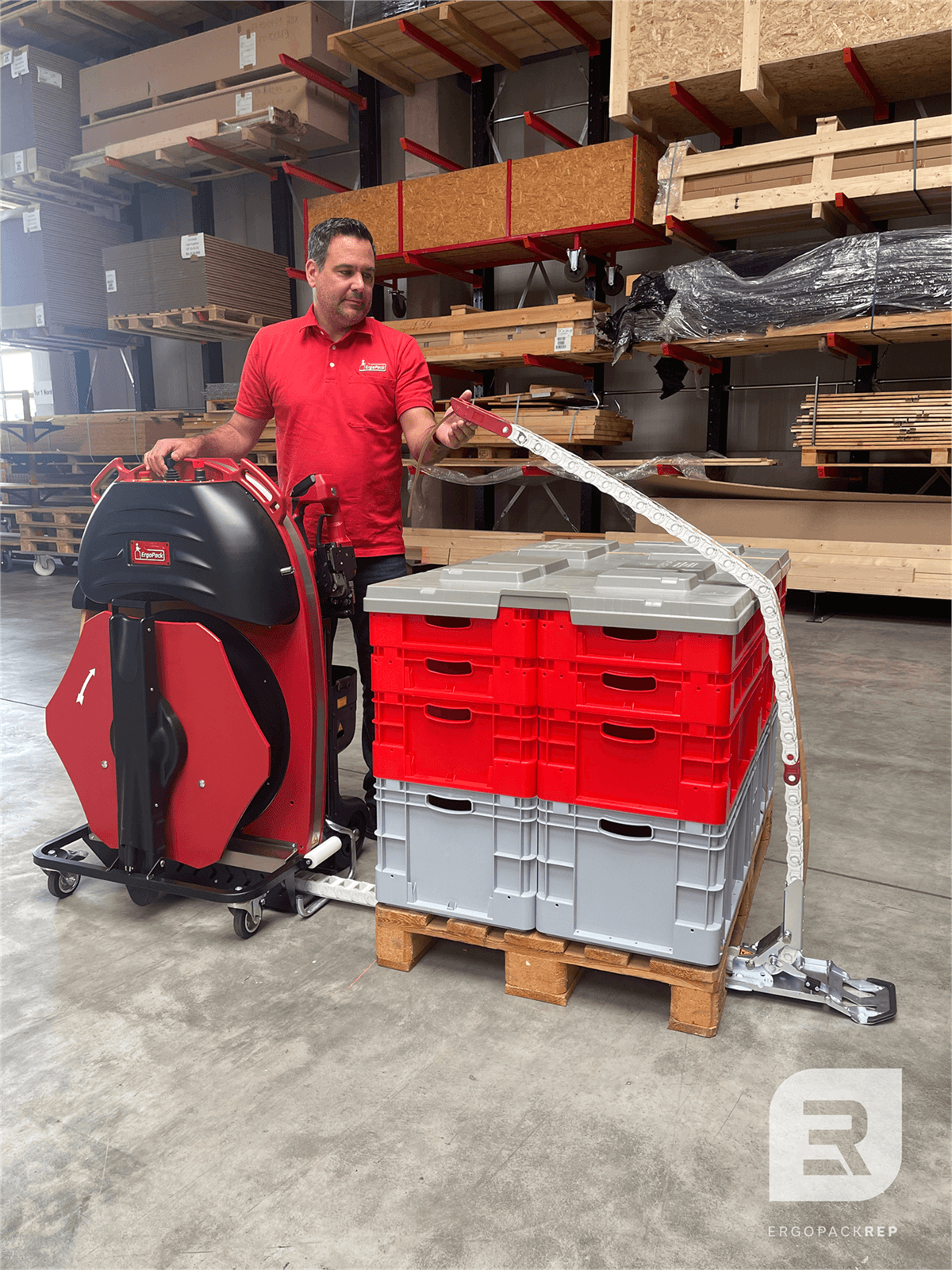
Warehouse cost reduction usually starts in the wrong place — squeezing a supplier on consumable prices while the big money leaks out of labour, damage and underused throughput. The operations that genuinely cut cost attack the largest, most recurring drains first. Here is where they are.
The five buckets of warehouse cost
| Bucket | What it includes | Typically the biggest? |
|---|---|---|
| Labour | Picking, packing, palletising, strapping, loading | Yes — and rising |
| Space & rent | Storage footprint, racking | Often |
| Inventory | Stock holding, obsolescence | Varies |
| Damage | Rejected loads, re-ships, claims | Underestimated |
| Equipment & consumables | Machines, film, strap, seals | Visible but smaller |
Most cost programs optimise the last bucket and ignore the first four — which is backwards.
1. Labour — the biggest, fastest-rising cost
Labour dominates warehouse operating cost in India, and it rises with every wage revision (most recently April 2026). The win is not cutting people and output — it is automating the most repetitive, no-value manual tasks and redeploying people to value-adding work:
- End-of-line strapping is the classic target: a two-person, ~120-second-per-pallet task that a mobile machine cuts to one operator at under 40 seconds — saving ~₹25 lakh/year on a typical floor (reduce labour cost in packaging).
- Redeploy the freed labour to picking, staging and QA.
2. Throughput — capacity you already have
Lifting throughput is cost reduction in disguise — you ship more from the same floor and people. The key is to find and remove the bottleneck, which is often the dispatch dock (increase factory throughput). Clearing it means more output per rupee of fixed cost.
3. Damage — the cost no one tracks
Rejected and damaged loads are a major, under-measured cost — re-ship freight, replacement product, claims and lost customers. The leading cause is inconsistent load securing. Consistent, machine-calibrated tension removes the variation and cuts the rejection rate (reduce transit damage, reduce shipping damage).
4. Space and slotting
Better slotting (fast movers near dispatch), denser, more stable unit loads, and stackable pallets all use space more efficiently — and a well-secured, square pallet stacks where a leaning one cannot.
5. Consumables — real but smaller
Cut film over-use (calibrated tension uses less), remove metal-seal cost (sealless friction welding), and right-size cartons (reduce packaging costs). Real savings, but smaller than labour and damage — do them, but not first.
The order to cut warehouse cost
- Measure cost per pallet across all buckets — see the true picture.
- Automate the biggest repetitive labour task (usually strapping) and redeploy people.
- Remove the dispatch bottleneck to unlock throughput.
- Cut the damage rate with consistent securing.
- Optimise space and consumables last.
Model the labour and damage savings for your floor in the ROI calculator.
Warehouse cost reduction checklist
- Cost per pallet measured across labour, space, inventory, damage, consumables
- Most repetitive labour task automated; people redeployed
- Dispatch bottleneck removed to lift throughput
- Damage rate cut with consistent, calibrated securing
- Slotting and unit-load density improved
- Consumable waste cut (film, seals, right-sizing)
Cut warehouse cost where the money actually is — labour, throughput and damage — not where it's easiest to negotiate. The single highest-leverage move on most floors is automating the dispatch securing step, which hits labour, throughput and damage at once. Model it or request a quote.
Talk to a pallet strapping engineer
BENZ Packaging and ErgoPack India engineers support installations and service anywhere in India. Tell us your pallet setup and we’ll recommend the right machine — and send pricing.
Related Reading
Continue with the next guide
insights
Improving OEE: Why the Dispatch Dock Is the Forgotten Factor
OEE programmes obsess over the production line and ignore the dispatch dock — yet a manual securing bottleneck there caps the throughput your OEE is meant to protect. Here’s the link.
insights
Pallet Strapping Machine for Small Business: Is It Worth It?
Small and mid-size Indian manufacturers and exporters often assume automation is only for big plants. For pallet securing, that’s usually wrong — here’s why a mobile machine fits a small business.
insights
How Many Pallets a Day Justify a Strapping Machine?
There’s a simple volume threshold above which a mobile strapping machine pays for itself. Here’s how to work out yours — and why it’s lower than most people expect.