insights
How to Reduce Packaging Costs: 7 Proven Levers for Indian Factories (2026)
A practical framework to cut packaging cost on an Indian dispatch floor — labour, material waste, right-sizing, consumables, and the hidden cost most teams miss: transit damage and rejected shipments.
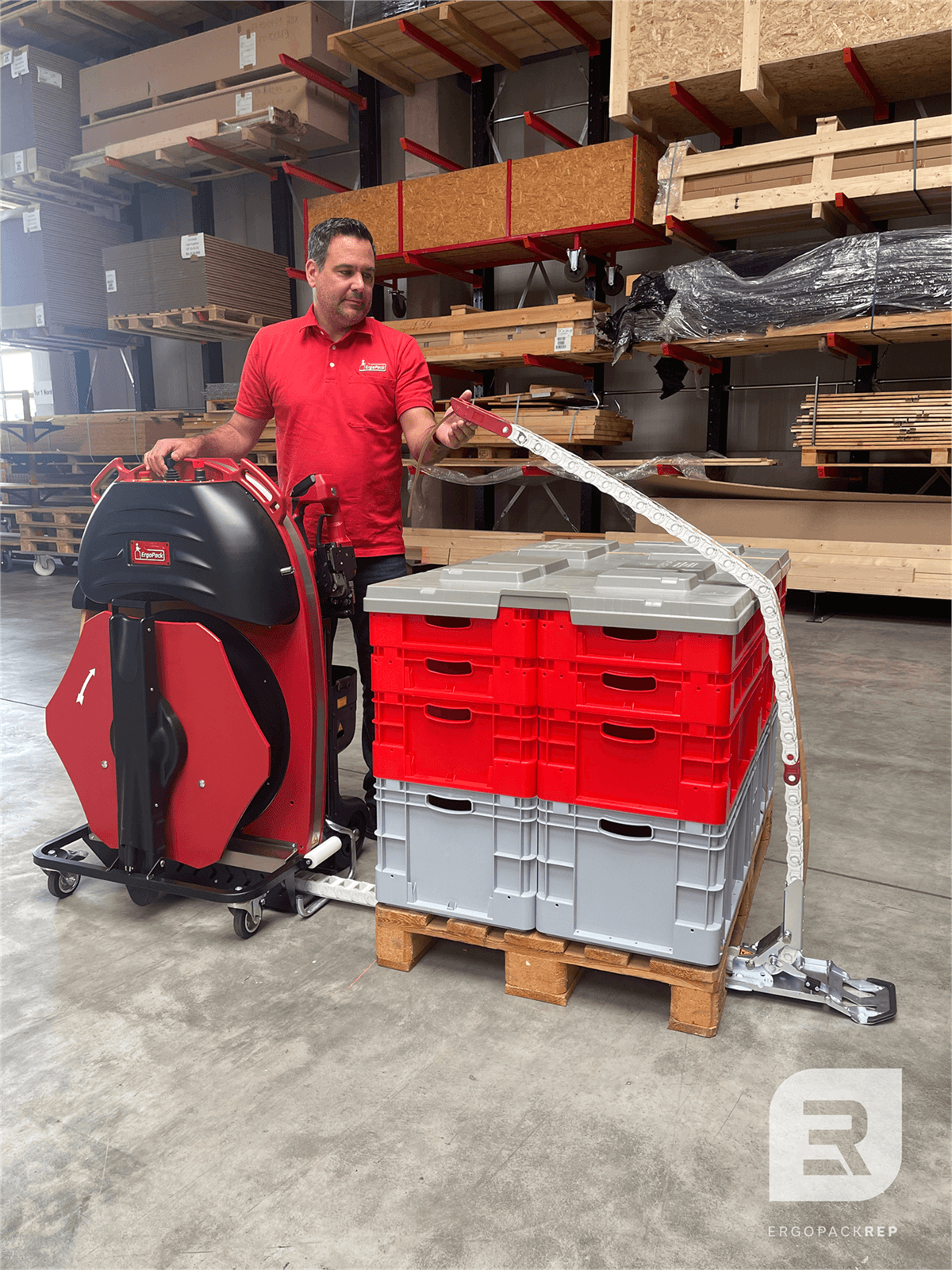
Most packaging "cost-cutting" attacks the wrong number. Teams negotiate a few rupees off a film roll while the real money leaks out of three places that never appear on the purchasing invoice: labour hours, material waste, and damaged shipments. Here is the framework that finds the actual savings — and where the biggest ones usually hide.
The four places packaging cost actually lives
Before cutting anything, see the full cost. Packaging cost is not just what you pay the supplier:
| Cost bucket | What it includes | Usually visible? |
|---|---|---|
| Material | Cartons, film, strap, seals | Yes — on the invoice |
| Labour | Time per pallet, operators per pallet | Partly |
| Damage | Rejected shipments, re-ships, claims | Rarely tracked |
| Space & inventory | Storage of bulk consumables | Rarely tracked |
Most teams optimise the first bucket and ignore the other three — which is exactly where the largest, repeatable savings sit.
Lever 1 — Cut labour per pallet (usually the biggest)
Labour is paid every shift, forever, so small per-pallet savings compound enormously.
- Manual strapping takes a two-person team ~120 seconds per pallet. Automated routing cuts that to under 40 seconds with one operator — a 66% cut, and one operator doing the work of three.
- That freed labour redeploys to picking, staging and QA without new headcount.
- See the full math in our pallet strapping ROI & cost comparison.
Lever 2 — Eliminate consumable waste
Consumables bleed money quietly:
- Stretch film over-use: hand wrapping cannot hold consistent tension, so operators over-wrap — using up to 50% more film than a calibrated process.
- Metal seals: crimped strapping clips are a recurring purchase by the thousand, and a failure point. Sealless friction welding fuses the strap to itself and removes that line from the budget entirely.
- Switching to strapping for load securing (with film only for dust/moisture) often cuts total consumable spend on medium-to-heavy loads.
Lever 3 — Right-size and audit the packaging
- Right-size cartons: oversized boxes waste board, waste filler, and raise dimensional-weight freight charges. Correct sizing is one of the fastest wins.
- Run a packaging audit: map every SKU's pack spec and find the over-specified ones. Lightening over-built packaging without losing protection is free margin.
Lever 4 — The hidden giant: reduce transit damage
This is the lever most cost programs never touch, because the cost shows up in a different department. A single rejected container or a batch of crushed cartons costs more than months of film savings — it triggers re-ship freight, replacement product, a claim, and a customer who now double-checks before re-ordering.
The root cause is almost always inconsistent load securing. Machine-calibrated tension up to 2,500N anchors every pallet to its base identically, removing the load shift that causes rejections. See how to reduce pallet transit damage.
Lever 5 — Consolidate suppliers and buy to plan
- A strong relationship with fewer suppliers unlocks bulk pricing and better terms.
- A just-in-time consumable model frees warehouse space and cash tied up in bulk stock — receive materials as needed instead of storing months of film and strap.
Lever 6 — Automate the labour-heavy steps
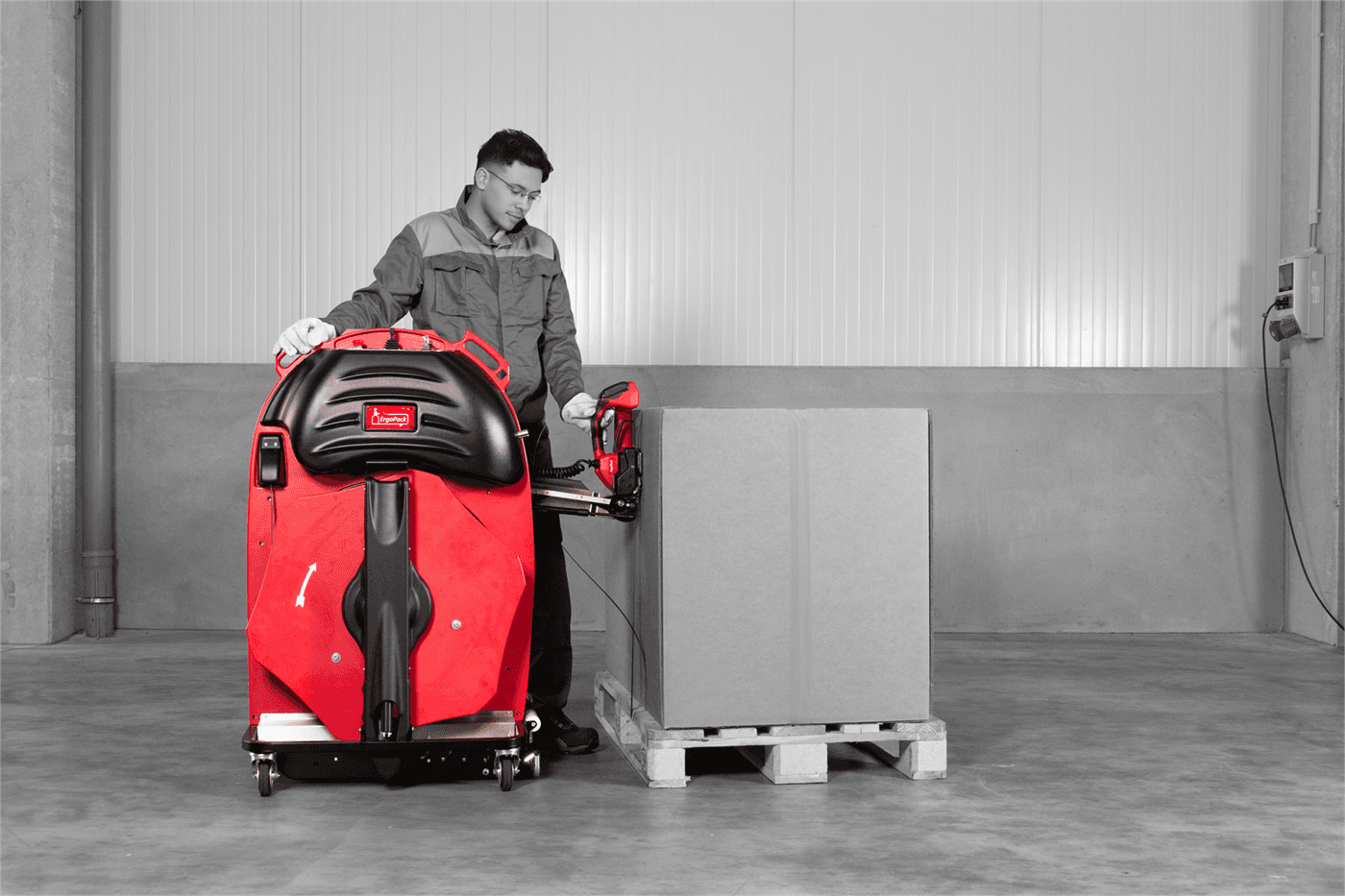
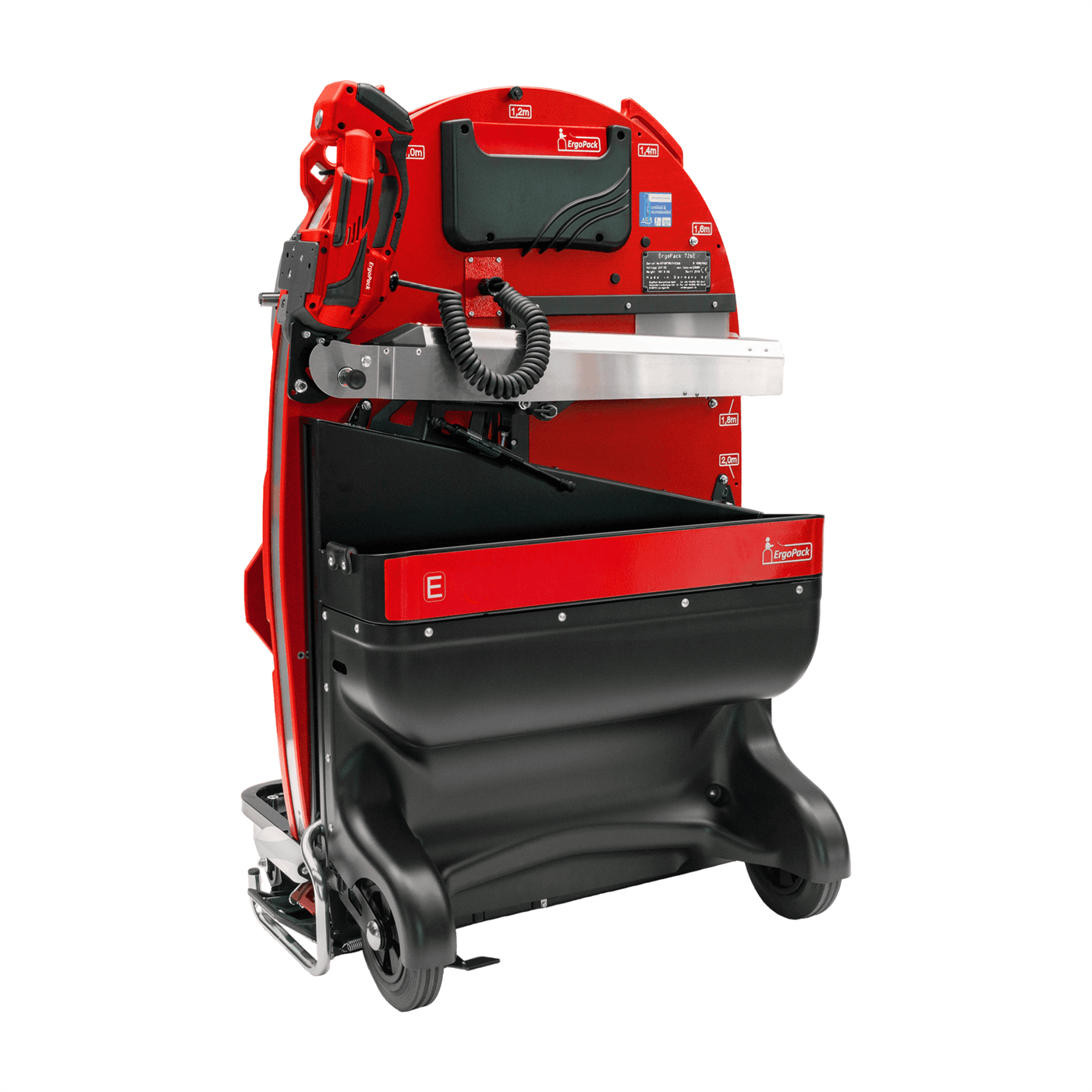
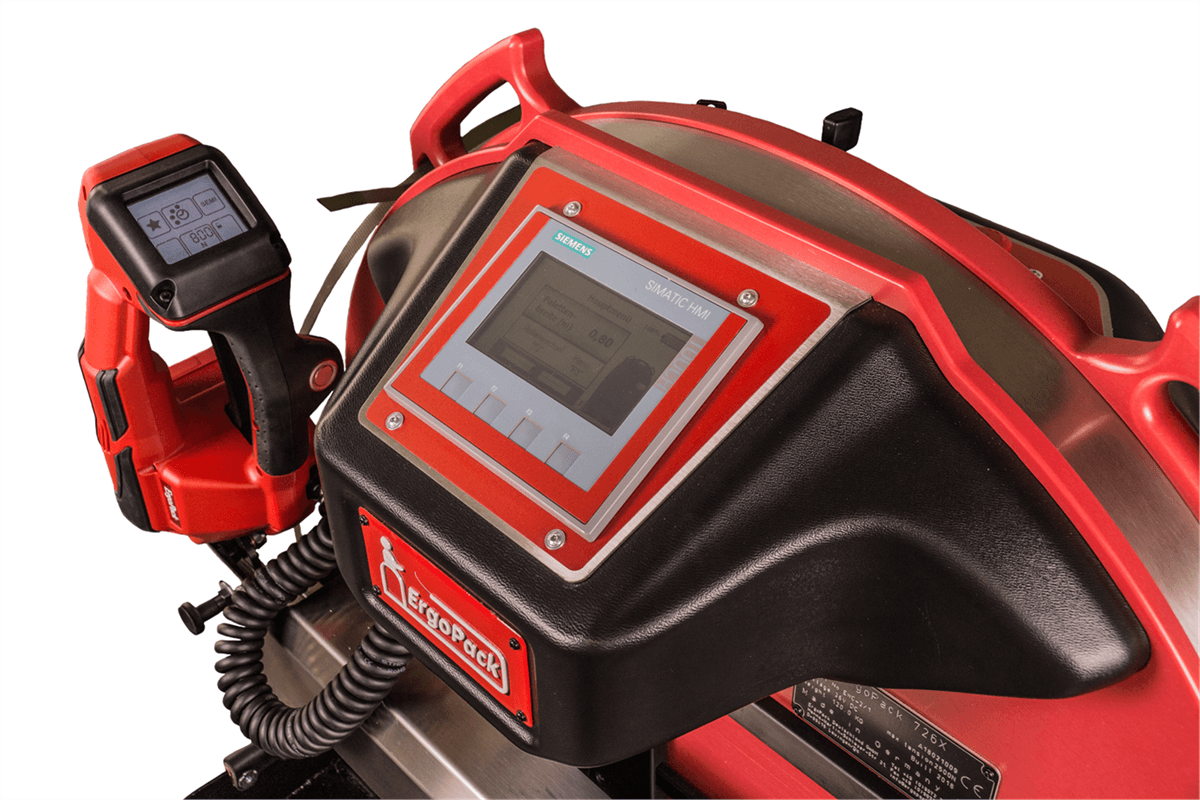
Manual assembly and manual strapping are where labour cost concentrates. Automating the most repetitive end-of-line step — getting the strap around the pallet — delivers the labour saving in Lever 1 while also fixing the consistency that drives Lever 4. Mobile systems such as the ErgoPack 726X, GO and manual-crank 700 automate that step without conveyors or floor rebuilds, so the saving does not come with a large capital project attached.
Lever 7 — Measure cost per pallet, not price per roll
The single most useful change is to stop measuring packaging by the price of a consumable and start measuring total cost per secured pallet: (material + labour + damage + space) ÷ pallets shipped. Optimised against that number, the decisions change — and the cheap machine or the cheap film often turns out to be the expensive choice.
Where to start
- Calculate your current cost per pallet across all four buckets.
- Time your manual strapping cycle — the labour lever is usually the biggest.
- Pull your transit-damage / rejection rate — the hidden giant.
- Model the change with the ROI calculator.
The factories that win on packaging cost are not the ones that negotiate hardest with the film supplier. They are the ones that cut labour per pallet, kill consumable waste, and stop paying for damage they could have prevented.
Talk to a pallet strapping engineer
BENZ Packaging and ErgoPack India engineers support installations and service anywhere in India. Tell us your pallet setup and we’ll recommend the right machine — and send pricing.
Related Reading
Continue with the next guide
insights
Improving OEE: Why the Dispatch Dock Is the Forgotten Factor
OEE programmes obsess over the production line and ignore the dispatch dock — yet a manual securing bottleneck there caps the throughput your OEE is meant to protect. Here’s the link.
insights
Pallet Strapping Machine for Small Business: Is It Worth It?
Small and mid-size Indian manufacturers and exporters often assume automation is only for big plants. For pallet securing, that’s usually wrong — here’s why a mobile machine fits a small business.
insights
How Many Pallets a Day Justify a Strapping Machine?
There’s a simple volume threshold above which a mobile strapping machine pays for itself. Here’s how to work out yours — and why it’s lower than most people expect.