insights
How to Reduce Labour Cost in Packaging & Dispatch (Without Cutting Output)
Practical ways to cut labour cost on the packaging and dispatch floor — automate the most repetitive task, redeploy people, and the real savings from removing manual strapping.
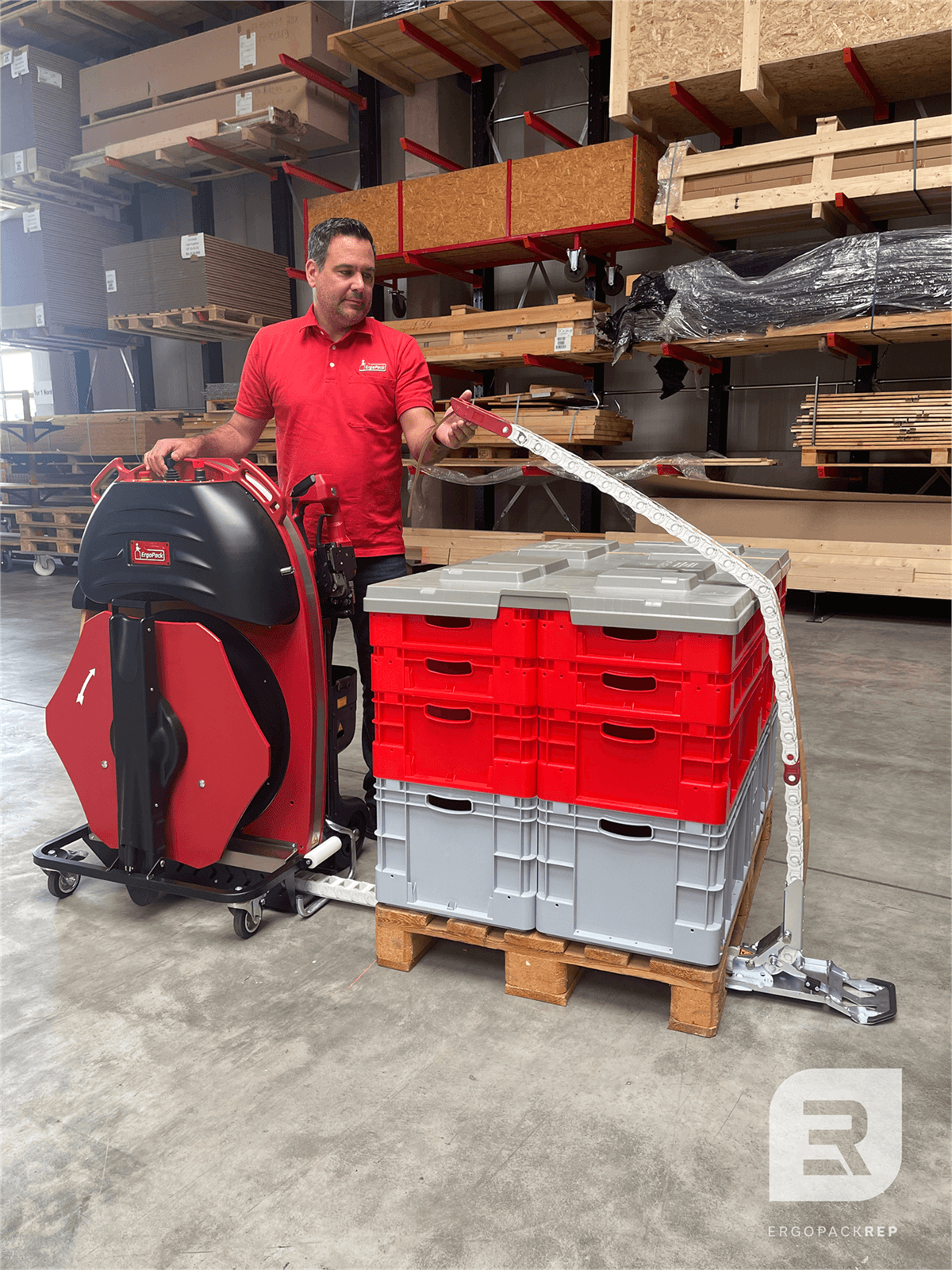
Labour is the largest controllable cost on most packaging and dispatch floors, and in India it is rising every year. But "cut labour cost" usually gets misread as "cut people and cut output." The smarter version is to remove the labour that produces no value — the repetitive manual handling — and redeploy those people to work that does. Here is how, with the numbers.
Where packaging labour actually goes
On a dispatch floor, paid hours concentrate in a few manual, repetitive tasks:
- Manual strapping — a two-person team, ~120 seconds per pallet, all shift.
- Manual stretch wrapping — walking the load, 5–10 minutes per pallet.
- Lifting and re-stacking — moving goods by hand.
These are pure labour costs that scale directly with volume and rise with every wage increase — and they are exactly the tasks a machine does better.
The principle: remove the no-value labour, keep the people working
You do not cut output by automating strapping — you free the people doing it to do something that adds value:
- Automate the most repetitive, highest-volume manual task first (usually strapping).
- Redeploy the freed workers to picking, staging, QA and loading — work that lifts throughput.
- You end up with more output from the same or fewer people, not less output from fewer people.
The real saving from automating strapping
Using our ROI calculator defaults — 1 line, 2 shifts, 50 pallets/shift, ₹30,000 monthly CTC:
- Manual strapping needs ~8 people; with a mobile machine, ~2.
- That removes the cost of
6 people: roughly ₹1.8 lakh/month, **₹21–22 lakh/year** in labour. - Add
₹12/pallet in strapping-material savings (₹3.6 lakh/year). - ~₹25 lakh a year, and crores over the machine's life — see the full case in rising labour costs & automation savings.
And because it cuts cycle time 66% (120s → under 40s), the same change also lifts dispatch throughput — you reduce cost and increase output at once.
The order to reduce packaging labour cost
- Measure where manual hours go (time the strapping and wrapping cycles).
- Automate the biggest, most repetitive task — strapping is usually it.
- Redeploy the freed labour, don't just remove headcount.
- Cut consumable waste alongside (sealless friction weld removes metal-seal cost; calibrated tension cuts film over-use) — see how to reduce packaging costs.
- Measure cost per pallet, not price per machine, so the decision is honest — see the ROI & cost comparison.
Why this is urgent now
Indian minimum wages rose again in April 2026 and labour is scarce. Every wage increase makes manual packaging more expensive and the automation saving larger. The operations that act now lock in the saving before the next hike.
Reduce-labour-cost checklist
- Manual hours measured by task
- Most repetitive task (strapping) automated first
- Freed labour redeployed to value-adding work
- Consumable waste cut alongside labour
- Decision made on cost per pallet, not machine price
- Savings modelled in the ROI calculator
You reduce packaging labour cost not by cutting output, but by removing the repetitive manual work and redeploying people — saving ~₹25 lakh a year on a typical floor. Model your numbers or request a quote.
Talk to a pallet strapping engineer
BENZ Packaging and ErgoPack India engineers support installations and service anywhere in India. Tell us your pallet setup and we’ll recommend the right machine — and send pricing.
Related Reading
Continue with the next guide
insights
Improving OEE: Why the Dispatch Dock Is the Forgotten Factor
OEE programmes obsess over the production line and ignore the dispatch dock — yet a manual securing bottleneck there caps the throughput your OEE is meant to protect. Here’s the link.
insights
Pallet Strapping Machine for Small Business: Is It Worth It?
Small and mid-size Indian manufacturers and exporters often assume automation is only for big plants. For pallet securing, that’s usually wrong — here’s why a mobile machine fits a small business.
insights
How Many Pallets a Day Justify a Strapping Machine?
There’s a simple volume threshold above which a mobile strapping machine pays for itself. Here’s how to work out yours — and why it’s lower than most people expect.