guides
Seafood & Marine Export Packaging: Cold Chain, Cartons and Secure Palletising
How frozen and chilled seafood is packaged for export — the cold chain, master cartons, moisture and ice management, hygiene standards, and securing reefer pallets that must not break the chain.
Seafood is one of India's largest food exports and one of the least forgiving to ship. It is highly perishable, temperature-critical, moisture-heavy and tightly regulated — a single break in the cold chain can spoil a container and fail a food-safety audit. Packaging and securing marine products correctly is what keeps the catch saleable from the processing plant to the overseas buyer. Here is how it is done.
What makes seafood export demanding
- Highly perishable and temperature-critical — frozen seafood must stay frozen; any excursion risks spoilage and rejection.
- Moisture and ice — water, ice glaze and condensation are everywhere, weakening cartons and creating slip and contamination risk.
- Strict food-safety regulation — HACCP, the buyer's standards and destination authorities demand documented hygiene and traceability.
- High value — a container of prawns or fillets is a significant loss if it fails.
The cold chain comes first
Everything serves the temperature:
- Blast-freeze and maintain the product; pack at temperature.
- Reefer (refrigerated container) shipping with correct set-point and pre-cooling; manage airflow and the door-end so cold reaches every pallet.
- Insulated and moisture-resistant inner packaging as required.
- Temperature monitoring and documentation through the chain.
Cartons and inner packaging
- Waxed/coated or moisture-resistant master cartons that survive frozen-store humidity and ice.
- Inner packs (vacuum packs, glazed blocks, IQF bags) per the product and buyer.
- Cartons rated for stacking when cold and damp — frozen-store humidity softens plain corrugated.
Palletise and secure for the reefer
A seafood pallet's configuration must hold so the cold chain and hygiene stay intact:
- Plastic/hygienic pallets where possible — washable, moisture-proof, outside ISPM-15 (standard pallet sizes).
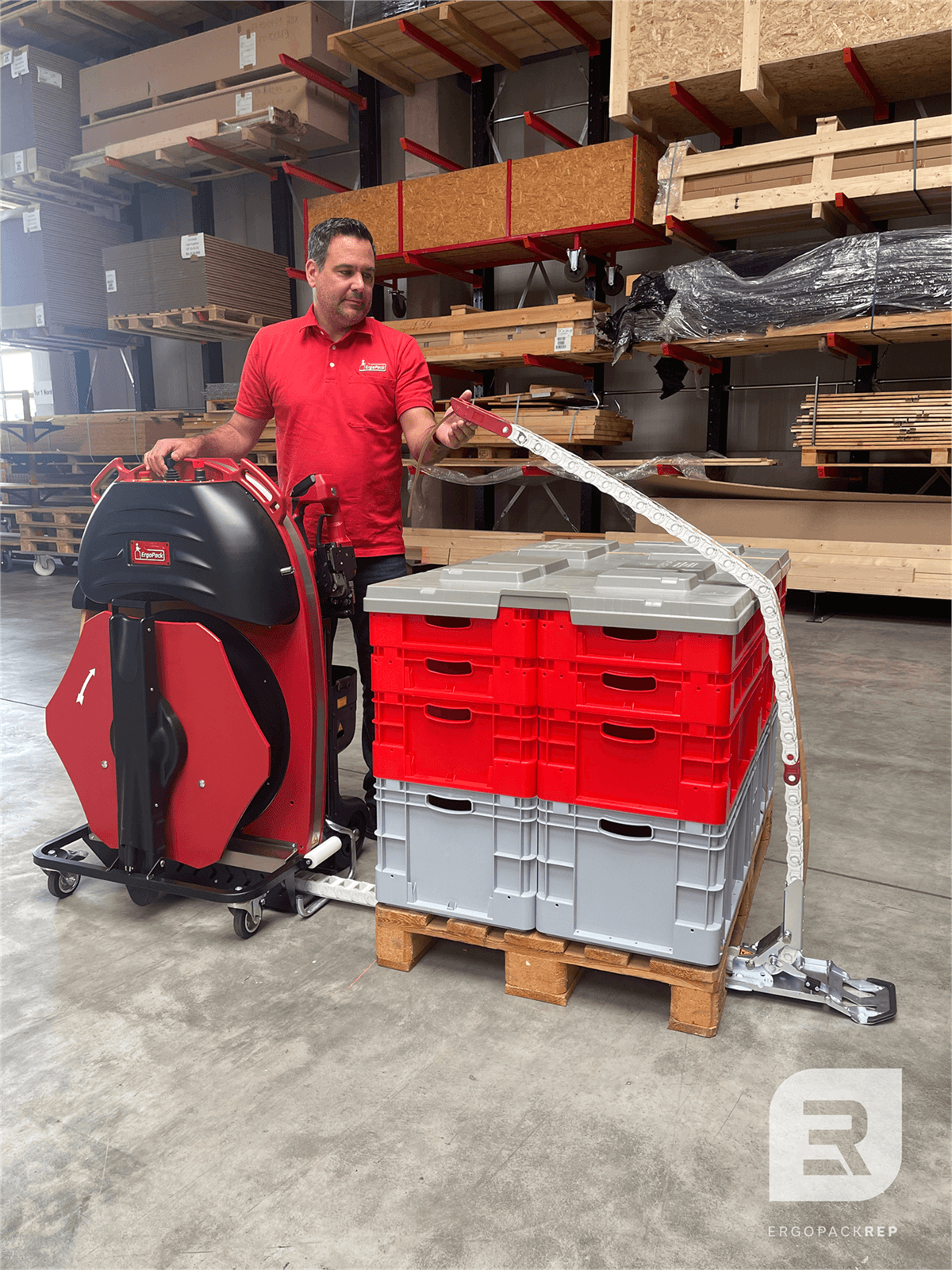
- Strap the load to the pallet so the configuration cannot shift, slump or block reefer airflow — a parallel to frozen & cold-chain food packaging.
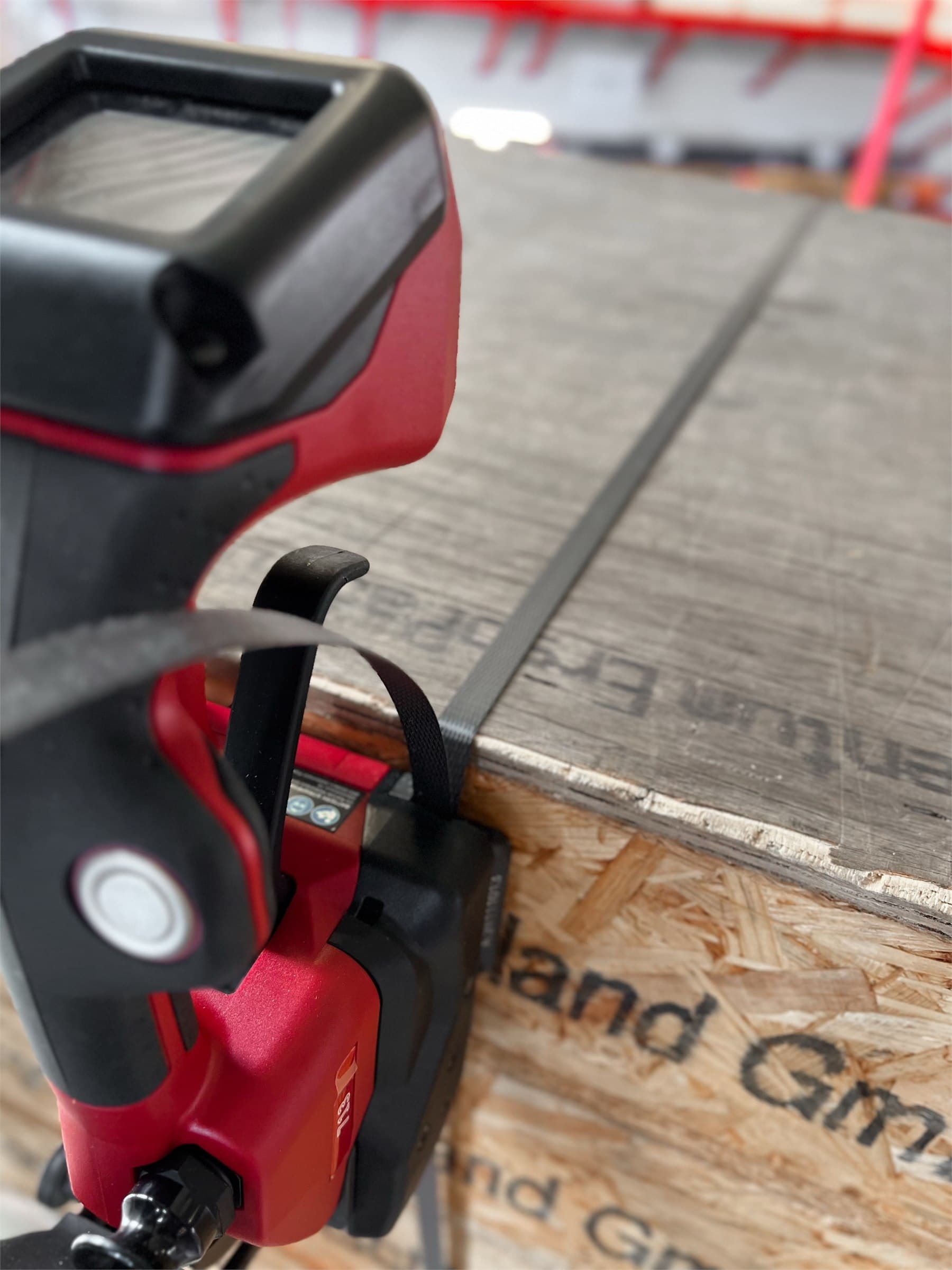
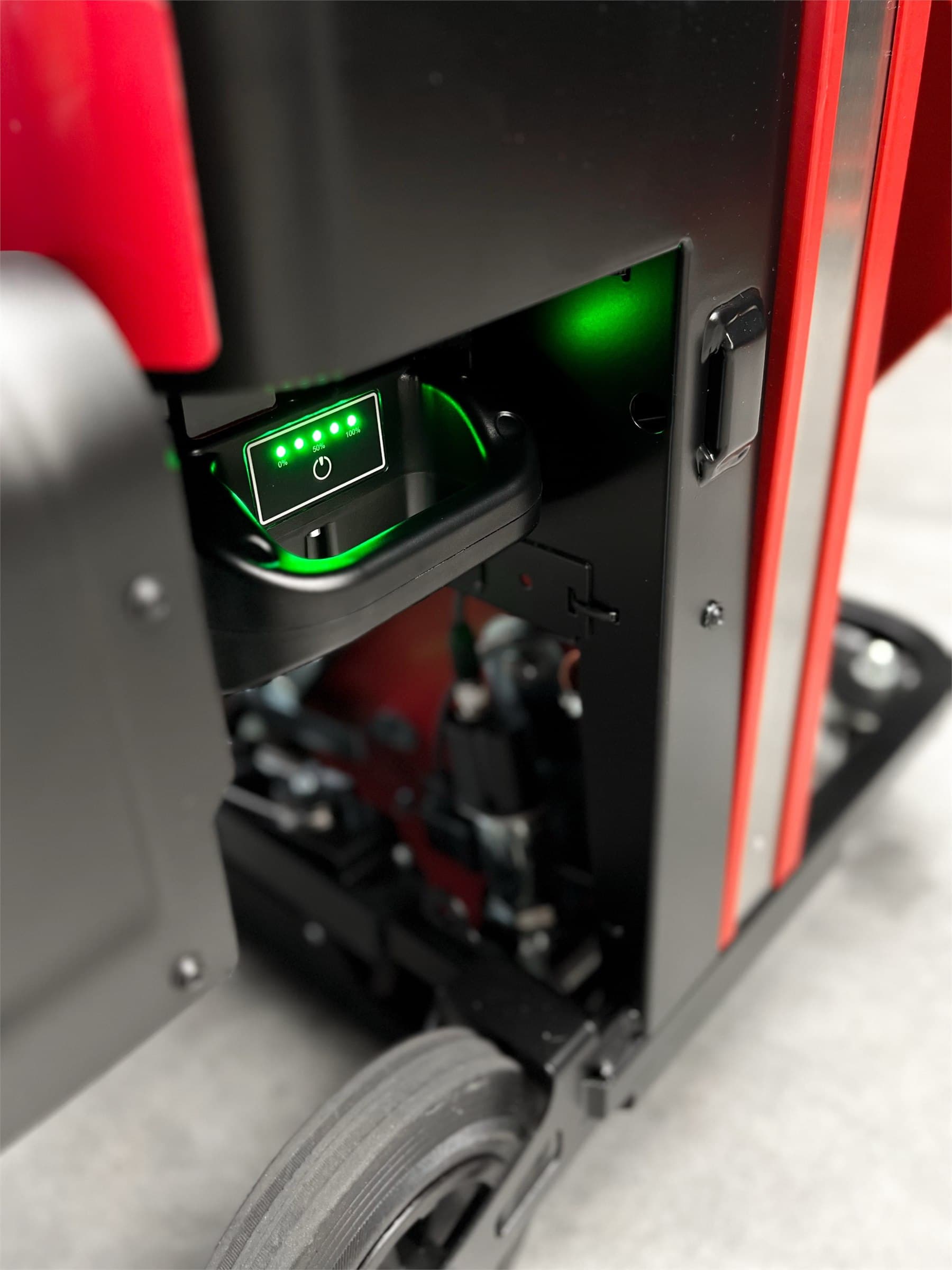
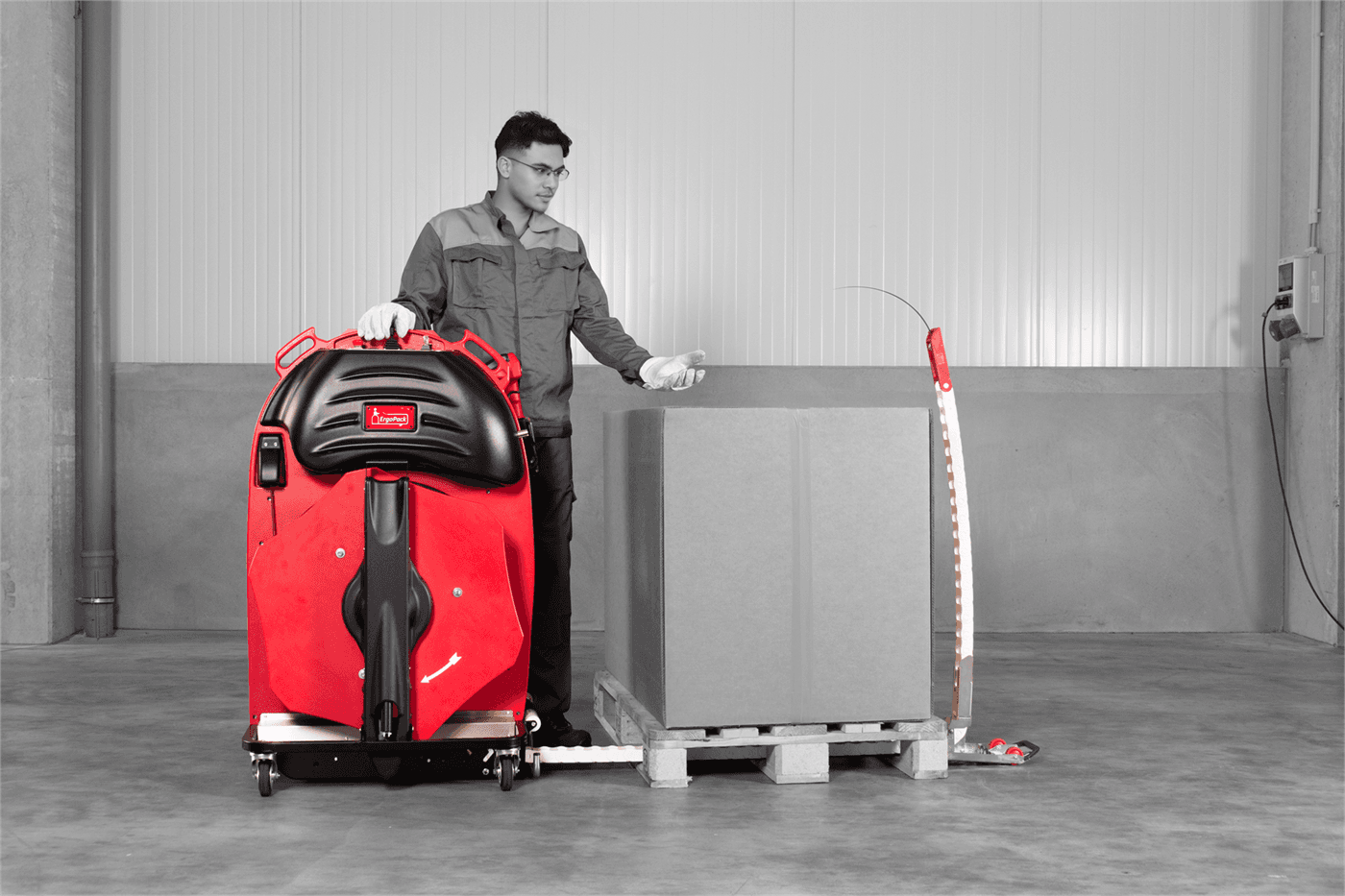
- Use PET strap (moisture-proof, no rust or contamination, recovers tension as cold cartons settle) with a sealless friction weld (no metal clips near food). Apply gentle, consistent tension on cold-weakened cartons with edge protectors. A calibrated machine such as the ErgoPack 726X, GO or 700 applies repeatable tension and supports low-contact, hygienic handling.
Comply and document
- HACCP and buyer hygiene standards; clean, low-contact handling.
- Health certificates, traceability and export documentation.
- Manage condensation on any non-reefer leg (container rain).
Seafood export checklist
- Product frozen/chilled and packed at temperature
- Reefer set correctly, pre-cooled, airflow managed
- Moisture-resistant master cartons; correct inner packs
- Plastic/hygienic pallets; stable airflow-friendly config
- Load strapped to the pallet; PET + sealless friction weld
- Gentle consistent tension; edge protectors; low-contact
- HACCP, certificates, traceability, monitoring documented
Package and secure seafood to this standard — cold chain intact, hygienic materials, configuration locked with moisture-proof PET — and the catch reaches the overseas buyer frozen, safe and saleable.
Talk to a pallet strapping engineer
BENZ Packaging and ErgoPack India engineers support installations and service anywhere in India. Tell us your pallet setup and we’ll recommend the right machine — and send pricing.
Related Reading
Continue with the next guide
guides
PP vs PET Strapping: Which Should You Use, and When?
PP and PET strap suit very different loads. A clear guide to when polypropylene is enough and when polyester is essential — by load weight, settling, and export exposure.
guides
Strapping Machine AMC, Spares and Uptime: What to Check Before You Buy
A strapping machine is only as good as its uptime. What to check on service, spare parts and AMC before you buy — so the machine that saves you ₹25 lakh a year actually keeps running.
guides
Pallet Strapping Machine Buying Checklist: 10 Questions Before You Decide
Before you buy a pallet strapping machine, run through these ten questions. They cover loads, volume, power, tension, service and ROI — so you choose the right machine, not just the cheapest.