guides
Frozen & Cold-Chain Food Packaging: Palletising and Securing for the Cold Chain
How frozen and chilled food is palletised and secured for the cold chain — insulation, condensation and frost, hygienic materials, and securing loads that must not break the temperature configuration.
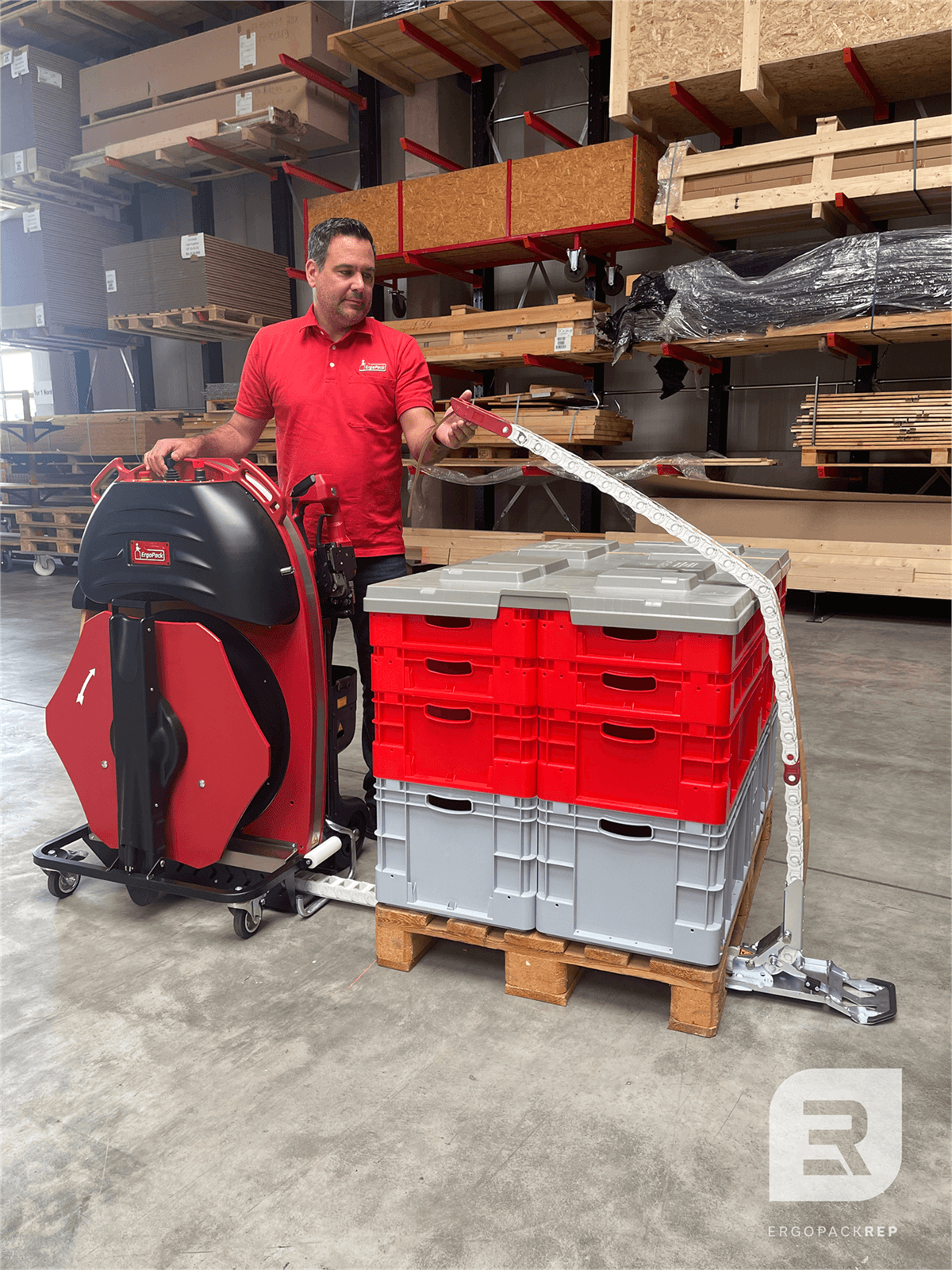
Frozen and chilled food adds a hard constraint to every packaging decision: temperature. A pallet that shifts, a strap that fails, or a configuration that breaks open does not just damage product — it risks a temperature excursion that makes the whole load unsaleable or unsafe. India's growing frozen-food and seafood export trade runs on getting this right. Here is how cold-chain loads are palletised and secured.
What makes cold-chain packaging different
- Temperature is the product — the cold chain must hold from production to delivery, and packaging is part of the thermal system.
- Condensation and frost — moisture forms as cold loads meet warmer air, weakening cartons and creating slip and contamination risk.
- Hygiene — food contact and regulatory standards demand clean, washable, non-contaminating materials.
- Cartons weaken when cold and damp — frozen-store humidity softens corrugated, so loads slump if not secured.
Palletise for the cold chain
- Use plastic pallets where possible — hygienic, washable, moisture-proof, and outside ISPM-15 (standard pallet sizes).
- Build validated, stable configurations that maintain airflow/temperature across the pallet.
- Layer pads and edge protection to keep cold-weakened cartons square.
- Keep the load square and even so air circulates and the stack stays stable.
Secure without breaking the cold chain
A frozen pallet's configuration must stay intact — a shifted or slumped load can break the thermal arrangement and cause an excursion:
- Strap the load to the pallet so the configuration holds through handling and transport — vertical strapping that anchors the stack.
- Use PET strap, which is moisture-proof, won't rust or contaminate, and recovers tension as cartons settle and as temperature changes flex the load. Steel rusts and is a contamination risk. (See PP vs PET vs steel strapping.)
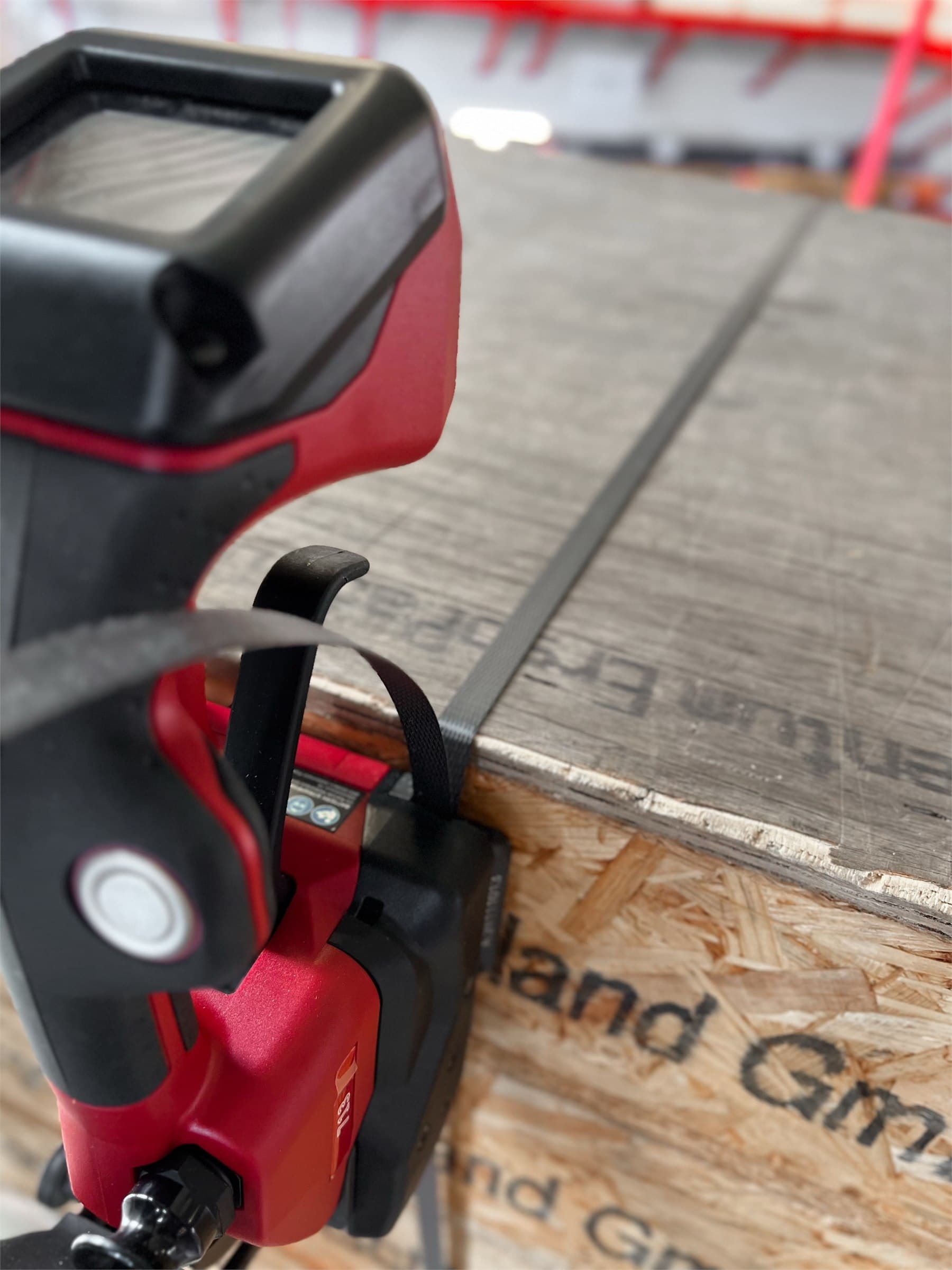
- Apply consistent, controlled tension — firm enough to hold cold-weakened cartons, not so much it crushes them; use edge protectors. A calibrated machine such as the ErgoPack 726X applies repeatable tension and a sealless friction weld (no metal clips to rust or shed); the GO and 700 automate routing.
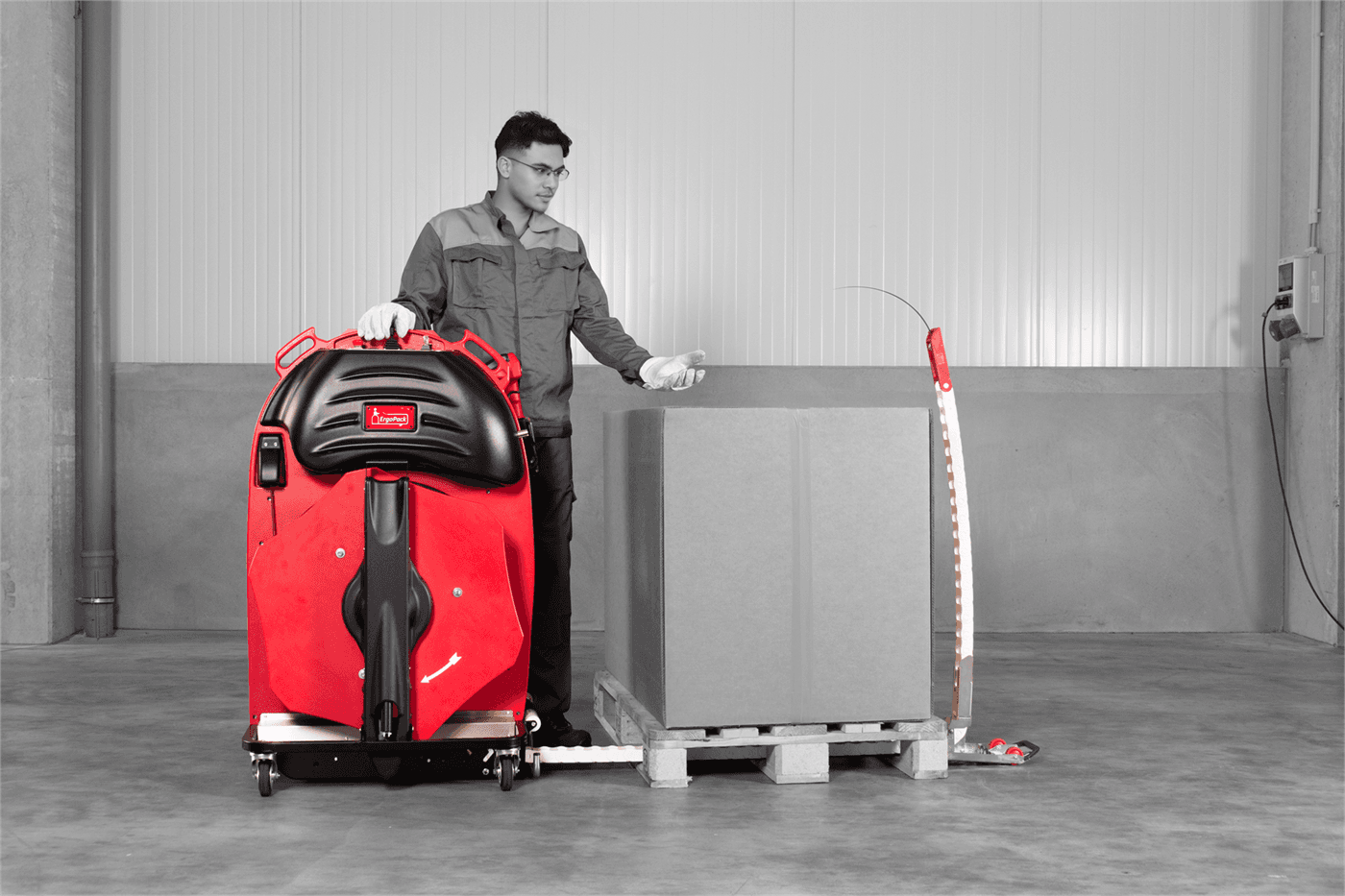
- Low-contact securing — automated strap routing means fewer hands on a controlled, hygienic load, supporting food-safety practice (see pharmaceutical packaging & GDP for the parallel).
Manage moisture and monitoring
- Condensation/frost control, moisture barriers, and dry pallets/dunnage in.
- Temperature monitoring and documentation through the chain.
- Reefer container settings and pre-cooling as required; manage the door-end and airflow.
Cold-chain food checklist
- Plastic/hygienic pallets where possible
- Validated, stable, airflow-friendly configuration
- Layer pads + edge protection for cold-weakened cartons
- Load strapped to the pallet so the configuration holds
- PET strap (moisture-proof, recovers tension) at consistent tension
- Sealless friction weld — no metal clips
- Low-contact securing; condensation and monitoring managed
Palletise and secure cold-chain food to this standard — hygienic materials, a stable configuration, and PET strapping that holds through temperature swings — and the cold chain stays intact from plant to plate.
Talk to a pallet strapping engineer
BENZ Packaging and ErgoPack India engineers support installations and service anywhere in India. Tell us your pallet setup and we’ll recommend the right machine — and send pricing.
Related Reading
Continue with the next guide
guides
PP vs PET Strapping: Which Should You Use, and When?
PP and PET strap suit very different loads. A clear guide to when polypropylene is enough and when polyester is essential — by load weight, settling, and export exposure.
guides
Strapping Machine AMC, Spares and Uptime: What to Check Before You Buy
A strapping machine is only as good as its uptime. What to check on service, spare parts and AMC before you buy — so the machine that saves you ₹25 lakh a year actually keeps running.
guides
Pallet Strapping Machine Buying Checklist: 10 Questions Before You Decide
Before you buy a pallet strapping machine, run through these ten questions. They cover loads, volume, power, tension, service and ROI — so you choose the right machine, not just the cheapest.