guides
How to Reduce Dispatch Time at the Warehouse Dock
Dispatch time decides how fast a warehouse turns inventory into shipped orders. A practical guide to finding and fixing the dock bottleneck — usually the manual securing step.
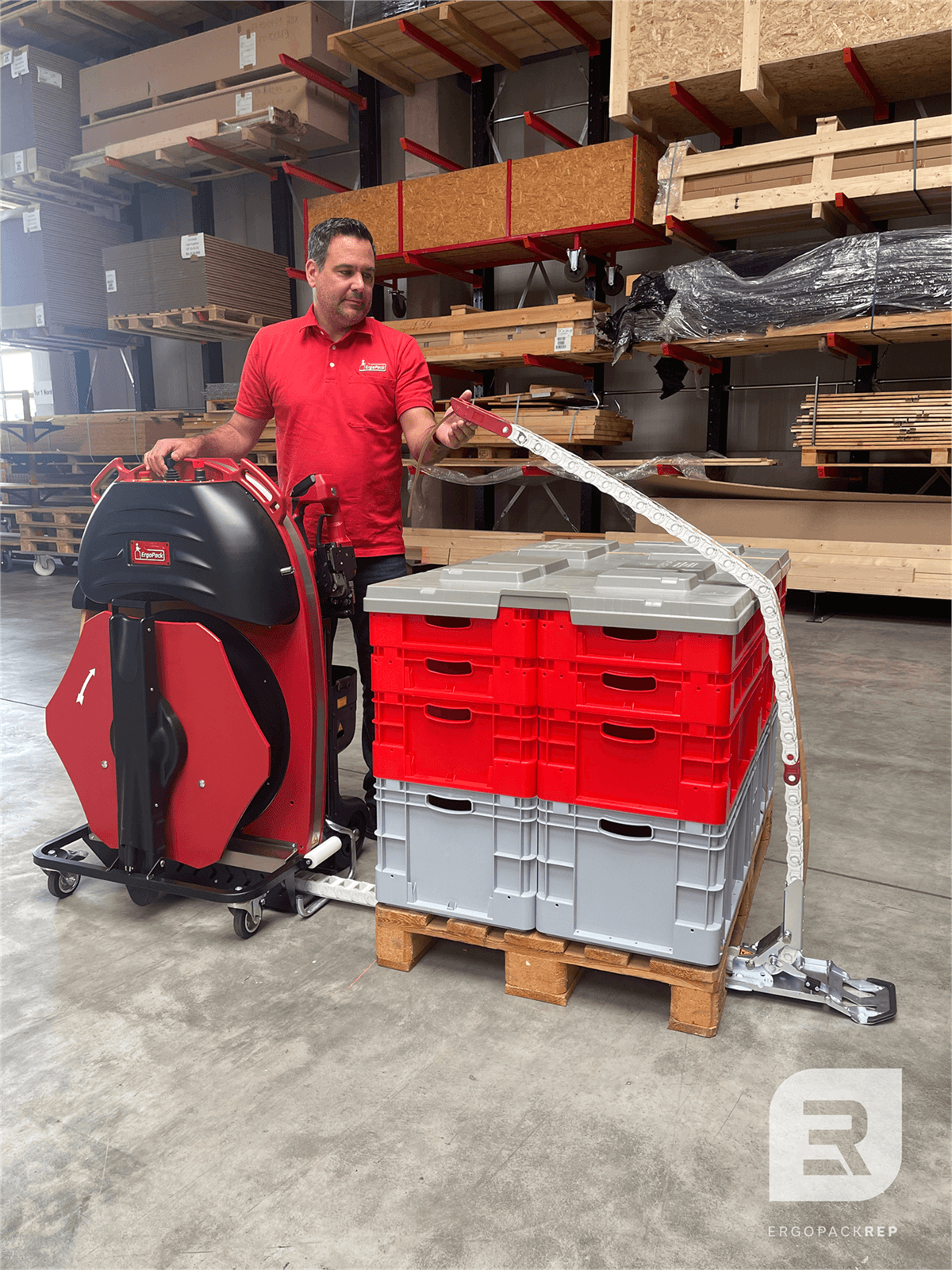
Dispatch time — how long a pallet takes from "ready" to "on the truck" — quietly caps a warehouse's output. When it's slow, trucks wait, orders slip and labour piles up at the dock. Here is how to find and cut dispatch time, starting with the step that's usually the real bottleneck.
Why dispatch time matters
Dispatch is the last gate before revenue ships. A slow dock means:
- Trucks waiting — detention charges and missed slots.
- Orders delayed — service-level penalties, unhappy buyers.
- Labour stacking up — people queuing behind the slow step.
- A throughput cap — you can't ship faster than the dock clears (increase factory throughput).
Find the dock bottleneck
Time each dock step for a typical pallet — picking-to-stage, wrapping, securing/strapping, labelling, loading. The bottleneck is the longest, most labour-heavy step. On most docks that is manual strapping: two people threading and tensioning strap by hand at ~120 seconds per pallet (manual vs automatic).
The biggest single cut: automate securing
Moving the securing step from manual to mobile automatic typically cuts it from ~120 seconds to under 40 — and from two operators to one. That's the largest single reduction in dispatch time available on most docks, and it frees people to keep the rest of the dock flowing (end-of-line automation).
A wheeled machine like the ErgoPack GO needs no conveyors or rebuild — it's brought to the pallet at any dock, so the cut is immediate and low-disruption.
Other dispatch-time levers
- Stage in sequence — pallets ready in load order, no re-handling.
- Right-size the strap pattern — calibrated tension, no re-doing loose loads.
- Cut rejections at source — a load that fails inspection goes back through the whole dock (reduce transit damage).
- Parallelise — don't let one slow step starve the rest.
How to reduce dispatch time — the method
- Time every dock step for a typical pallet.
- Find the bottleneck — usually manual securing.
- Automate that step — mobile, contained, low-disruption.
- Re-sequence staging to remove re-handling.
- Measure dispatch time again, then attack the next slowest step.
- Model the labour and throughput gain — ROI calculator.
Dispatch-time checklist
- Every dock step timed
- Bottleneck identified (often manual strapping)
- Securing step automated (~120s → <40s)
- Staging re-sequenced to cut re-handling
- Rejections cut at source
- Gain modelled in ROI calculator
Reduce dispatch time by attacking the dock bottleneck — almost always the manual securing step. Automating it cuts the longest step by two-thirds and frees the people who keep the dock flowing. Model the gain or request a quote.
Talk to a pallet strapping engineer
BENZ Packaging and ErgoPack India engineers support installations and service anywhere in India. Tell us your pallet setup and we’ll recommend the right machine — and send pricing.
Related Reading
Continue with the next guide
guides
PP vs PET Strapping: Which Should You Use, and When?
PP and PET strap suit very different loads. A clear guide to when polypropylene is enough and when polyester is essential — by load weight, settling, and export exposure.
guides
Strapping Machine AMC, Spares and Uptime: What to Check Before You Buy
A strapping machine is only as good as its uptime. What to check on service, spare parts and AMC before you buy — so the machine that saves you ₹25 lakh a year actually keeps running.
guides
Pallet Strapping Machine Buying Checklist: 10 Questions Before You Decide
Before you buy a pallet strapping machine, run through these ten questions. They cover loads, volume, power, tension, service and ROI — so you choose the right machine, not just the cheapest.