guides
Horizontal vs Vertical Strapping Machines: What’s the Difference and Which to Use
Horizontal and vertical strapping machines apply the strap in different planes for different jobs. The difference, what each secures, and how mobile vertical strapping fits pallet dispatch.
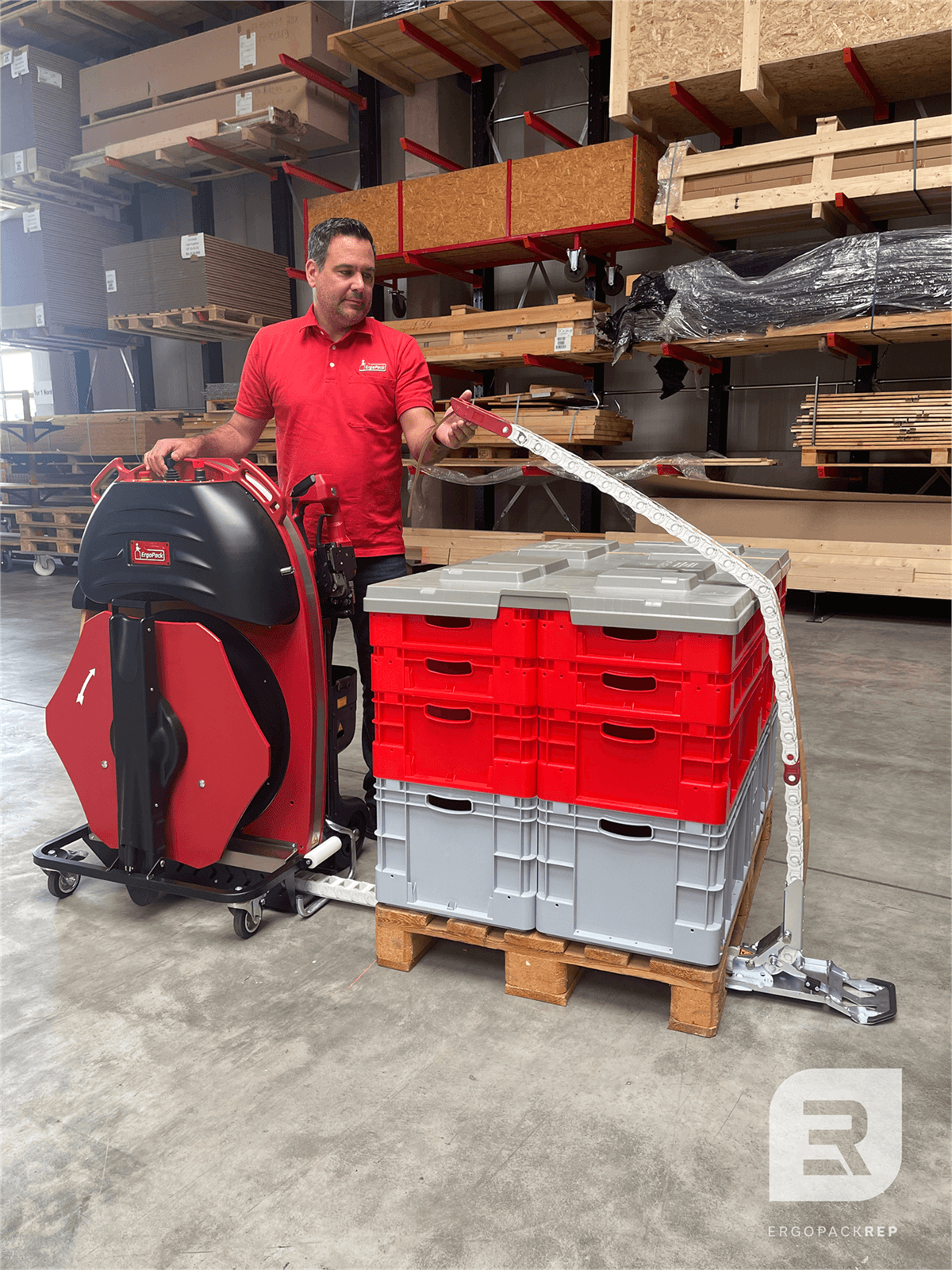
Strapping machines are often split into "horizontal" and "vertical" types — and buyers pick the wrong one because the names describe the strap direction, not the application. Here is what each actually does and which your load needs.
The difference: which way the strap goes
The terms describe the plane in which the strap is applied:
- Horizontal strapping wraps the strap around the sides of a product — a band running around the girth, like a belt. It bundles items together side to side.
- Vertical strapping passes the strap under the base and over the top — a band running top-to-bottom. It anchors a load down onto whatever it sits on.
That single difference decides what each is for.
What each is for
| Horizontal strapping | Vertical strapping | |
|---|---|---|
| Strap plane | Around the sides (girth) | Under base, over top |
| Main job | Bundle items together | Anchor load to the pallet |
| Typical use | Bundling pipes, profiles, boards, cartons | Securing a palletised load |
| For pallets | Holds the stack's sides | Ties the stack to the pallet base |
Why pallet dispatch needs vertical strapping
For securing a pallet, vertical strapping is the one that matters. A horizontal band around the sides of a stack holds the boxes to each other but does not stop the whole stack sliding off the pallet — the same limitation stretch wrap has. Vertical strapping passes under the pallet deck and over the load, locking the cargo to the pallet as a single rigid unit. That is what resists the load shift that causes transit damage. (See reduce pallet transit damage.)
Many operations use both: vertical straps to anchor to the pallet, and horizontal straps to bundle a tall or loose stack — but if you only do one for a pallet, it is vertical.
Fixed vertical arch vs mobile vertical strapping
Vertical strapping machines come as fixed inline arches (the load passes through on a conveyor) — and as mobile machines. The mobile ChainLance performs vertical strapping by routing the strap under the pallet and back to the operator, at any dock, without conveyors or floor-bolting. You get the secure vertical band without trapping every pallet at one fixed station. (See mobile vs stationary pallet strapping.)
Mobile systems such as the ErgoPack 726X, GO and 700 apply vertical strapping to pallets up to 2.4 m wide, with calibrated tension on the 726X up to 2,500N. For the full category map, see types of pallet strapping machines.
Quick reference
- Bundling items side to side → horizontal strapping
- Securing a load to a pallet → vertical strapping
- Pallet dispatch → vertical is the essential one (horizontal optional)
- Want vertical strapping without a fixed arch → mobile ChainLance
- Heavy/export loads → calibrated tension + PET strap
Match the strap direction to the job: horizontal to bundle, vertical to anchor — and for pallets, anchor first.
Talk to a pallet strapping engineer
BENZ Packaging and ErgoPack India engineers support installations and service anywhere in India. Tell us your pallet setup and we’ll recommend the right machine — and send pricing.
Related Reading
Continue with the next guide
guides
PP vs PET Strapping: Which Should You Use, and When?
PP and PET strap suit very different loads. A clear guide to when polypropylene is enough and when polyester is essential — by load weight, settling, and export exposure.
guides
Strapping Machine AMC, Spares and Uptime: What to Check Before You Buy
A strapping machine is only as good as its uptime. What to check on service, spare parts and AMC before you buy — so the machine that saves you ₹25 lakh a year actually keeps running.
guides
Pallet Strapping Machine Buying Checklist: 10 Questions Before You Decide
Before you buy a pallet strapping machine, run through these ten questions. They cover loads, volume, power, tension, service and ROI — so you choose the right machine, not just the cheapest.