guides
Types of Pallets Explained: Stringer vs Block, Materials, and Which to Choose
A complete guide to pallet types — stringer vs block, 2-way vs 4-way entry, wood, plastic, metal and pressed — what each is for, and how to pick the right one for your load and equipment.
"Pallet" is one word for a lot of very different structures. Pick the wrong type and you get forklift entry problems, weak loads, failed exports or wasted money. This is the full breakdown of pallet types and how to choose.
The two structural types: stringer vs block
The biggest distinction is how the pallet is built underneath:
- Stringer pallets use parallel boards ("stringers") between the top and bottom decks. A basic stringer pallet allows 2-way forklift entry (notched stringers can allow partial 4-way). Cheaper, common.
- Block pallets use solid blocks at the corners and midpoints, giving full 4-way entry — a forklift or pallet jack can enter from any side. Stronger and easier to handle; the basis of many standard and export pallets.
Pallet vs skid: a pallet has a top and a bottom deck; a skid has only a top deck (no bottom boards). Skids are simpler but less stable for stacking.
Entry types
- 2-way entry: forklift enters from two opposite sides only.
- 4-way entry: access from all four sides — faster handling, fewer repositioning moves on a busy dock.
For high-throughput dispatch, 4-way block pallets reduce handling time.
Pallet materials
| Material | Strengths | Watch-outs |
|---|---|---|
| Wood | Strong, cheap, repairable | ~3–5 yr life; ISPM-15 needed for export; absorbs moisture |
| Plastic | Hygienic, moisture-proof, ~10–15 yr | Higher upfront cost |
| Metal | Highest load capacity, very durable | Heavy, expensive |
| Pressed / moulded wood | Light, nestable, export-friendly | Lower load rating |
For the wood-vs-plastic decision and Indian sizes, see standard pallet sizes in India.
Reversible vs non-reversible, wing vs flush
- Reversible pallets have identical top and bottom decks — usable either way up.
- Non-reversible have a distinct top deck (often for delicate loads).
- Wing pallets have top/bottom decks overhanging the stringers (for strapping or bar handling); flush pallets do not.
How to choose the right pallet
- Handling: need 4-way access on a busy dock? Choose a block pallet.
- Load weight: match the pallet's rated capacity to your heaviest load.
- Export: wood needs ISPM-15; plastic avoids it entirely.
- Reuse / hygiene: plastic for many trips, washdown, pharma and food.
- Your machine's range: make sure your strapping/handling equipment fits the pallet's height and width.
Don't forget what holds the load on the pallet
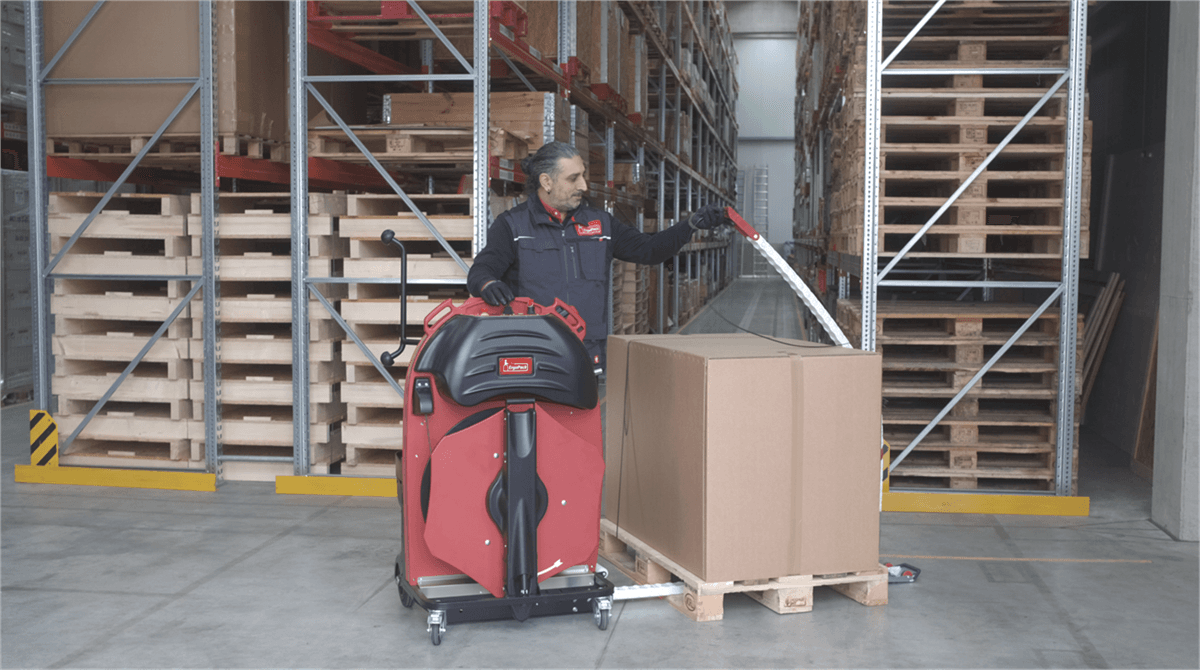
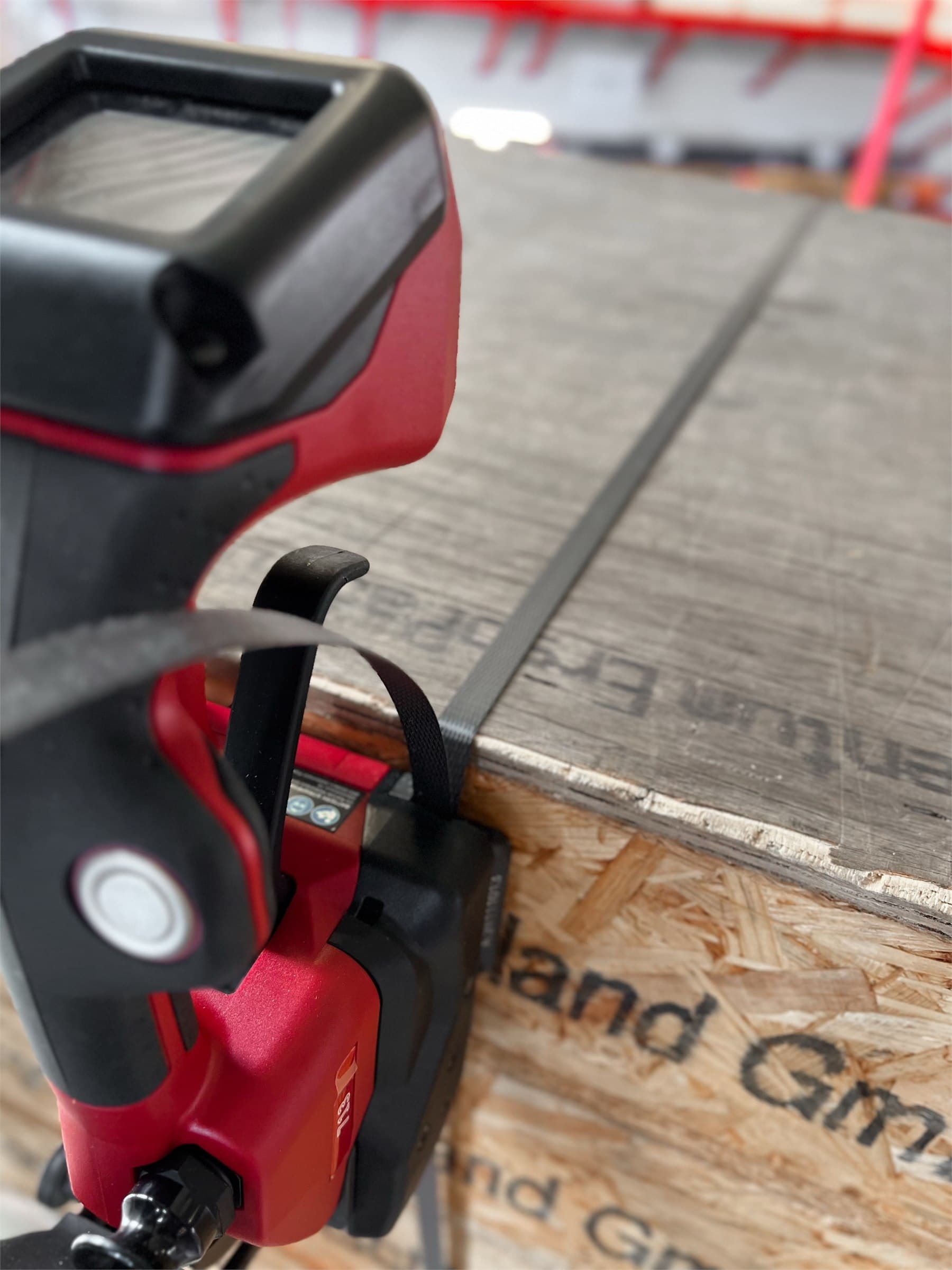
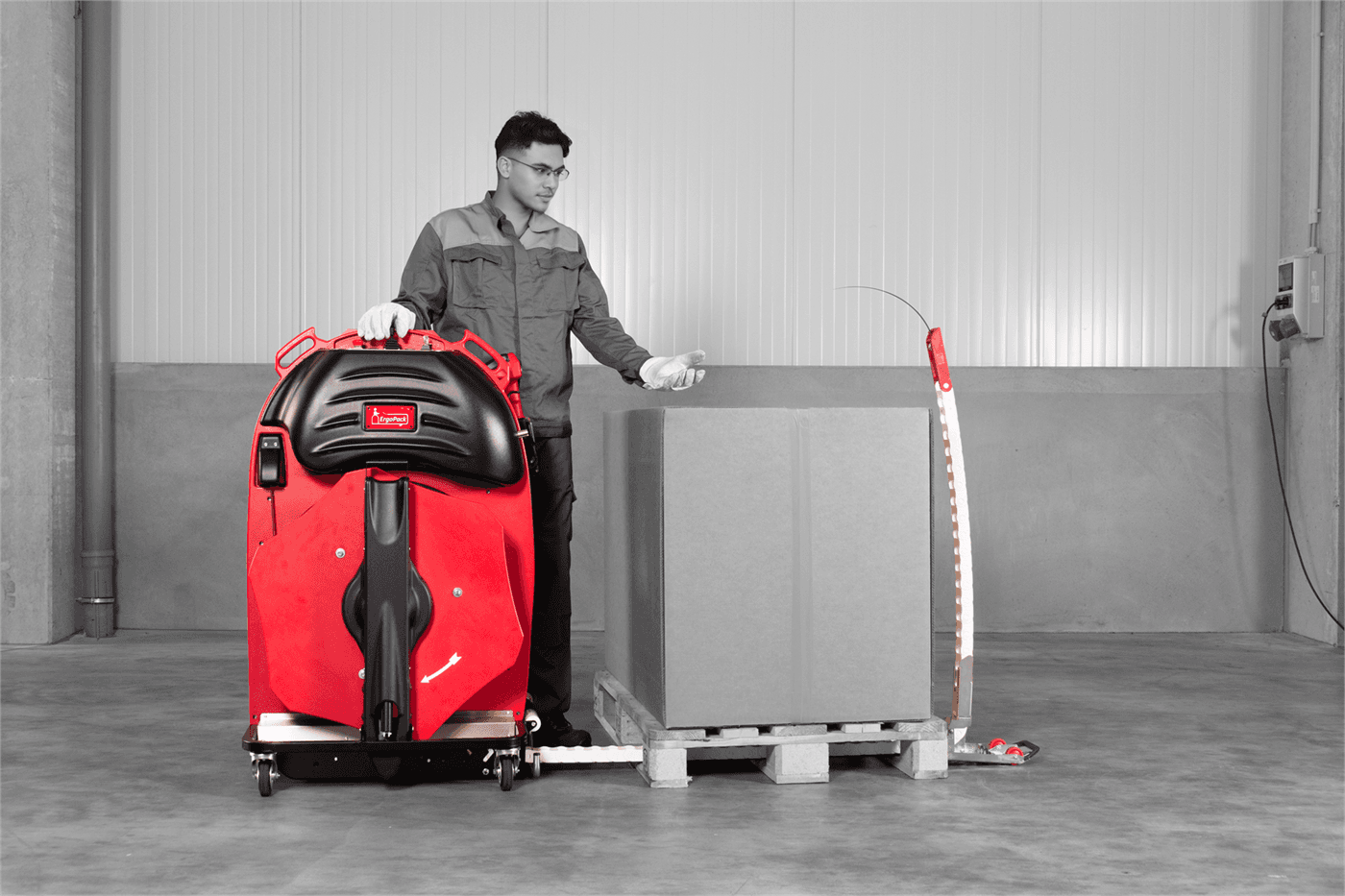
Choosing the right pallet is half the job — the load still has to be secured to it. Whatever pallet type you run, the load should be strapped to the deck at consistent tension so it travels as one unit. Mobile machines such as the ErgoPack 726X, GO and 700 handle the full range of pallet widths (40–270 cm) on the same floor. See how to pack a pallet for shipping.
Pallet type quick reference
- Stringer = cheaper, usually 2-way; block = stronger, 4-way
- Pallet has two decks; a skid has one
- Match material to route: ISPM-15 wood or plastic for export
- 4-way block pallets speed up busy-dock handling
- Confirm your equipment fits the pallet size range
- Whatever the type — strap the load to the deck
Pick the structure, entry, and material for your load and your dock, and make sure your equipment — and your strapping — handles the whole range.
Talk to a pallet strapping engineer
BENZ Packaging and ErgoPack India engineers support installations and service anywhere in India. Tell us your pallet setup and we’ll recommend the right machine — and send pricing.
Related Reading
Continue with the next guide
guides
PP vs PET Strapping: Which Should You Use, and When?
PP and PET strap suit very different loads. A clear guide to when polypropylene is enough and when polyester is essential — by load weight, settling, and export exposure.
guides
Strapping Machine AMC, Spares and Uptime: What to Check Before You Buy
A strapping machine is only as good as its uptime. What to check on service, spare parts and AMC before you buy — so the machine that saves you ₹25 lakh a year actually keeps running.
guides
Pallet Strapping Machine Buying Checklist: 10 Questions Before You Decide
Before you buy a pallet strapping machine, run through these ten questions. They cover loads, volume, power, tension, service and ROI — so you choose the right machine, not just the cheapest.