guides
How to Reduce Pallet Wrapping and Strapping Time
Wrapping and strapping are the two slowest manual steps in pallet finishing. A practical guide to cutting the time on both — and why securing is the bigger, faster win.
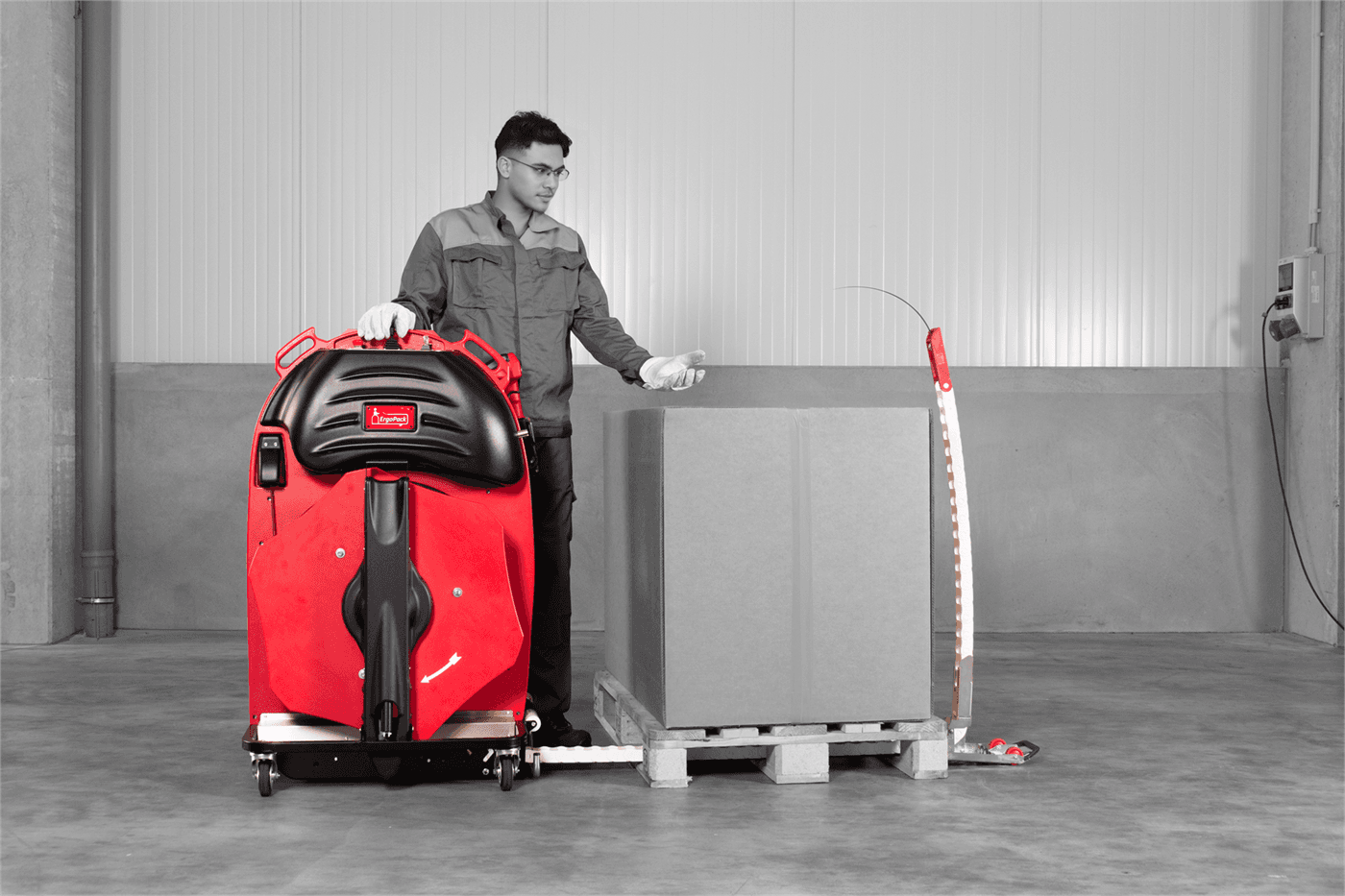
Wrapping and strapping are how a pallet gets finished — and by hand they’re the two slowest steps before a load ships. Cut them and you free both time and labour at the busiest point of the dock. Here’s how to reduce pallet wrapping and strapping time, and which one to attack first.
The two finishing steps
- Wrapping — stretch film around the load for unitisation and dust/moisture cover.
- Strapping (securing) — straps under and around the pallet for load integrity in transit.
Both matter, but they’re very different time problems.
Strapping is the bigger, faster win
Manual strapping is usually the slower and more labour-heavy of the two:
- ~120 seconds and two operators per pallet by hand (manual vs automatic).
- Inconsistent tension causes re-work and rejected loads (reduce transit damage).
Moving securing to mobile automation cuts it to under 40 seconds with one operator — the single biggest time cut available in pallet finishing (end-of-line automation). A wheeled machine (ErgoPack GO / 726X) needs no conveyors, so the gain is immediate.
Speeding up wrapping
Wrapping time is cut by:
- Right-sizing film and pre-stretch — fewer wraps, less film, faster cycle.
- Consistent application — no re-wrapping loose or torn film.
- Not over-wrapping — wrap for unitisation/cover; rely on strapping for load integrity, not film.
A common mistake is over-wrapping to compensate for weak securing — slow and costly. Strong, consistent strapping lets you wrap less.
Do them in the right order, fast
The efficient finishing sequence: strap for integrity, then wrap for cover — each step fast and consistent, neither compensating for the other. Automating the securing step is what unlocks this, because it makes strapping the quick, reliable anchor of the process.
How to reduce wrapping + strapping time
- Time both steps for a typical pallet.
- Automate securing first — the biggest cut (~120s → <40s).
- Right-size wrapping — film, pre-stretch, wrap count.
- Stop over-wrapping to mask weak securing.
- Re-sequence to strap-then-wrap, both fast.
- Model the labour/time gain — ROI calculator.
Finishing-time checklist
- Wrapping and strapping both timed
- Securing automated first (~120s → <40s)
- Wrapping film/pre-stretch right-sized
- Over-wrapping eliminated
- Strap-then-wrap sequence, both fast
- Gain modelled in ROI calculator
Reduce pallet wrapping and strapping time by attacking securing first — it’s the slowest, most labour-heavy step, and automating it cuts finishing time by the most while letting you wrap leaner. Model the gain or request a quote.
Talk to a pallet strapping engineer
BENZ Packaging and ErgoPack India engineers support installations and service anywhere in India. Tell us your pallet setup and we’ll recommend the right machine — and send pricing.
Related Reading
Continue with the next guide
guides
PP vs PET Strapping: Which Should You Use, and When?
PP and PET strap suit very different loads. A clear guide to when polypropylene is enough and when polyester is essential — by load weight, settling, and export exposure.

guides
Strapping Machine AMC, Spares and Uptime: What to Check Before You Buy
A strapping machine is only as good as its uptime. What to check on service, spare parts and AMC before you buy — so the machine that saves you ₹25 lakh a year actually keeps running.
guides
Pallet Strapping Machine Buying Checklist: 10 Questions Before You Decide
Before you buy a pallet strapping machine, run through these ten questions. They cover loads, volume, power, tension, service and ROI — so you choose the right machine, not just the cheapest.