guides
Pallet Jack vs Forklift: Differences, Uses and Which One You Need
Pallet jack or forklift? The differences in capacity, height, cost and use case, when to use each, and how both depend on a stable, secured pallet to work safely.
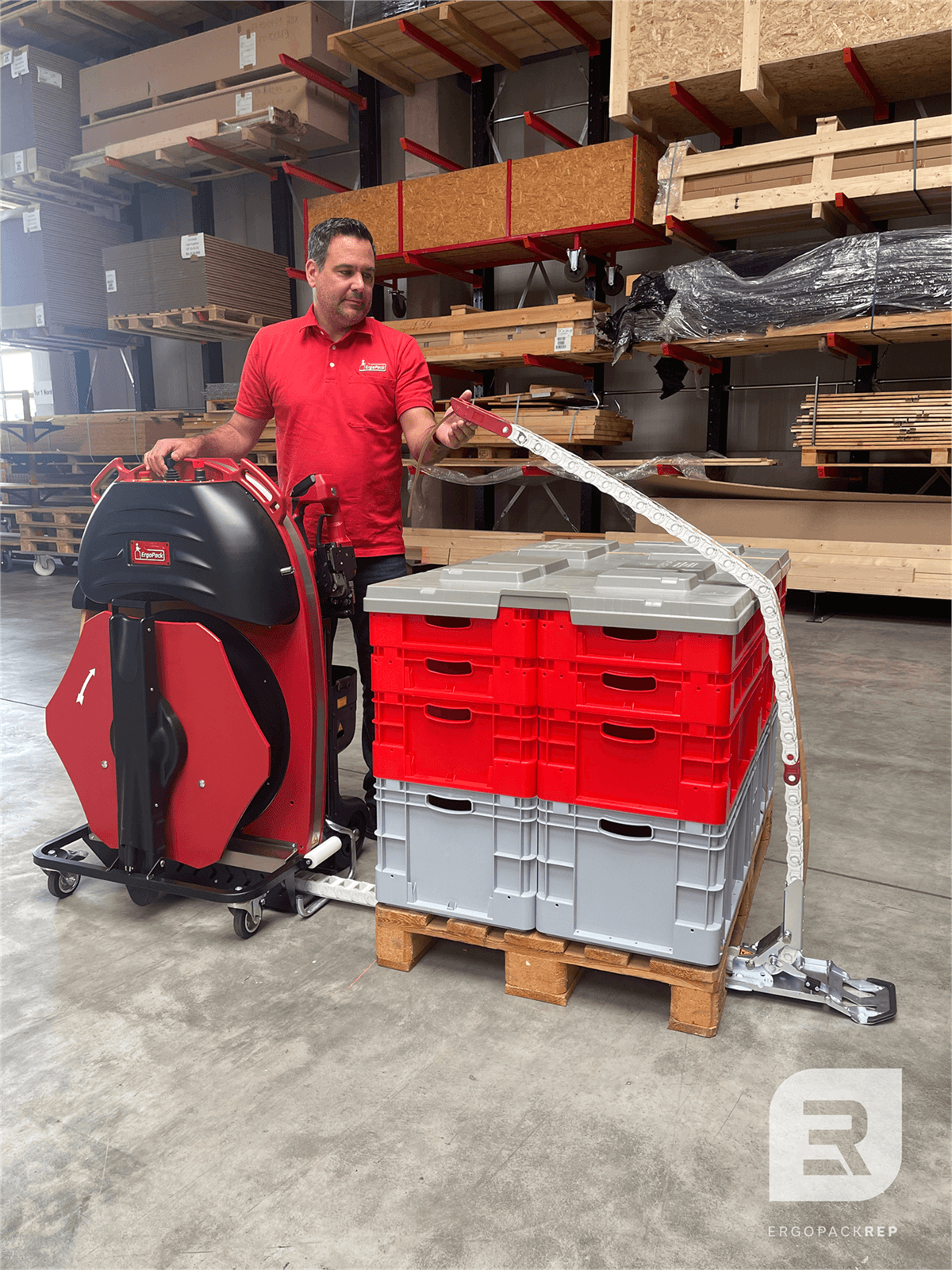
Pallet jacks and forklifts are the two machines that move almost every pallet on Earth — and choosing between them (or knowing when each is right) is a basic warehouse decision. Here is the clear comparison.
The quick answer
- A pallet jack (pallet truck) is a simple, low-cost device to lift a pallet just off the floor and move it horizontally — ideal for short moves on flat ground.
- A forklift is a powered vehicle that lifts heavy loads high — onto racking, into trucks, and across longer distances.
Use a pallet jack to move pallets around the floor; use a forklift to lift, stack and load.
Side-by-side
| Factor | Pallet jack | Forklift |
|---|---|---|
| Lift height | A few cm off the floor | Several metres (racking, stacking) |
| Capacity | ~2,000–2,500 kg typical | 1,000 kg to many tonnes |
| Power | Manual or electric | Electric, diesel, LPG |
| Cost | Low | High (plus operator licensing) |
| Operator | Minimal training | Trained, certified operator |
| Best for | Horizontal floor moves | Lifting, stacking, loading trucks |
| Space | Tight aisles, docks | Needs more room |
When to use a pallet jack
- Moving pallets short distances on a level floor.
- Loading/unloading at dock height.
- Tight spaces where a forklift won't fit.
- Operations that don't need to lift to height.
When to use a forklift
- Lifting pallets onto or off racking.
- Loading and unloading trucks and containers.
- Heavy loads beyond a pallet jack's capacity.
- Longer travel across a large facility.
Many operations use both — pallet jacks for floor moves and dock work, forklifts for lifting and loading.
Both depend on a stable, secured pallet
Here is the point that connects to the load itself: neither machine is safe with an unstable pallet. A pallet jack or forklift lifting a loose, leaning or poorly secured load risks the load shifting, toppling or falling — a serious safety hazard and a damaged shipment. The equipment can only be as safe as the unit load it moves.
That is why the load must be strapped to the pallet so it behaves as one rigid unit before it is lifted — especially for a forklift lifting to height, where a shifting load is dangerous. Mobile machines such as the ErgoPack 726X, GO and 700 secure the load to the pallet at consistent tension so it is stable to handle. See warehouse manual handling safety and how to reduce shipping damage.
In short
A pallet jack moves pallets along the floor; a forklift lifts them high. Pick by lift height, capacity and distance — and make sure whatever you lift is a properly secured unit load, because both machines are only as safe as the pallet they carry.
Talk to a pallet strapping engineer
BENZ Packaging and ErgoPack India engineers support installations and service anywhere in India. Tell us your pallet setup and we’ll recommend the right machine — and send pricing.
Related Reading
Continue with the next guide
guides
PP vs PET Strapping: Which Should You Use, and When?
PP and PET strap suit very different loads. A clear guide to when polypropylene is enough and when polyester is essential — by load weight, settling, and export exposure.
guides
Strapping Machine AMC, Spares and Uptime: What to Check Before You Buy
A strapping machine is only as good as its uptime. What to check on service, spare parts and AMC before you buy — so the machine that saves you ₹25 lakh a year actually keeps running.
guides
Pallet Strapping Machine Buying Checklist: 10 Questions Before You Decide
Before you buy a pallet strapping machine, run through these ten questions. They cover loads, volume, power, tension, service and ROI — so you choose the right machine, not just the cheapest.