guides
Marble & Granite Slab Export Packaging: Crates, A-Frames and Securing Stone
How marble, granite and quartz slabs are packed and secured for export — A-frame and wooden bundle crating, interleaving against abrasion, and high-tension banding for extremely heavy stone.
Stone slabs are the heaviest, most dangerous and most valuable load most exporters will ever ship. A single marble or granite slab can weigh hundreds of kilos, a bundle can run into tonnes, and a shifted bundle inside a container is both a destroyed shipment and a serious safety hazard. India is a leading stone exporter — Rajasthan marble, South Indian granite — so getting slab packaging right is a major commercial discipline. Here is how it is done.
Why stone slabs are uniquely demanding
- Extreme weight — slabs and bundles are enormously heavy and dense; handling itself is hazardous (a known cause of serious injury).
- Rigid and brittle — stone cracks and chips, especially at edges and corners.
- Surface-critical — polished faces scratch and abrade; a marked slab is downgraded.
- High value, low tolerance — buyers reject cracked, chipped or stained slabs.
Slabs travel vertically — on A-frames
Like glass, stone slabs are shipped on edge, leaning against an A-frame, never flat. The A-frame racking holds slabs against its back or against each other at a stable angle for the whole journey. This keeps the load's weight on the strong edge and stops the flexing that cracks a flat slab.
Crating and bundling
- Slabs are packed in fumigated (ISPM-15) wooden bundles or crates (ISPM-15 explained).
- Within a bundle, slabs are tightly compressed together so they cannot move.
- Plastic, foam or cardboard sheets between every slab prevent friction, scratching and abrasion of the polished surface.
Securing the heavy bundle
This is the high-tension end of strapping:
- Wooden blocks and braces fix the bundle and stop it shifting; C-clamps secure bundles in the container.
- High-tensile banding (traditionally steel; high-strength PET where its shock absorption and rust-free finish help) holds the slabs and frame together — see PP vs PET vs steel strapping.
- Wire-rope lashing secures stone blocks against movement inside the container.
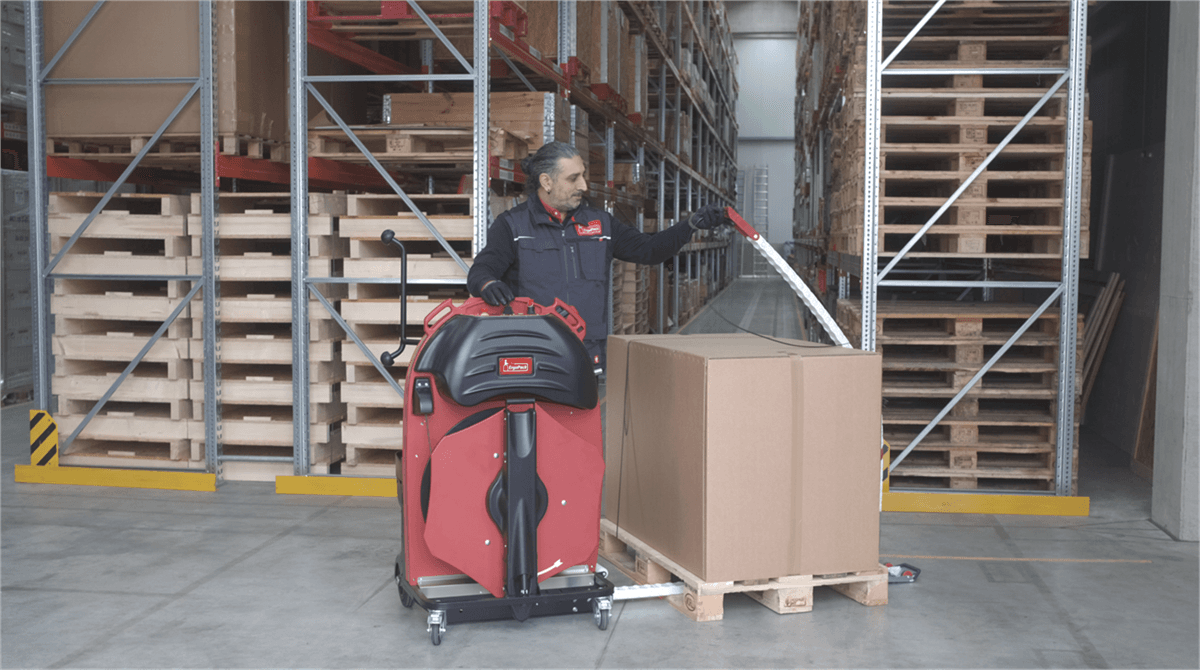
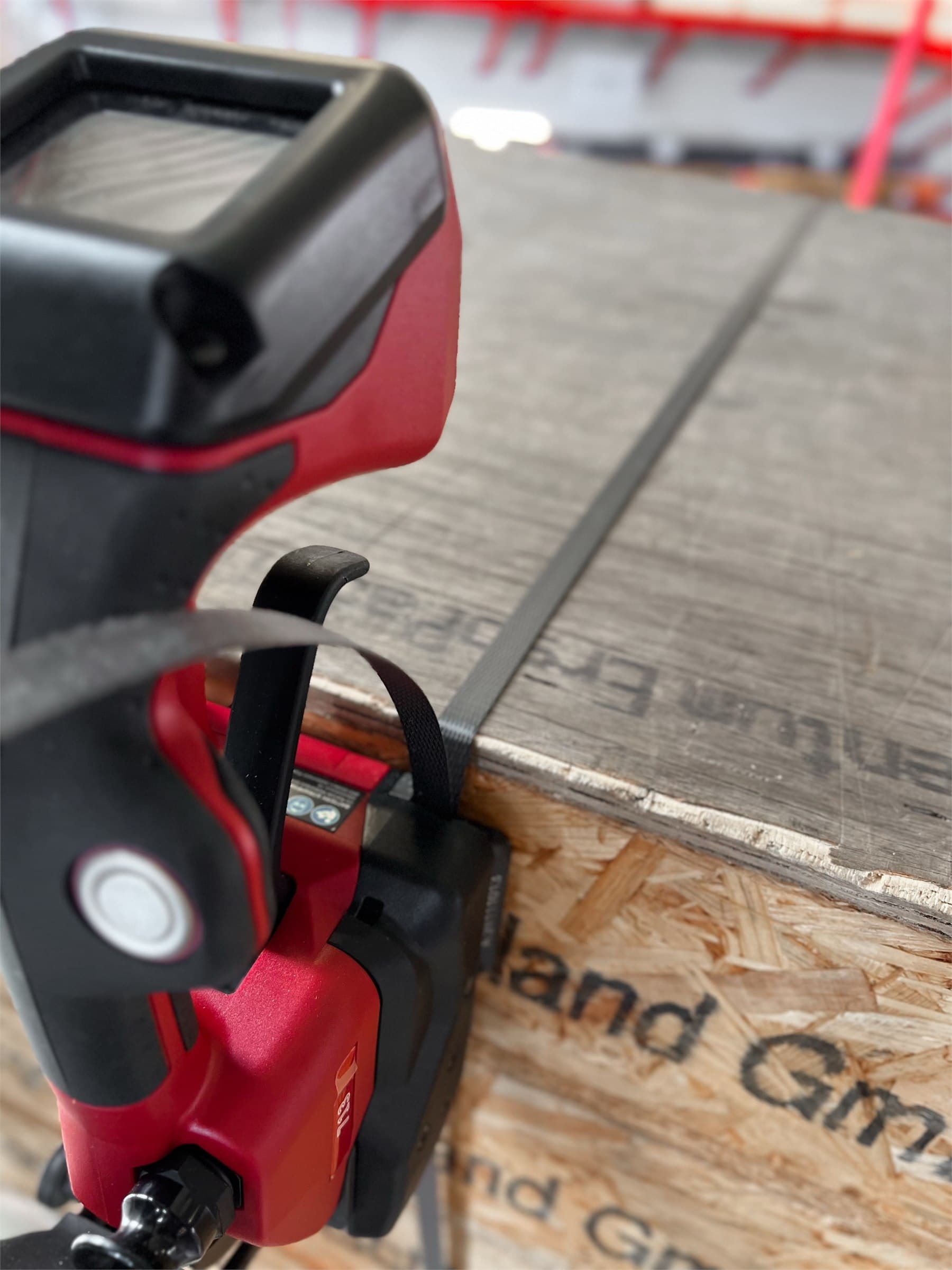
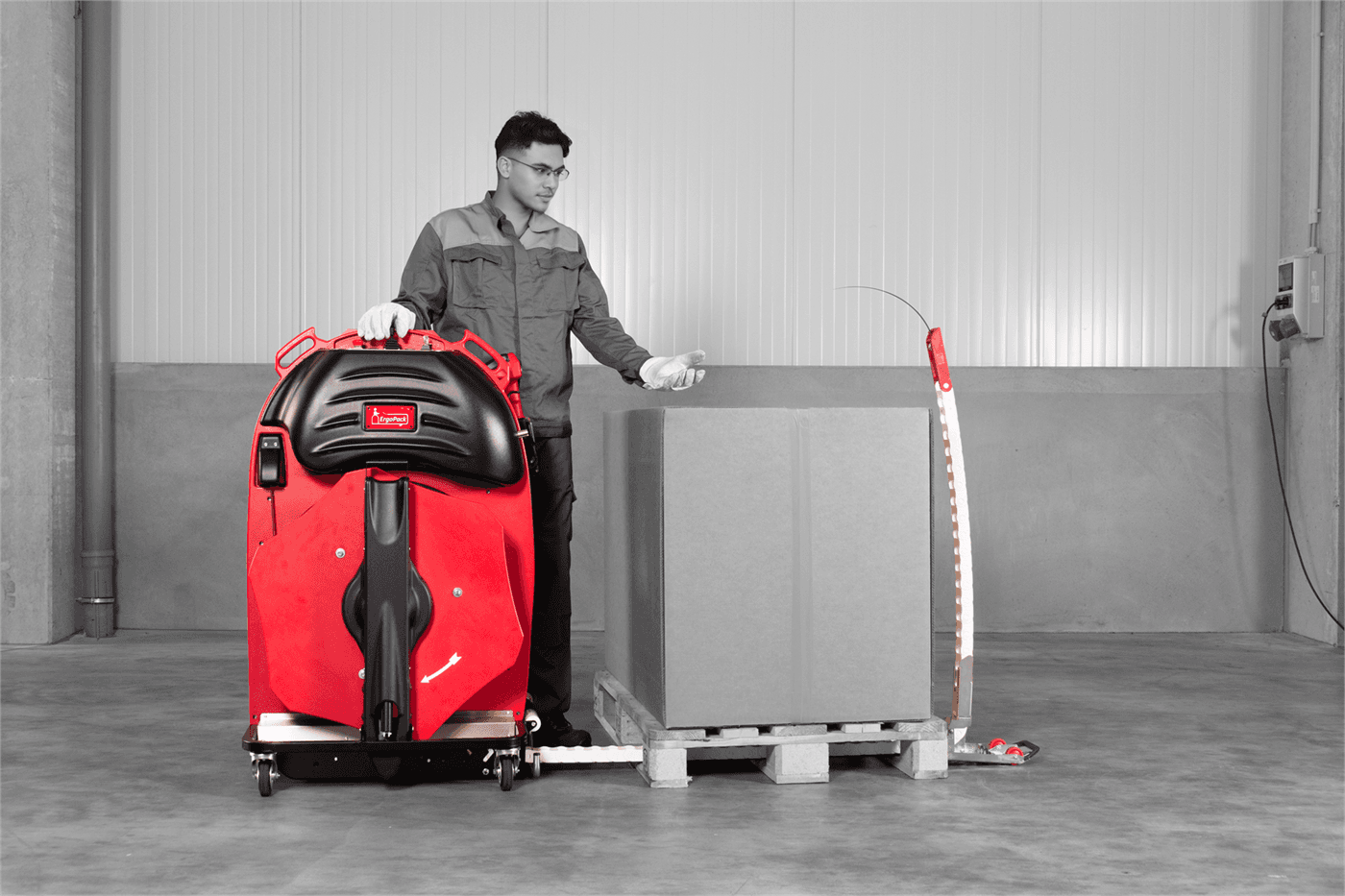
- The banding must be tight and consistent — a loose band on a multi-tonne stone bundle is a shifting load. Calibrated machines such as the ErgoPack 726X apply repeatable high tension; see best machine for heavy loads.
Protect, mark and document
- Edge and corner protection where bands bear and where chips start.
- Moisture management for the sea leg (container rain).
- Heavy/handling marks and full documentation; ISPM-15 stamps visible.
Stone slab export checklist
- Slabs on edge, on an A-frame — never flat
- Interleaving (plastic/foam/cardboard) between every slab
- Fumigated ISPM-15 wooden bundle/crate
- Bundle tightly compressed; blocks/braces/C-clamps fixed
- High-tensile banding at tight, consistent tension
- Wire-rope lashing inside the container for heavy blocks
- Edge/corner protection; moisture managed; documents + ISPM-15
Pack and secure stone to this standard — on edge, interleaved, crated and banded at high consistent tension — and an extremely heavy, brittle, valuable load travels safely and arrives unmarked.
Talk to a pallet strapping engineer
BENZ Packaging and ErgoPack India engineers support installations and service anywhere in India. Tell us your pallet setup and we’ll recommend the right machine — and send pricing.
Related Reading
Continue with the next guide
guides
PP vs PET Strapping: Which Should You Use, and When?
PP and PET strap suit very different loads. A clear guide to when polypropylene is enough and when polyester is essential — by load weight, settling, and export exposure.
guides
Strapping Machine AMC, Spares and Uptime: What to Check Before You Buy
A strapping machine is only as good as its uptime. What to check on service, spare parts and AMC before you buy — so the machine that saves you ₹25 lakh a year actually keeps running.
guides
Pallet Strapping Machine Buying Checklist: 10 Questions Before You Decide
Before you buy a pallet strapping machine, run through these ten questions. They cover loads, volume, power, tension, service and ROI — so you choose the right machine, not just the cheapest.