guides
How Many Boxes Fit on a Pallet? How to Calculate Cases Per Pallet
How to calculate how many boxes or cases fit on a pallet — the formula, layers and tie-high, a worked example, and how to keep a full pallet stable once it’s built.
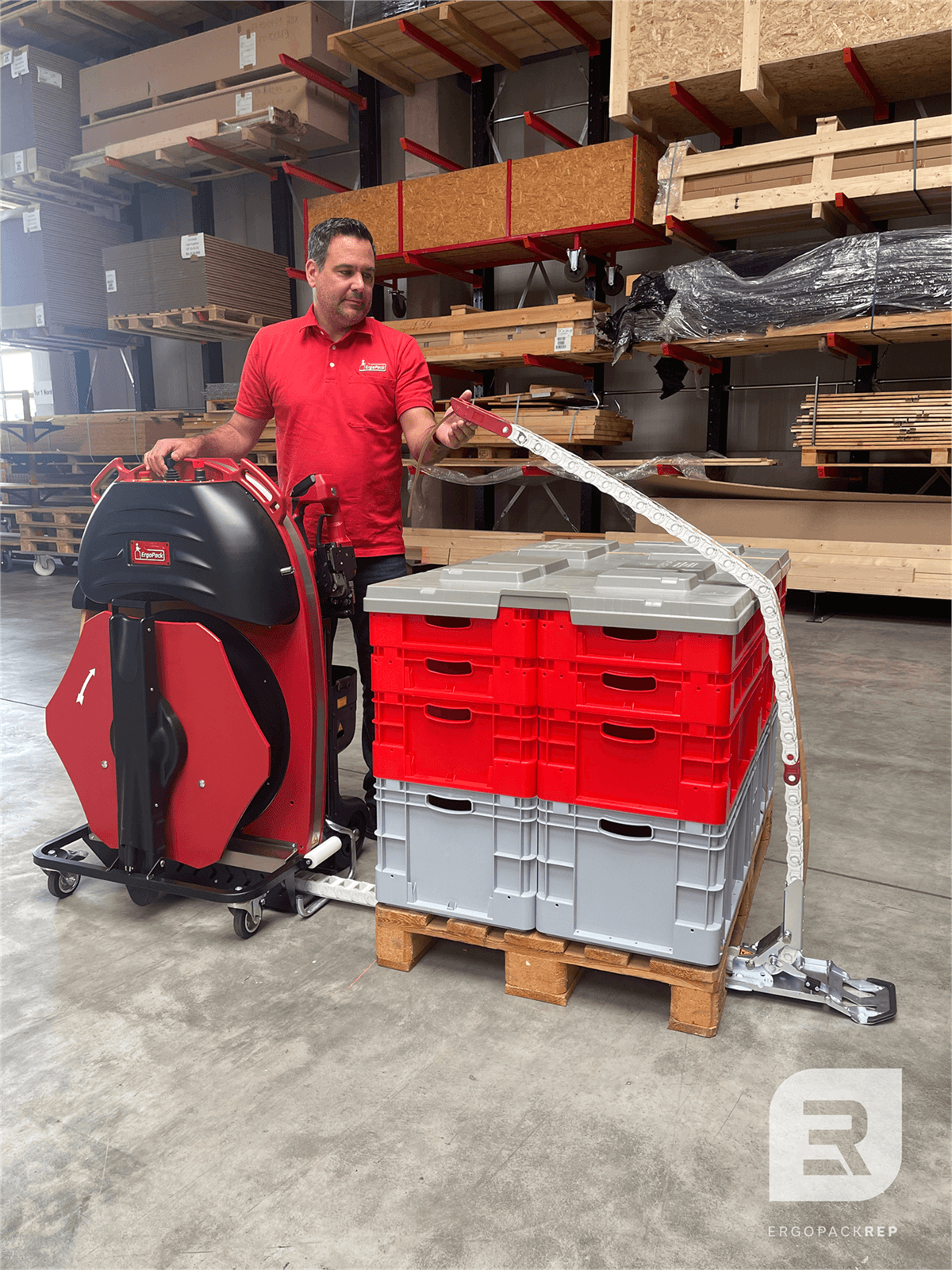
"How many boxes fit on a pallet?" is one of the most-asked questions in shipping — because it drives your freight cost, your storage, and your truck planning. There is no single answer (it depends on your box and pallet), but there is a simple method. Here it is.
The basic method
You work it out in two steps: how many boxes fit in one layer, then how many layers you can stack.
Boxes per layer (the "tie") = the pallet's deck area ÷ the box footprint, adjusted for how the boxes are arranged so they fit neatly without overhang.
Layers (the "high") = maximum stack height ÷ box height.
Total boxes = boxes per layer × number of layers.
This layer-and-stack pattern is called the "tie-high" (tie = boxes per layer, high = number of layers).
Worked example
Take a standard 1200 × 1000 mm pallet and a box measuring 400 × 300 mm, 250 mm tall, with a maximum stack height of 1,500 mm above the pallet:
- Per layer: the 1200×1000 deck = 1,200,000 mm². The box footprint = 120,000 mm². That's a theoretical 10 boxes per layer — and 400×300 boxes arrange neatly on a 1200×1000 deck (e.g. a mix of orientations) to fill it with little waste, so ~10 per layer.
- Layers: 1,500 mm ÷ 250 mm = 6 layers.
- Total: 10 × 6 = 60 boxes on the pallet.
Adjust for your real box and pallet — and never let boxes overhang the pallet edge, which destroys strength.
What limits the number
- Pallet size — bigger deck, more boxes per layer (but mind truck/container fit).
- Box dimensions — and how neatly they tessellate on the deck.
- Max stack height — your own limit, the carrier's, and the product's crush strength.
- Weight limit — never exceed the pallet's rated capacity, even if there is height left.
- Stacking pattern — column (strongest) vs interlock (more stable but less compression strength).
Tools and tips
- Online pallet/cube calculators do the tessellation maths for you — useful for awkward box sizes.
- Optimising the box-to-pallet fit can add a layer or a column and cut your cost per unit shipped (the same density logic as LTL freight class).
Don't forget: a full pallet has to stay together
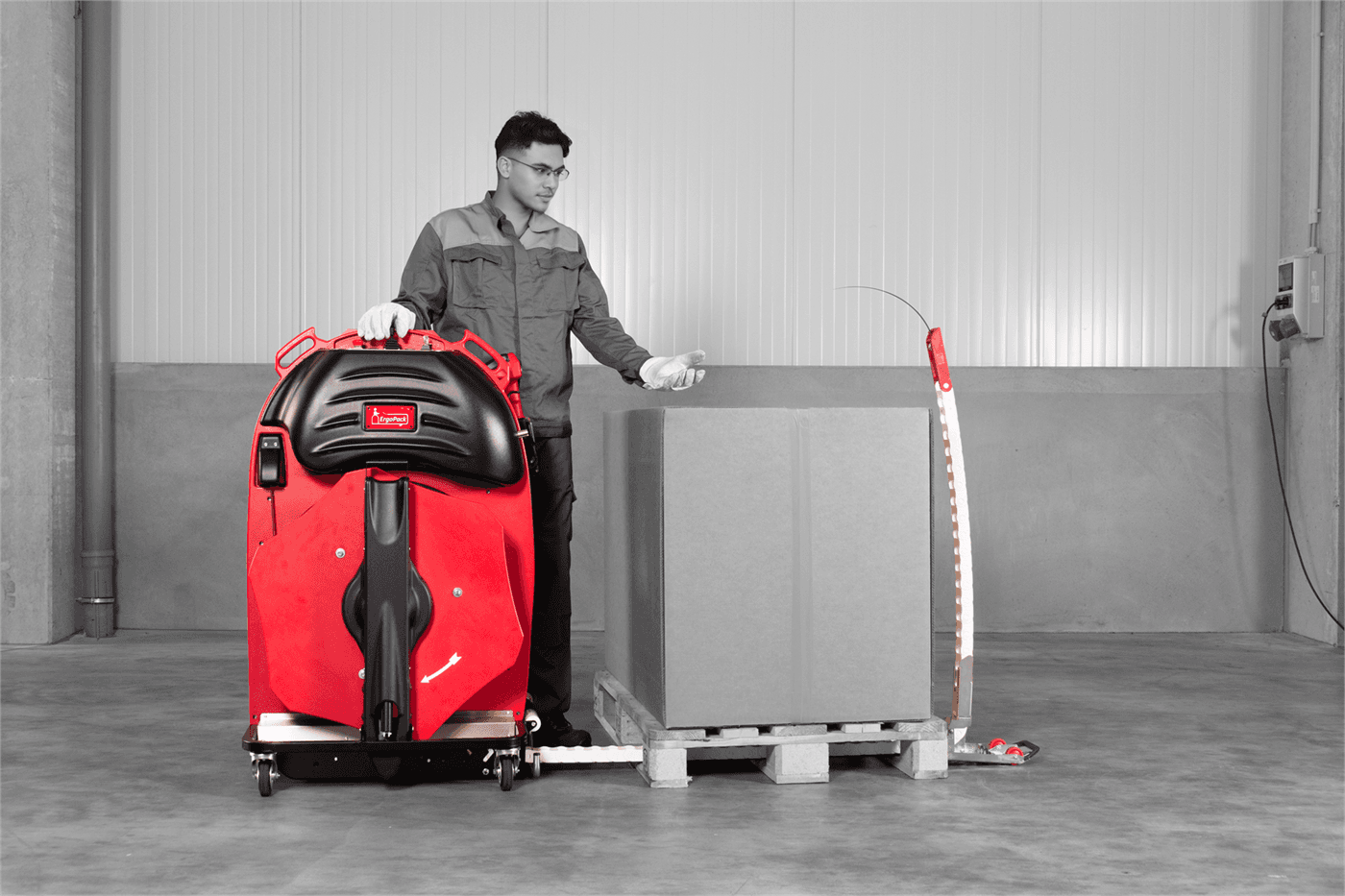
Calculating 60 boxes onto a pallet is only useful if those 60 boxes arrive as one unit. A tall, full pallet has a high centre of gravity and will shift, lean and topple in transit unless the load is secured to the pallet. Strap the load down to the pallet base at consistent tension so the calculated stack travels as one rigid unit — machines such as the ErgoPack 726X, GO and 700 do this in under 40 seconds. See how to pack a pallet for shipping.
Quick checklist
- Boxes per layer = deck area ÷ box footprint (arranged without overhang)
- Layers = max stack height ÷ box height
- Total = per layer × layers
- Within the pallet's weight limit
- No overhang; stable stacking pattern
- Full pallet strapped to the deck so it travels as one unit
Calculate the tie-high for your box and pallet, optimise the fit to cut cost — and secure the finished stack so every box you loaded is a box that arrives.
Talk to a pallet strapping engineer
BENZ Packaging and ErgoPack India engineers support installations and service anywhere in India. Tell us your pallet setup and we’ll recommend the right machine — and send pricing.
Related Reading
Continue with the next guide
guides
PP vs PET Strapping: Which Should You Use, and When?
PP and PET strap suit very different loads. A clear guide to when polypropylene is enough and when polyester is essential — by load weight, settling, and export exposure.
guides
Strapping Machine AMC, Spares and Uptime: What to Check Before You Buy
A strapping machine is only as good as its uptime. What to check on service, spare parts and AMC before you buy — so the machine that saves you ₹25 lakh a year actually keeps running.
guides
Pallet Strapping Machine Buying Checklist: 10 Questions Before You Decide
Before you buy a pallet strapping machine, run through these ten questions. They cover loads, volume, power, tension, service and ROI — so you choose the right machine, not just the cheapest.