guides
Edge Protectors & Corner Boards: When and Why to Use Them on Pallets
Edge protectors (corner boards) stop strapping from crushing your cartons, add vertical stability, and let you apply proper tension. Here is when to use them, which thickness, and how they work with strapping.
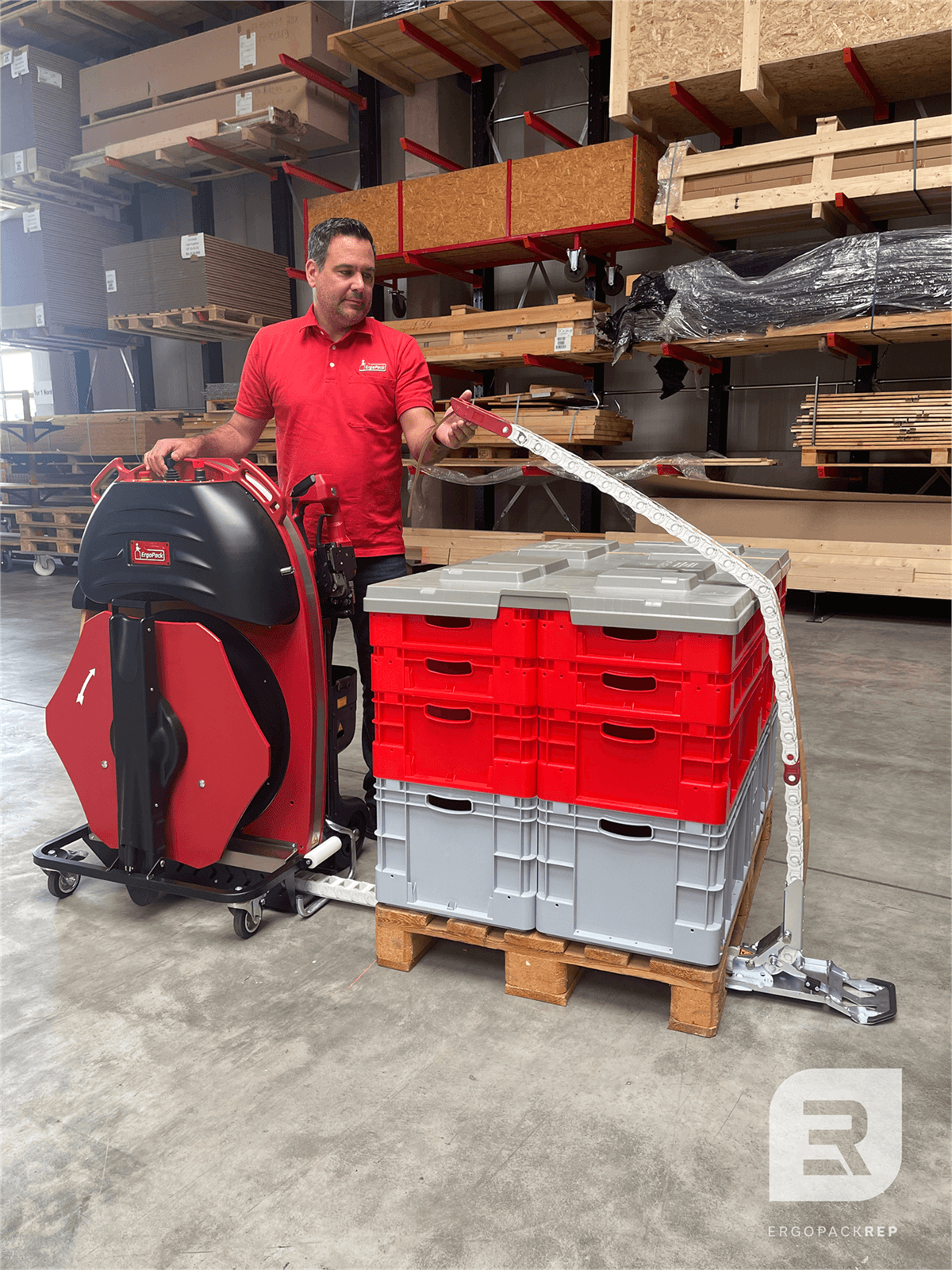
Edge protectors are the cheapest insurance on a pallet, and the most commonly skipped. Skip them, and either your strap crushes the top cartons or you under-tension to avoid the damage — and an under-tensioned load shifts in transit. Used right, they let you strap firmly and ship safely. Here is the full picture.
What are edge protectors (corner boards)?
Edge protectors — also called corner boards or edge boards — are L-shaped lengths of rigid cardboard or paperboard placed along the top edges and corners of a palletised load before it is strapped or wrapped. They reinforce the edge, spread pressure, and tie the stack together vertically.
What they actually do
- Distribute strap pressure. A strap pulled tight over a bare carton edge concentrates all its force on that edge and cuts in. An edge protector spreads that force along its length, so you can apply proper tension without crushing the box.
- Add vertical stability. Running corner to corner, they tie the layers of the stack into one rigid column — resisting the shift and lean that cause transit damage.
- Protect against handling and stacking. They shield corners from forklift knocks and from the weight of a pallet stacked on top.
- Enable higher, safer tension. This is the key link: edge protectors are what let you strap tightly enough to secure the load without damaging it.
When to use them
Use edge protectors whenever you strap a load that can be crushed or whenever corners are exposed:
- Corrugated and carton loads — almost always, because the strap will otherwise cut into the top boxes.
- Compressible goods (paper, textiles, FMCG) — essential, so you can apply firm tension safely.
- Heavy and export shipments — for compression resistance and stacking strength.
- Stacked pallets — vertical reinforcement against the load above.
Which thickness to choose
| Thickness | Best for |
|---|---|
| Lighter board (~.12) | Standard warehouse loads, consumer goods, light-to-medium cartons |
| Heavier board (~.16) | Industrial freight, export, stacked pallets, high strap tension |
| Moisture-resistant | Fresh produce, humid routes, sea freight |
Match the board to the strap tension and the journey: the heavier the load and the higher the tension, the thicker the board.
Edge protectors + strapping: the pairing that works
Edge protectors and strapping are designed to work together. The protector lets you apply the tension that actually secures the load:
- Place the edge protectors along the top edges where the strap will sit.
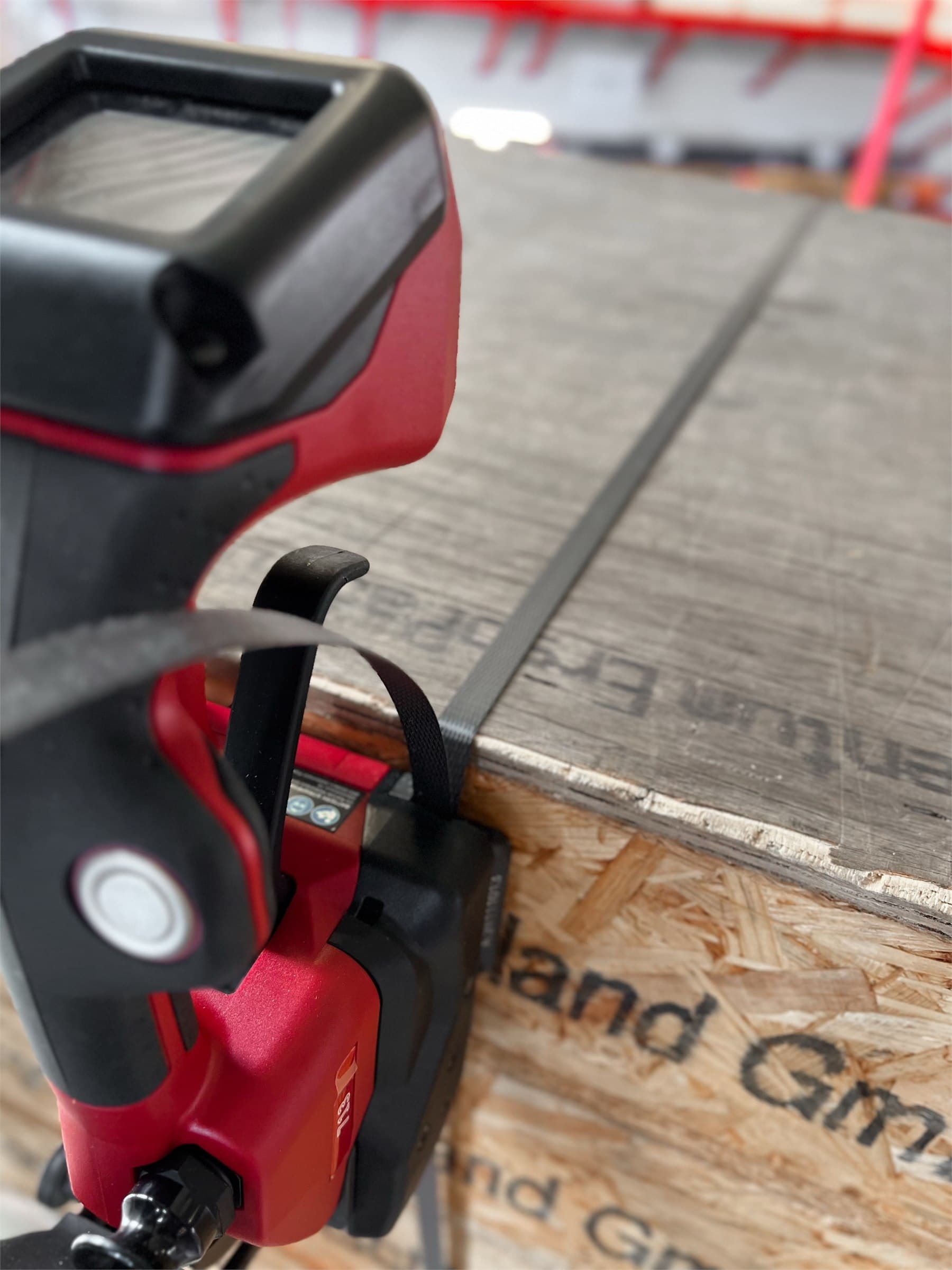
- Position the strap over the protector, not over a bare carton — a line-laser on machines like the ErgoPack 726X helps align the strap on the protector every time.
- Apply consistent, calibrated tension. On compressible loads you can now tension firmly — the protector spreads the force. See the pallet strapping tension guide.
This is exactly how you strap a stack of corrugated boxes without crushing them — covered in detail in our corrugated & compressible load strapping guide.
Edge protector checklist
- Edge protectors on every compressible or carton load
- Thickness matched to load weight and strap tension
- Moisture-resistant board for produce / sea freight
- Protectors placed where the straps will sit
- Strap aligned over the protector, not bare cartons
- Tension now applied firmly — the board spreads the force
A few rupees of edge protector lets you strap a load properly instead of choosing between a crushed pallet and a loose one. On any carton or export load, use them.
Talk to a pallet strapping engineer
BENZ Packaging and ErgoPack India engineers support installations and service anywhere in India. Tell us your pallet setup and we’ll recommend the right machine — and send pricing.
Related Reading
Continue with the next guide
guides
PP vs PET Strapping: Which Should You Use, and When?
PP and PET strap suit very different loads. A clear guide to when polypropylene is enough and when polyester is essential — by load weight, settling, and export exposure.
guides
Strapping Machine AMC, Spares and Uptime: What to Check Before You Buy
A strapping machine is only as good as its uptime. What to check on service, spare parts and AMC before you buy — so the machine that saves you ₹25 lakh a year actually keeps running.
guides
Pallet Strapping Machine Buying Checklist: 10 Questions Before You Decide
Before you buy a pallet strapping machine, run through these ten questions. They cover loads, volume, power, tension, service and ROI — so you choose the right machine, not just the cheapest.