guides
Pallet Strapping Tension Guide: How Much Tension, and Why Consistency Decides Everything
How much tension should you apply when strapping a pallet? A practical guide to setting strap tension by load and material, the cost of over- and under-tensioning, and why repeatability matters more than the number.
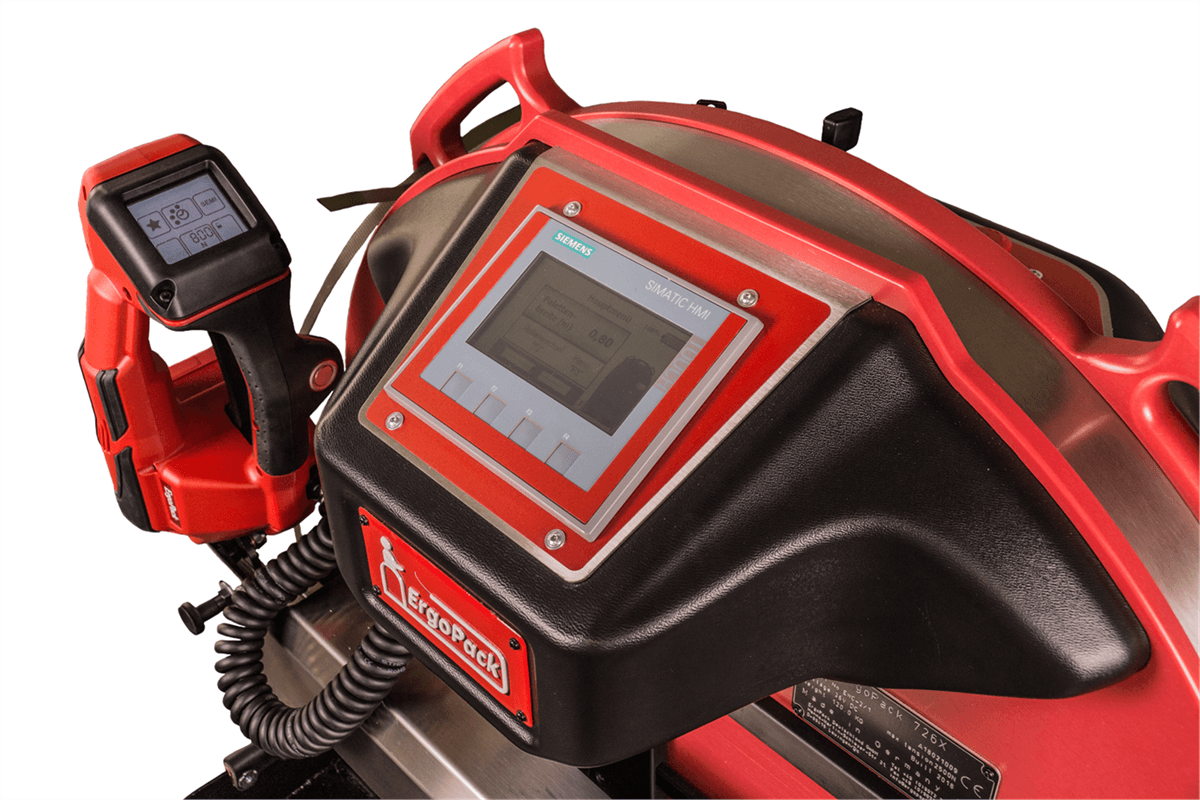
"How tight should the strap be?" is the most common — and most under-answered — question in pallet securing. Too loose and the load shifts and arrives damaged. Too tight and you crush the product or snap the strap. And the answer that almost no manual process gets right is the one that matters most: the same tension, on every single pallet.
Why tension is the whole game
A strap does one job: hold the load to the pallet as a single rigid unit. It can only do that within a window:
- Too little tension — the load is not anchored. It vibrates, shifts and slides in transit, and arrives as a damage claim.
- Too much tension — the strap cuts into cartons, crushes corners, deforms the product, or snaps at the joint.
- The right tension — firm, with only slight give, holding the load without damaging it.
The window is real, and it is different for every combination of strap and load.
What decides the right tension
Three things set the correct tension:
| Factor | Effect on tension |
|---|---|
| Load weight & rigidity | Heavier, rigid, non-compressible loads need higher tension |
| Load compressibility | Cartons, foam, textiles need lower tension to avoid crushing |
| Strap material & size | Stronger straps (PET, wider/thicker) hold more tension; PP holds less |
A dense metal casting and a stack of corrugated boxes need very different tensions — and applying the casting's tension to the boxes will crush them.
Tension by load type (practical guidance)
- Heavy, rigid, non-compressible (machinery, castings, metal parts): high tension — this is where calibrated machines run up to 2,500N.
- Medium palletised goods: moderate tension, enough to lock the load to the pallet base.
- Compressible loads (corrugated, paper, FMCG, textiles): lower tension — firm but never cutting into the product. Edge protectors let you tension safely.
A good rule: start lower and increase until the strap has only slight give when pressed, and the load is solid to the pallet.
The cost of over- and under-tensioning
- Over-tension on compressible loads is a leading cause of crushed corners and product damage before the truck even moves.
- Under-tension is the leading cause of in-transit load shift and rejected shipments.
- A snapped strap at the joint usually means tension and joint quality were mismatched — too much force on a weak (metal-clip) seal.
The real problem: humans can't repeat a number
Here is what most tension guides skip. Even an operator who knows the right tension cannot apply it identically 400 times. Hand tension drifts with fatigue across a shift — tighter in the morning, looser by the afternoon — so a batch of pallets leaves at a range of tensions, and the loosest one is the one that fails. One bad pallet in the container triggers the claim for the whole shipment.
This is why consistency beats the exact number. A load secured at a slightly-conservative tension on every pallet is safer than loads secured at the "perfect" tension on average.
How calibrated machines solve it
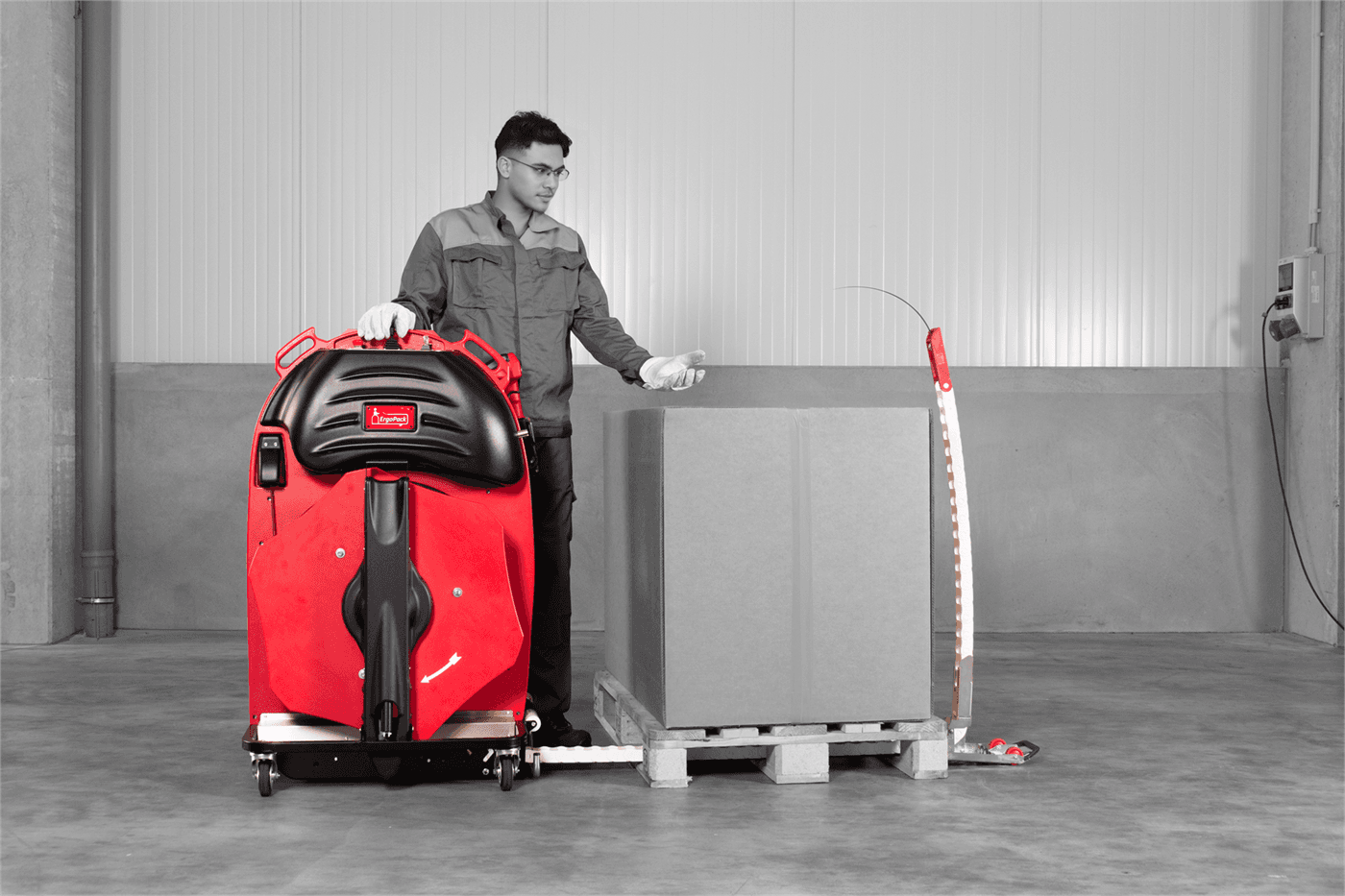
A machine that sets tension digitally removes the human variation entirely. You dial in the force for the load — and every pallet gets exactly that, from strap #1 to strap #1,400:
- The ErgoPack 726X applies electronically controlled tension from 400N to 2,500N, set on a touchscreen, identical on every pallet — high enough for heavy export loads, low and precise enough for compressible corrugated stacks.
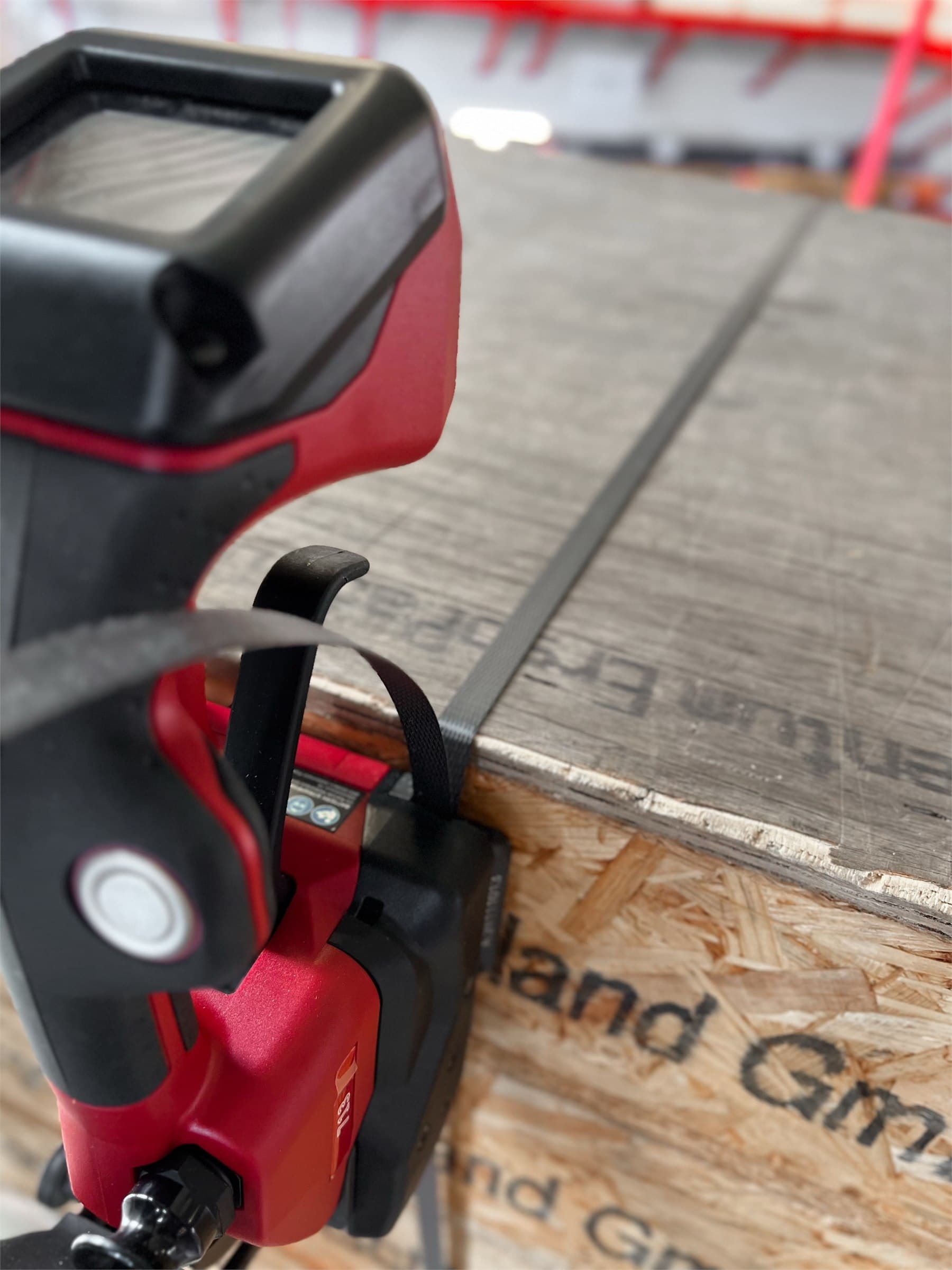
- The ErgoPack GO and manual-crank 700 automate the strap routing so the operator applies consistent tension with their own sealing tool.
Pair the right tension with a sealless friction weld (up to 90% joint efficiency) so the joint never becomes the weak point. See friction weld vs metal clips and, for choosing the strap, PP vs PET vs steel strapping.
Strapping tension quick checklist
- Tension matched to load: high for rigid/heavy, low for compressible
- Strap has only slight give when pressed — firm, not cutting in
- Edge protectors on compressible loads so you can tension safely
- Same tension on every pallet — not "right on average"
- Joint strength matched to tension (friction weld for high tension)
- If repeatability is a problem, calibrate it with a machine
Get the number roughly right and the repeatability exactly right, and the load that leaves your floor is the load that arrives — every time, not on average.
Talk to a pallet strapping engineer
BENZ Packaging and ErgoPack India engineers support installations and service anywhere in India. Tell us your pallet setup and we’ll recommend the right machine — and send pricing.
Related Reading
Continue with the next guide
guides
PP vs PET Strapping: Which Should You Use, and When?
PP and PET strap suit very different loads. A clear guide to when polypropylene is enough and when polyester is essential — by load weight, settling, and export exposure.

guides
Strapping Machine AMC, Spares and Uptime: What to Check Before You Buy
A strapping machine is only as good as its uptime. What to check on service, spare parts and AMC before you buy — so the machine that saves you ₹25 lakh a year actually keeps running.
guides
Pallet Strapping Machine Buying Checklist: 10 Questions Before You Decide
Before you buy a pallet strapping machine, run through these ten questions. They cover loads, volume, power, tension, service and ROI — so you choose the right machine, not just the cheapest.