insights
Automatic Strapping Machine ROI in India: How the Payback Actually Works
How ROI on an automatic strapping machine works in India — the four savings streams, a worked example with real figures, and the 6–18 month payback math you can check yourself.
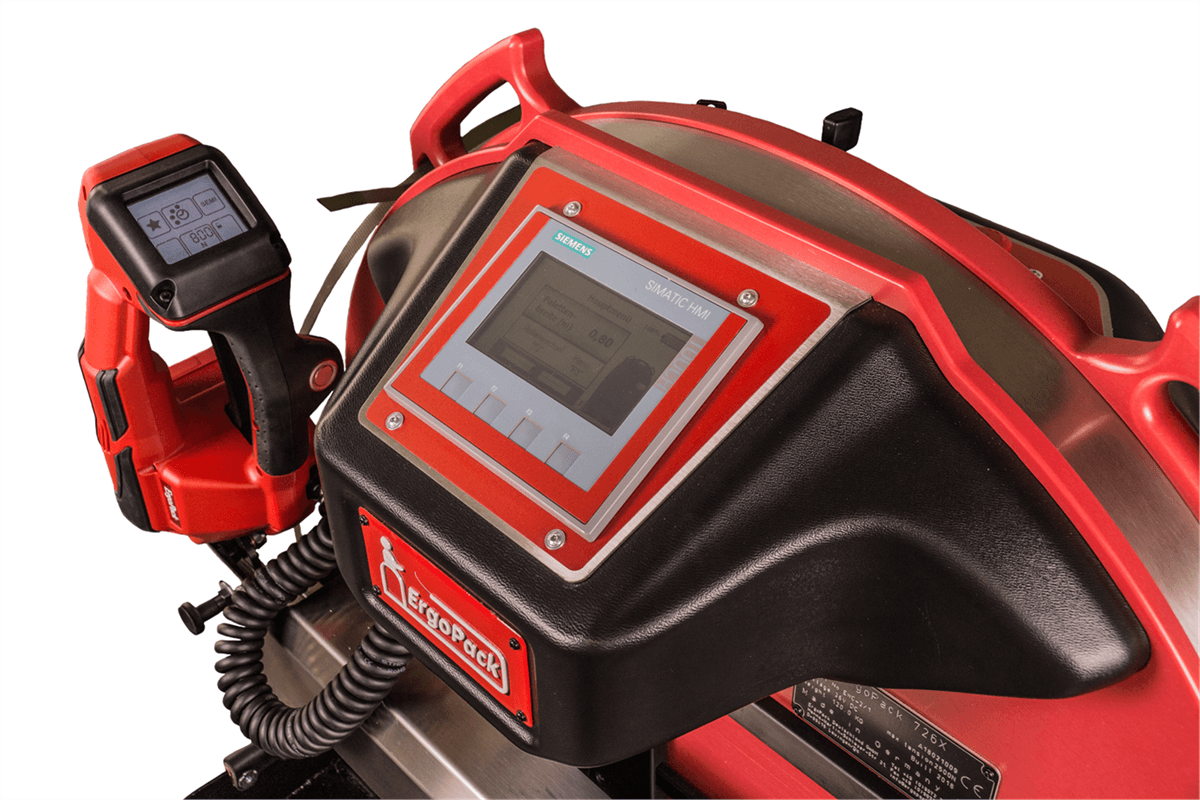
Before buying an automatic strapping machine, every Indian operations head asks the same thing: what's the ROI, and how fast does it pay back? Here is exactly how the payback works, with the four savings streams and a worked example you can check against your own floor.
The four savings streams
An automatic strapping machine pays back through four separate savings, not one:
- Labour — manual strapping uses ~2 people per pallet at ~120 sec; the machine uses 1 operator at <40 sec. That headcount/time saving is the biggest stream — and it grows as wages rise.
- Strap / consumable — calibrated tension and self-feeding cut strap waste by ~12% per pallet versus hand-feeding.
- Damage & rejection — consistent tension means fewer loose loads, less transit damage and fewer export rejections (reduce rejections).
- Throughput — freeing the dispatch bottleneck lets you ship more without adding people.
A worked example (typical Indian floor)
Using the ROI calculator defaults — 1 line, 4 manual operators across 2 shifts, ~50 pallets/shift, ~₹30,000 monthly CTC:
| Item | Value |
|---|---|
| Annual labour + strap + damage saving | ~₹25 lakh / year |
| Typical payback period | 6–18 months |
| 10-year cumulative saving | ~₹2 crore |
| AMC (annual maintenance) | ~₹1 lakh / year (already netted) |
After payback, the saving continues every year — while the manual alternative only gets more expensive.
Why the payback is fast in India specifically
- Wages are rising — each statutory increase widens the gap in the machine's favour.
- Two-person manual norm — Indian floors often double-staff strapping, so the labour saving is large.
- Export rejection cost — one rejected container can swing the ROI on its own.
- Mobile = low CapEx, no civil work — a wheeled machine needs no conveyors or rebuild, so the investment to recover is small (end-of-line automation).
How to calculate YOUR ROI
- Enter your lines, operators, shifts, pallets/shift and CTC in the ROI calculator.
- It computes labour + strap + damage savings against machine + AMC cost.
- Read off your annual saving and payback months.
- Validate on your floor — free on-site demo on your heaviest pallet.
ROI checklist
- All four savings streams counted (labour, strap, damage, throughput)
- Real floor numbers entered (lines/operators/shifts/pallets/CTC)
- Wage rises factored (savings grow over time)
- Export rejection cost included if you ship overseas
- Payback confirmed in ROI calculator
- Verified with an on-site demo
Automatic strapping machine ROI in India is driven by four savings streams, dominated by rising labour cost — giving ~₹25 lakh/year and a 6–18 month payback on a typical floor. Calculate yours or request a quote.
Talk to a pallet strapping engineer
BENZ Packaging and ErgoPack India engineers support installations and service anywhere in India. Tell us your pallet setup and we’ll recommend the right machine — and send pricing.
Related Reading
Continue with the next guide
insights
Improving OEE: Why the Dispatch Dock Is the Forgotten Factor
OEE programmes obsess over the production line and ignore the dispatch dock — yet a manual securing bottleneck there caps the throughput your OEE is meant to protect. Here’s the link.
insights
Pallet Strapping Machine for Small Business: Is It Worth It?
Small and mid-size Indian manufacturers and exporters often assume automation is only for big plants. For pallet securing, that’s usually wrong — here’s why a mobile machine fits a small business.
insights
How Many Pallets a Day Justify a Strapping Machine?
There’s a simple volume threshold above which a mobile strapping machine pays for itself. Here’s how to work out yours — and why it’s lower than most people expect.