guides
Steel Coil Packaging & Securing: Strapping, Orientation and Export Best Practices
How to package and secure steel coils for transport and export — eye-to-sky vs eye-to-side, circumferential and radial strapping, cradles and dunnage, tie-down ratios and documentation.
A steel coil is one of the most demanding loads in logistics: enormously heavy, prone to unrolling, and capable of rolling off a trailer if it is not secured correctly. Coil packaging is a specialist discipline. Here are the principles that keep coils safe in transit and intact at the destination.
Orientation: eye to sky vs eye to side
A coil's "eye" is its hollow centre. How it is oriented changes everything downstream:
- Eye to sky — the coil stands up, eye facing up. Workable for smaller coils and vans, but a major drawback is handling at the destination: unloading and re-orienting often needs specialised, expensive equipment (a coil upender).
- Eye to side (eye fore-aft) — the coil lies on its side with the eye facing the sides of the vehicle. This is the global standard for road and sea transport because it sits stably in a cradle and is easier to secure and unload.
Always record the orientation on the bill of lading so the carrier can plan securement.
Packaging the coil
Before securing, the coil itself is protected:
- Circumferential and radial strapping — bands around the coil's circumference and through the eye stop it unrolling or telescoping. Steel banding or heavy-duty polyester (PET) is used; PET adds shock absorption and avoids rust marks on the steel surface.
- Wrapping / VCI — moisture barriers and vapour corrosion inhibitors protect the surface finish on the voyage, since a rusted coil is a downgraded coil. See container rain / condensation.
- Edge and eye protection — guards on the edges and the eye where straps bear.
Securing the coil for transport
The coil must be stopped from rolling and from sliding:
- Cradles, bunks or racks hold the coil and stop it rolling; wooden or rubber dunnage adds friction and cushioning; wedges, blocks and chocks add stability.
- Tie-downs (chains or straps) pass over the coil to the vehicle bed — in parallel, "X", or "spider" patterns for very heavy coils.
- Follow the tie-down ratios: a common rule is one tie-down per ~10,000 lb of weight, with each rated to a defined share of the cargo weight.
Where consistent strapping matters
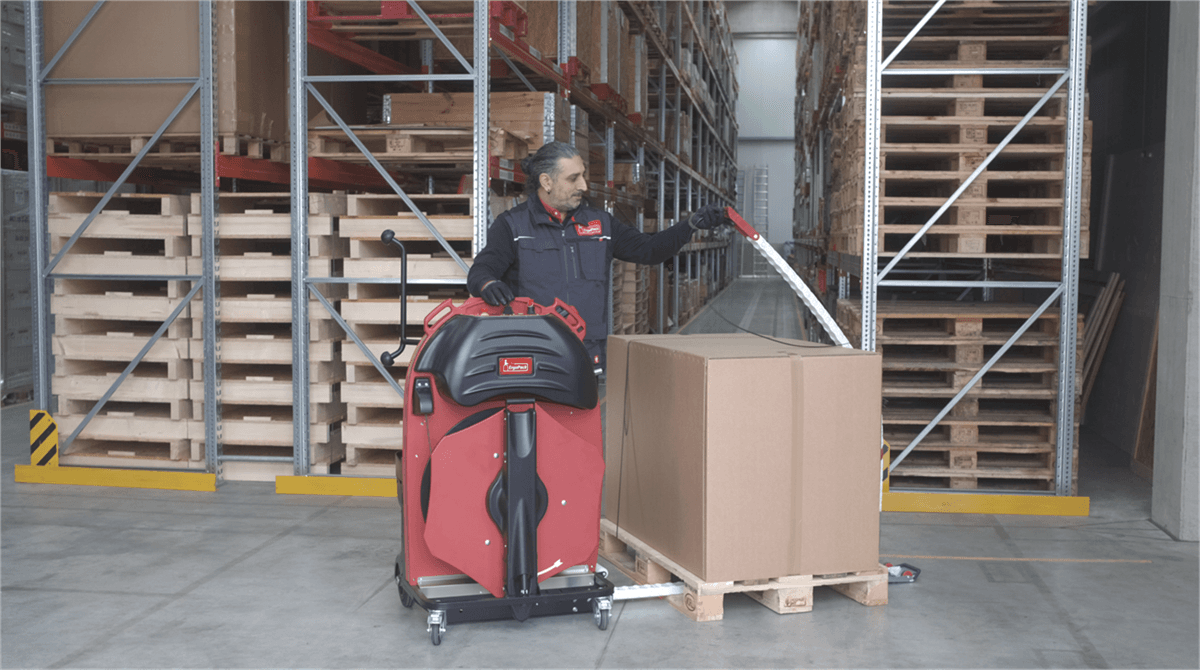
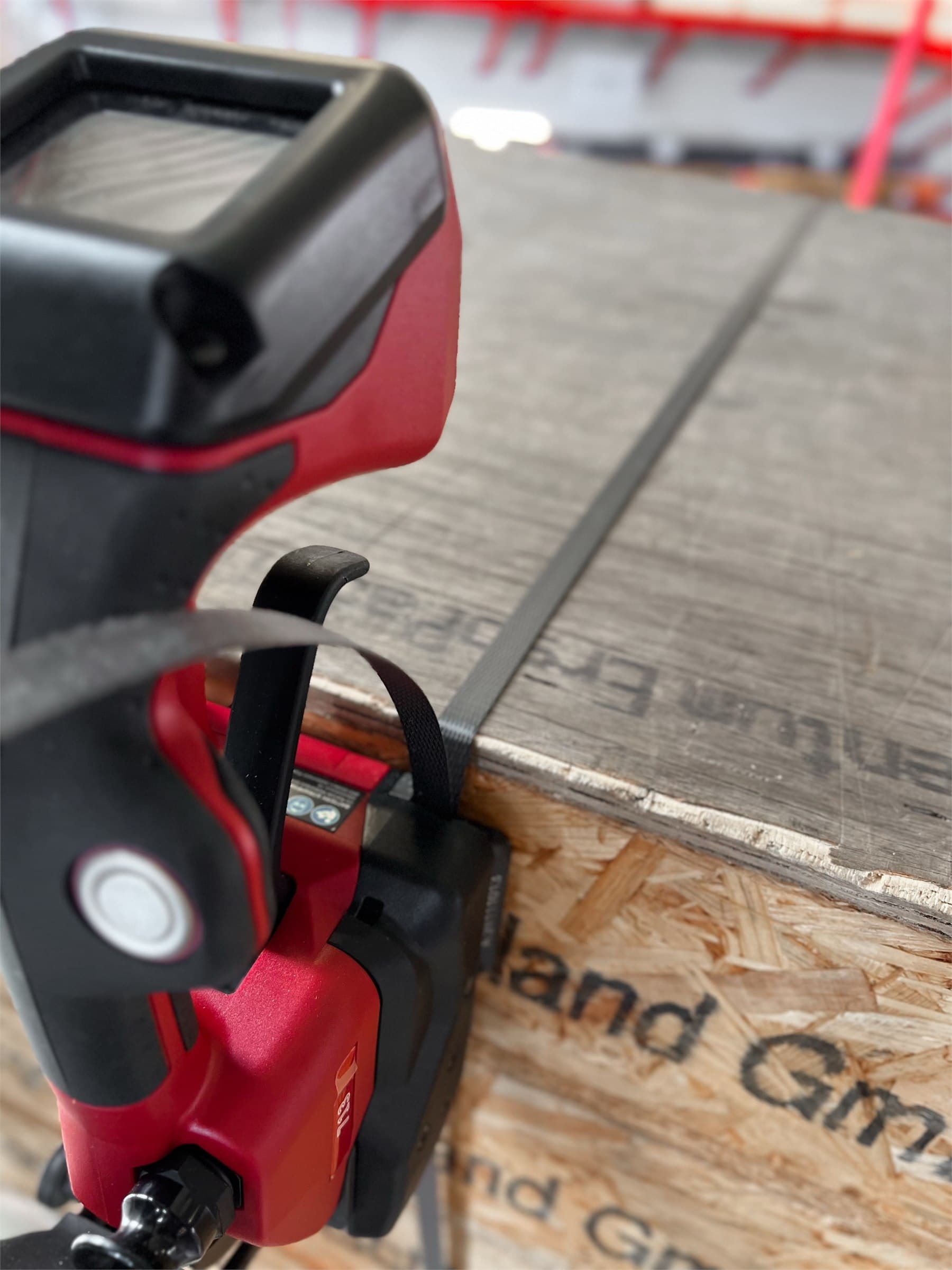
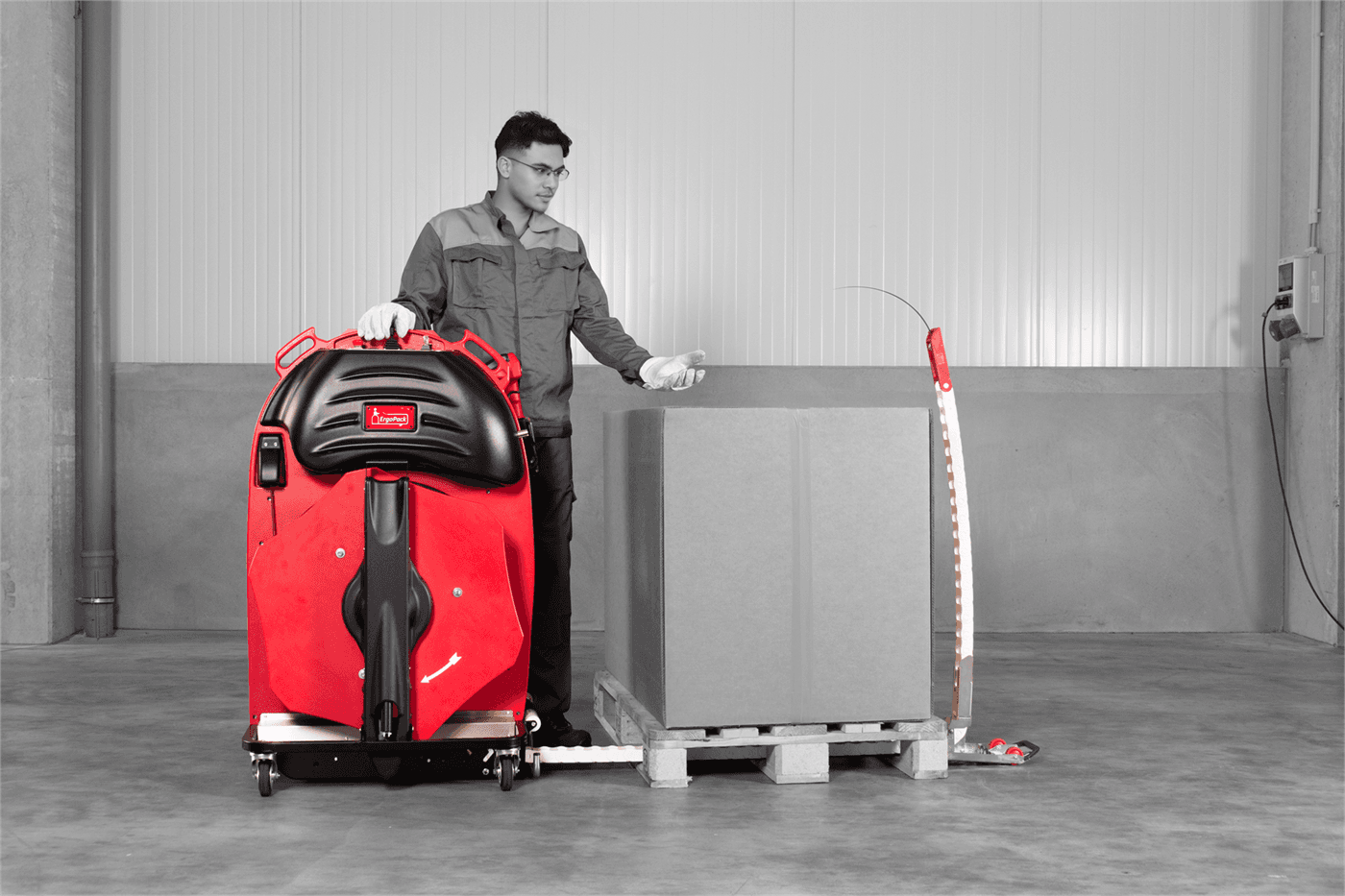
The circumferential banding that keeps a coil from unrolling has to be tight and consistent — a loose band lets the coil telescope, which damages the edges and destabilises the load. For coil and other heavy non-compressible metal loads, repeatable high tension is essential, which is the case for a calibrated machine (up to 2,500N on the ErgoPack 726X); see best pallet strapping machine for heavy loads and PP vs PET vs steel strapping for the material trade-off on metal exports.
Steel coil checklist
- Orientation chosen (eye-to-side standard for road/sea) and recorded on the BoL
- Circumferential + radial banding to stop unrolling/telescoping
- Consistent, tight tension on the bands
- VCI / moisture protection for the surface finish
- Cradle/bunk + dunnage + chocks to stop rolling
- Tie-downs to the correct ratio and pattern for the weight
- Edge and eye protection where straps bear
Package and secure coils to this standard and they arrive round, rust-free and exactly where the cradle held them.
Talk to a pallet strapping engineer
BENZ Packaging and ErgoPack India engineers support installations and service anywhere in India. Tell us your pallet setup and we’ll recommend the right machine — and send pricing.
Related Reading
Continue with the next guide
guides
PP vs PET Strapping: Which Should You Use, and When?
PP and PET strap suit very different loads. A clear guide to when polypropylene is enough and when polyester is essential — by load weight, settling, and export exposure.
guides
Strapping Machine AMC, Spares and Uptime: What to Check Before You Buy
A strapping machine is only as good as its uptime. What to check on service, spare parts and AMC before you buy — so the machine that saves you ₹25 lakh a year actually keeps running.
guides
Pallet Strapping Machine Buying Checklist: 10 Questions Before You Decide
Before you buy a pallet strapping machine, run through these ten questions. They cover loads, volume, power, tension, service and ROI — so you choose the right machine, not just the cheapest.