guides
Semi-Automatic vs Fully-Automatic Strapping: Which Do You Actually Need?
Semi-automatic, mobile-automatic and fully-automatic inline strapping suit very different operations. A clear guide to which one fits your pallets, volume and budget — and the trap in the middle.
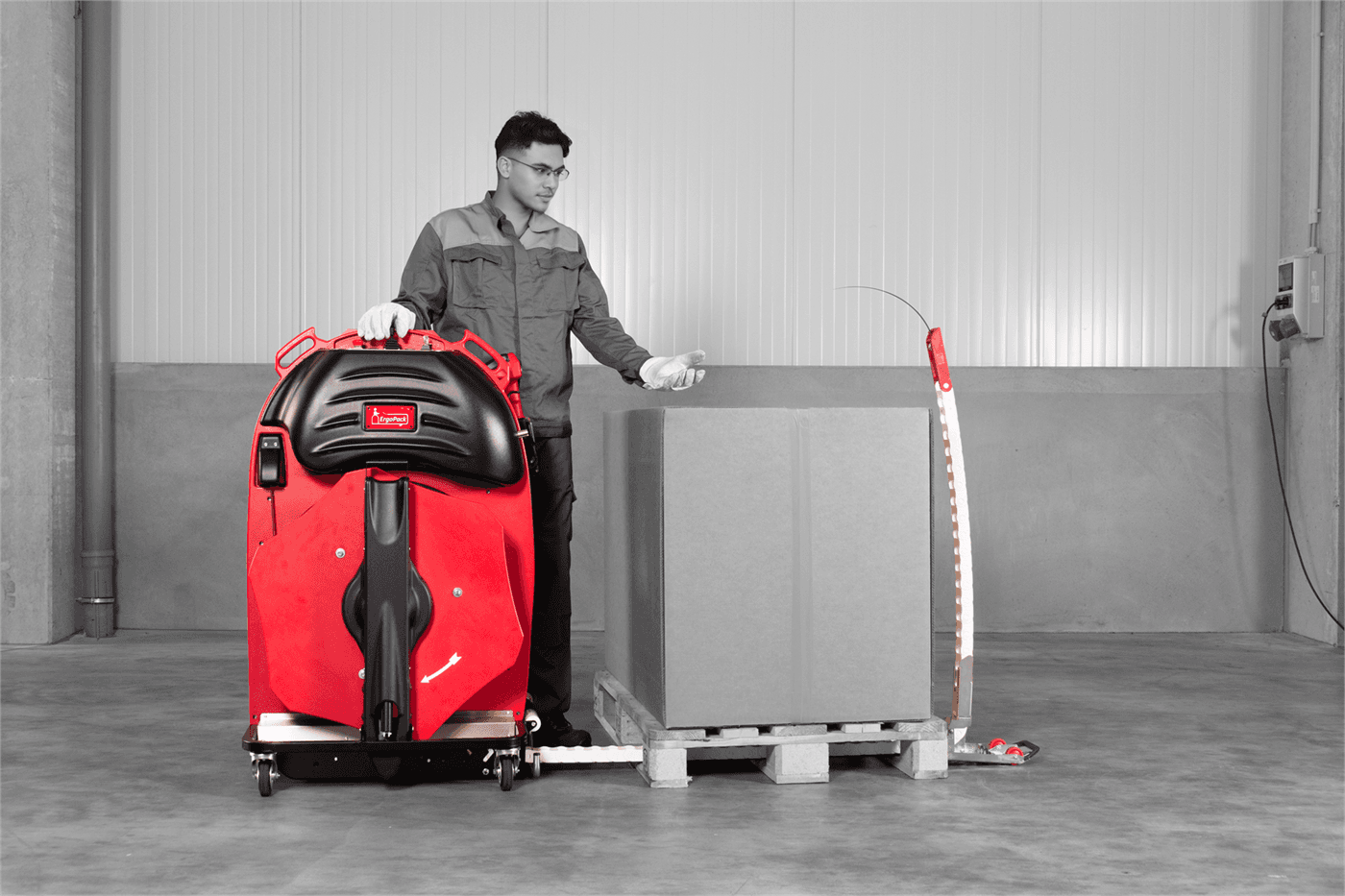
"Should I get a semi-automatic or fully-automatic strapping machine?" is a common question — and the honest answer is that for loaded pallets, neither of the two extremes is usually right. There’s a third option in the middle that most Indian dispatch floors actually need. Here’s how to choose.
The three categories
- Semi-automatic (table-top) — a small bench machine; the operator places a carton in it and it tensions and seals. Cheap, but it cannot strap a loaded pallet — only small cartons.
- Mobile automatic — a wheeled machine brought to the loaded pallet; it self-feeds the strap, tensions and seals in under 40 seconds. No conveyors, no rebuild.
- Fully-automatic (inline) — a fixed machine fed by conveyors; high speed but high CapEx, civil works and a fixed location.
The trap: semi-automatic can’t strap pallets
The most common mistake is buying a cheap semi-automatic table-top machine to "automate pallet strapping." It can’t — it’s built for small cartons, not loaded pallets. You end up still hand-strapping pallets, or lifting goods off the pallet to strap them, which is slower. For pallet dispatch, the choice is really mobile automatic vs fully-automatic inline.
Mobile automatic vs fully-automatic inline
| Factor | Mobile automatic | Fully-automatic inline |
|---|---|---|
| Strap loaded pallets | Yes — at any dock | Yes — at fixed point |
| Infrastructure | None (wheeled) | Conveyors + civil works |
| CapEx | Low | High |
| Flexibility | Any dock, any layout | Fixed line only |
| Best for | Most Indian floors | Very high, single-point volume |
| Payback | 6–18 months | Longer |
For the large majority of Indian operations — varied loads, multiple docks, growing but not conveyor-scale volume — mobile automatic is the right fit: it straps loaded pallets at calibrated tension with one operator, needs no rebuild, and pays back in 6–18 months (manual vs automatic). Fully-automatic inline only wins at very high, single-point volumes that justify the conveyors and CapEx.
How to choose
- Are you strapping loaded pallets? If yes, rule out semi-automatic table-top.
- Single fixed point at very high volume? → consider fully-automatic inline.
- Varied loads, multiple docks, growing volume? → mobile automatic.
- Model the payback — ROI calculator.
- Prove it on your heaviest pallet with a free demo.
Choice checklist
- Loaded pallets? → not semi-automatic table-top
- Very high single-point volume? → inline
- Varied loads / multiple docks? → mobile automatic
- Payback modelled in ROI calculator
- Verified on your own pallet
For loaded-pallet dispatch, the real choice is mobile automatic vs fully-automatic inline — and for most Indian floors, mobile automatic wins on flexibility, low CapEx and fast payback. Model your fit or request a quote.
Talk to a pallet strapping engineer
BENZ Packaging and ErgoPack India engineers support installations and service anywhere in India. Tell us your pallet setup and we’ll recommend the right machine — and send pricing.
Related Reading
Continue with the next guide
guides
PP vs PET Strapping: Which Should You Use, and When?
PP and PET strap suit very different loads. A clear guide to when polypropylene is enough and when polyester is essential — by load weight, settling, and export exposure.
guides
Strapping Machine AMC, Spares and Uptime: What to Check Before You Buy
A strapping machine is only as good as its uptime. What to check on service, spare parts and AMC before you buy — so the machine that saves you ₹25 lakh a year actually keeps running.
guides
Pallet Strapping Machine Buying Checklist: 10 Questions Before You Decide
Before you buy a pallet strapping machine, run through these ten questions. They cover loads, volume, power, tension, service and ROI — so you choose the right machine, not just the cheapest.