insights
Rising Labour Costs in India: How Strapping Automation Saves Crores Over 10 Years
Indian minimum wages rose again in April 2026, and labour is getting scarcer. See how automating end-of-line strapping cuts headcount on the dispatch floor and saves crores over the machine’s life — with the real numbers.
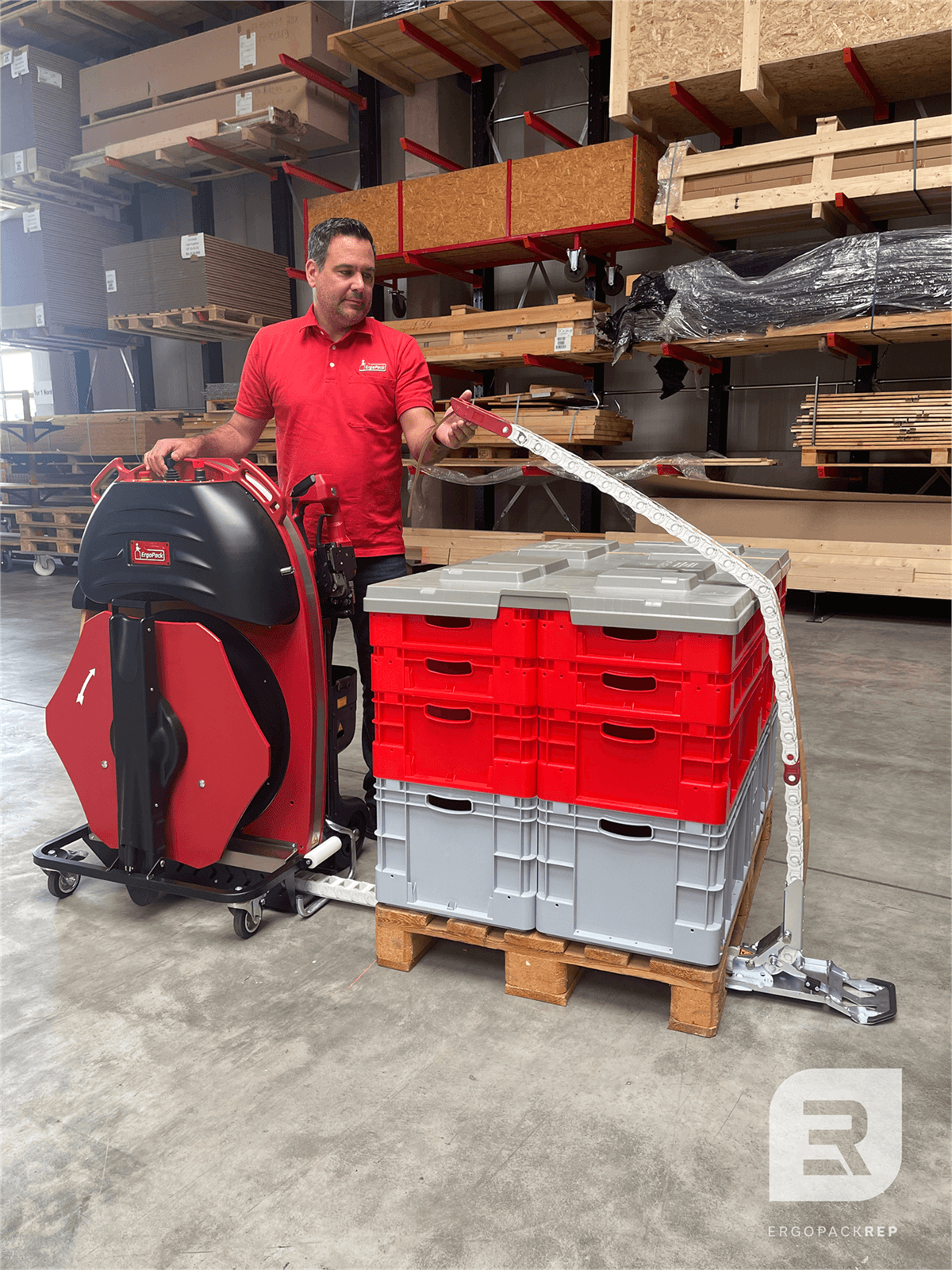
On 1 April 2026, India's central minimum wages rose again — an upward revision of 11.28 CPI points — continuing a steady, structural climb in the cost of labour. At the same time, manufacturers are reporting a real labour shortage. For any operation that still straps pallets by hand, this is a slow, compounding financial problem. This is the case for fixing it — with the actual numbers.
The structural problem: labour is getting more expensive, and scarcer
Two trends are squeezing every dispatch floor in India:
- Rising statutory wages. Central minimum wages now run from roughly ₹821/day for unskilled to ₹1,094/day for highly skilled workers in metro areas — and they ratchet up at each revision. Every increase raises the cost of every manual hour, permanently.
- Labour shortage. Manufacturers in 2026 report difficulty finding and keeping workers, so the cost is not just higher wages — it is overtime, attrition and the risk of not being able to staff a shift at all.
Manufacturers respond to this in one of a few ways: cut headcount, automate tasks, or absorb the rising cost. The ones who automate the right task win.
The most labour-heavy task on the dispatch floor
End-of-line strapping is one of the most labour-intensive, most repetitive jobs in the building. Manual double-strapping a pallet takes a two-person team about 120 seconds. Across a busy floor, that is a continuous drain of paid hours on a task that produces no value beyond securing the load.
Automating it is unusually high-leverage because:
- It removes a fixed, repeated labour cost — paid every shift, every day, forever.
- One operator with a mobile machine does the work of three — cutting the strapping crew dramatically.
- The freed people move to picking, staging and QA, so you get more output from fewer people.
The real numbers (from our ROI model)
Take a typical mid-size Indian floor and the default assumptions in our ROI calculator:
- 1 line, 2 shifts/day, 50 pallets per shift (100 pallets/day).
- Manual: ~4 workers per line per shift for strapping → 8 people across the day.
- With ErgoPack: 1 operator per line per shift → 2 people.
- Monthly cost per worker (CTC): ₹30,000.
That removes the cost of roughly 6 people from the strapping operation:
| Metric | Figure |
|---|---|
| Workers reduced | ~6 (from 8 to 2) |
| Monthly labour saving | ~₹1.8 lakh |
| Annual labour saving | ~₹21–22 lakh |
| Plus strapping-material saving (~₹12/pallet) | ~₹3.6 lakh/year |
| Indicative total annual saving | ~₹25 lakh |
| Over a 10-year machine life | ~₹2 crore+ |
And that is before wages rise further — which they will. Every future minimum-wage hike makes the manual option more expensive and the automation saving larger. The crore-scale number is not a marketing figure; it is the compounding of a fixed labour cost removed over a machine's life.
These figures use the calculator's defaults. Your real saving depends on your volume, shifts and wage — model it precisely with the ROI calculator.
Why the saving compounds
- Wages only go up. Each statutory increase widens the gap between manual and automated cost.
- Labour scarcity adds hidden cost. Overtime, recruitment and the risk of an unstaffed shift are real costs automation removes.
- The machine cost is fixed and one-time (plus modest annual maintenance), while the labour cost it replaces rises every year.
This is why the payback is fast — typically 6 to 18 months — and the net benefit over the machine's life runs into crores.
Beyond the wage line
The labour saving is the headline, but automating strapping also:
- Cuts transit damage (consistent tension → fewer rejected loads) — see reduce transit damage.
- Lifts throughput — the dock stops queuing — see improve floor efficiency.
- Removes the hardest manual-handling task — see warehouse manual handling safety.
The bottom line
Labour in India is on a one-way upward path, and it is getting harder to find. Automating end-of-line strapping converts a rising, recurring, hard-to-staff cost into a fixed one-time investment — saving roughly ₹25 lakh a year and crores over the machine's life on a typical floor. Model your own numbers in the ROI calculator, then request a quote and on-site demo.
Talk to a pallet strapping engineer
BENZ Packaging and ErgoPack India engineers support installations and service anywhere in India. Tell us your pallet setup and we’ll recommend the right machine — and send pricing.
Related Reading
Continue with the next guide
insights
Improving OEE: Why the Dispatch Dock Is the Forgotten Factor
OEE programmes obsess over the production line and ignore the dispatch dock — yet a manual securing bottleneck there caps the throughput your OEE is meant to protect. Here’s the link.
insights
Pallet Strapping Machine for Small Business: Is It Worth It?
Small and mid-size Indian manufacturers and exporters often assume automation is only for big plants. For pallet securing, that’s usually wrong — here’s why a mobile machine fits a small business.
insights
How Many Pallets a Day Justify a Strapping Machine?
There’s a simple volume threshold above which a mobile strapping machine pays for itself. Here’s how to work out yours — and why it’s lower than most people expect.