guides
Pallet Weight & Load Capacity: How Much Can a Pallet Hold?
How much a pallet weighs and how much it can hold — static, dynamic and racking capacity explained, by material, and why the load rating only matters if the load is secured.
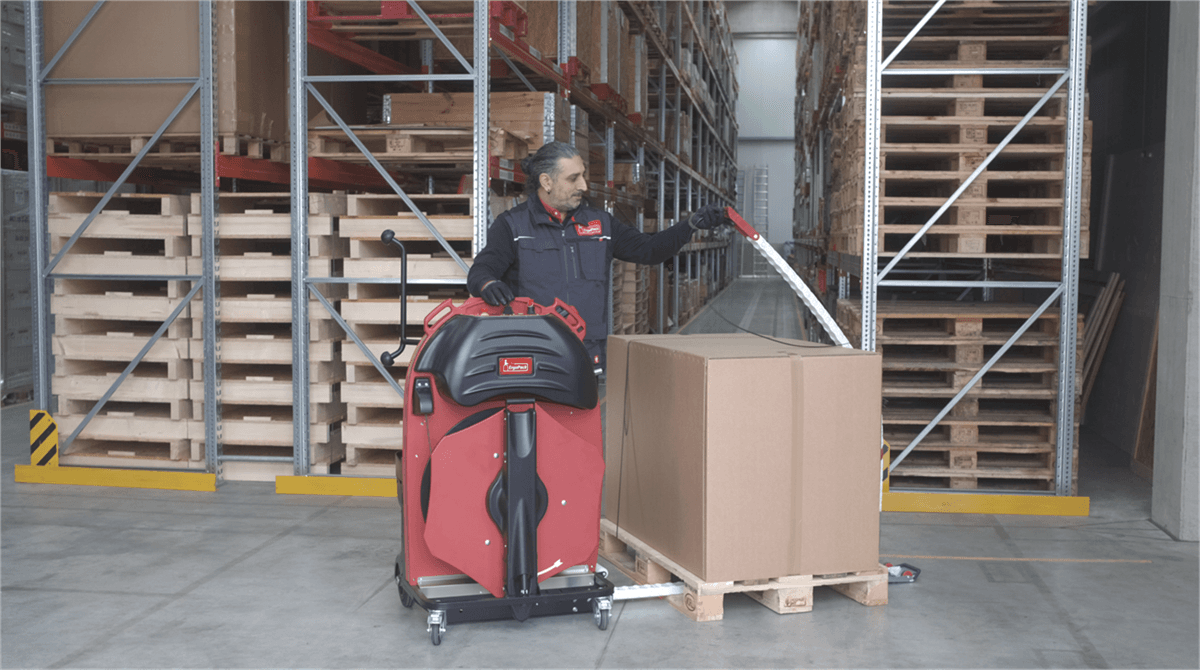
"How much can a pallet hold?" sounds like one number, but a pallet actually has three different capacity ratings — and using the wrong one is how pallets fail. Here is what pallet weight and load capacity really mean.
How much does a pallet weigh?
The empty weight depends on material and size:
- Wooden pallet (standard): typically ~15–25 kg (a 48×40 in pallet ≈ 32–44 lb).
- Plastic pallet: varies widely by design, often lighter than wood for the same footprint.
- Metal pallet: heaviest, for the most demanding loads.
You need the empty weight for shipping calculations (it counts toward gross weight) and for manual handling.
The three load capacities
A pallet does not have one capacity — it has three, and they decrease in this order:
| Rating | Meaning | Typical use |
|---|---|---|
| Static | Max load when the pallet is stationary, on the floor | Storing one pallet on the ground |
| Dynamic | Max load when the pallet is being moved by forklift/jack | Handling and transport |
| Racking | Max load when the pallet is supported only at its edges in racking | Storage on beam racking |
Racking capacity is the lowest because the pallet is only supported at the ends and the deck must carry the load across the gap. Always design to the racking rating if the pallet will be racked — using the static rating in a rack is a collapse risk.
Typical capacities
- A standard wooden pallet commonly holds up to ~1,000–1,500 kg dynamic, less in racking.
- Heavy-duty plastic and metal pallets can hold considerably more.
- Always use the manufacturer's rated capacity for your specific pallet — do not guess.
What affects capacity
- Material and construction — block pallets are generally stronger than stringer.
- Condition — a cracked board or stringer slashes the safe capacity.
- Load distribution — an evenly spread load is safer than a concentrated point load.
- Support method — floor (static) vs forklift (dynamic) vs rack (racking).
Capacity is only safe if the load is secured
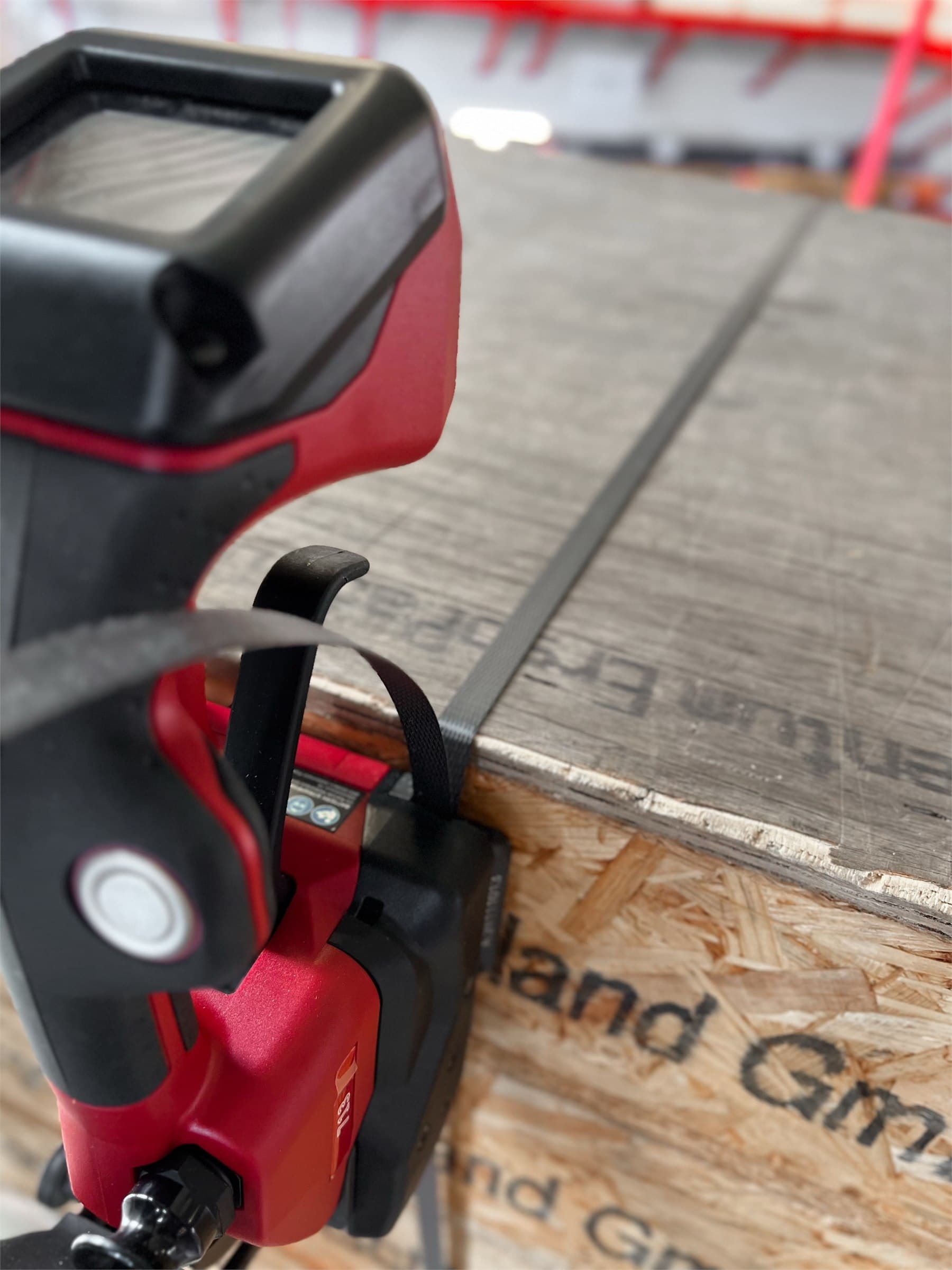
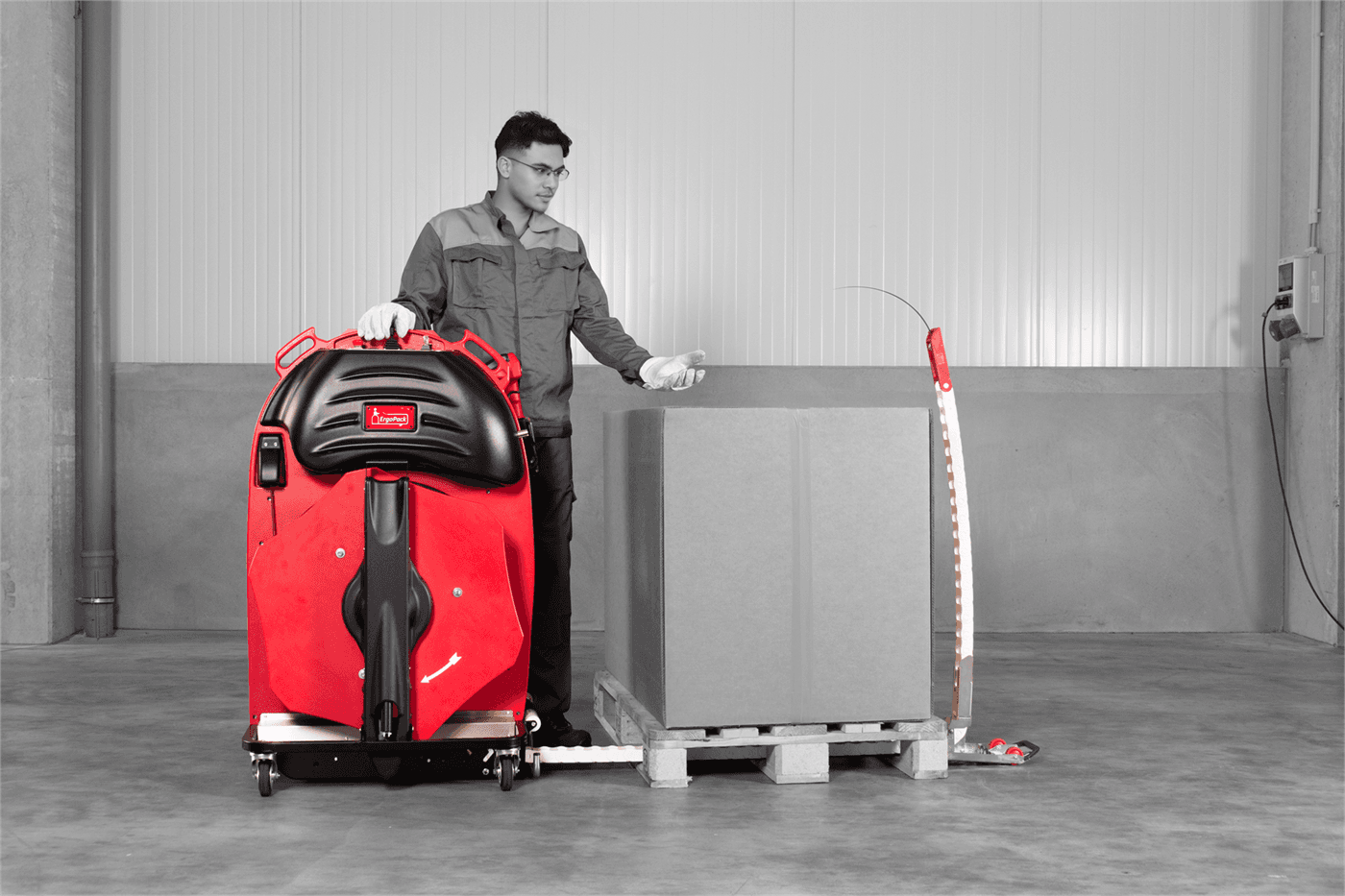
A pallet rated for 1,200 kg can still fail in transit if those 1,200 kg are not held in place — a load that shifts concentrates force, overloads one side, and can exceed the safe point load even within the total rating. Staying within the rated capacity and securing the load to the pallet is what keeps a heavy pallet safe. Strap the load down at consistent tension so the weight stays distributed and the unit stays stable — machines such as the ErgoPack 726X, GO and 700 apply repeatable tension up to 2,500N for heavy loads. See best machine for heavy loads and types of pallets explained.
Pallet capacity checklist
- Empty pallet weight known (for gross-weight calcs)
- Right rating used: static / dynamic / racking
- Racking rating used if the pallet will be racked
- Within the manufacturer's rated capacity
- Pallet condition sound (no cracks)
- Load evenly distributed
- Load secured to the pallet so weight stays distributed
Know the three ratings, design to the right one, stay within it — and secure the load so the capacity you planned for is the capacity you actually get.
Talk to a pallet strapping engineer
BENZ Packaging and ErgoPack India engineers support installations and service anywhere in India. Tell us your pallet setup and we’ll recommend the right machine — and send pricing.
Related Reading
Continue with the next guide
guides
PP vs PET Strapping: Which Should You Use, and When?
PP and PET strap suit very different loads. A clear guide to when polypropylene is enough and when polyester is essential — by load weight, settling, and export exposure.
guides
Strapping Machine AMC, Spares and Uptime: What to Check Before You Buy
A strapping machine is only as good as its uptime. What to check on service, spare parts and AMC before you buy — so the machine that saves you ₹25 lakh a year actually keeps running.
guides
Pallet Strapping Machine Buying Checklist: 10 Questions Before You Decide
Before you buy a pallet strapping machine, run through these ten questions. They cover loads, volume, power, tension, service and ROI — so you choose the right machine, not just the cheapest.