insights
Manual vs Automatic Pallet Strapping: The Real Cost Comparison (India)
A side-by-side cost comparison of manual vs automatic pallet strapping for Indian operations — labour, consumables, damage and time, with the real annual numbers and break-even.
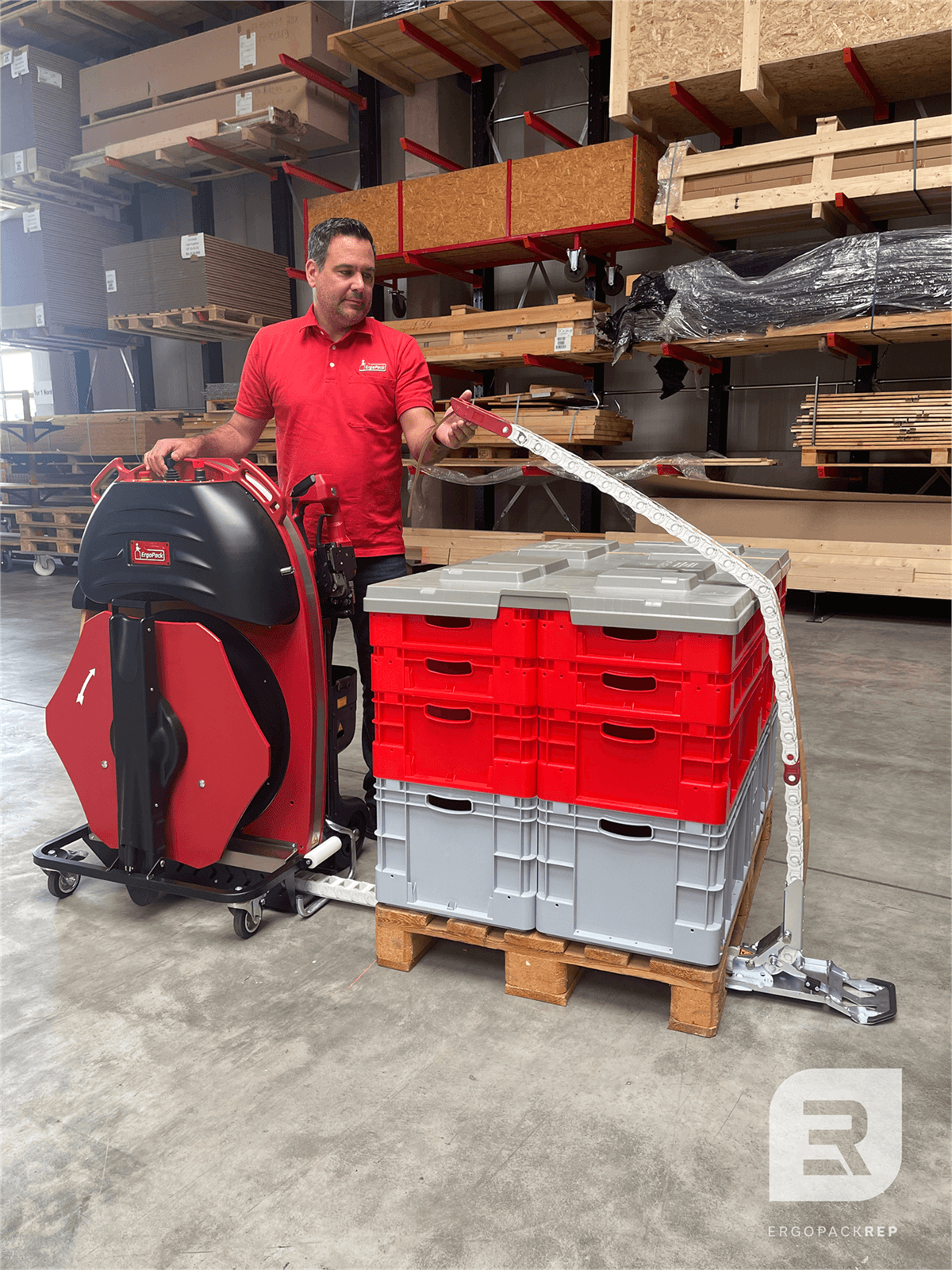
"Manual is cheaper" is the most expensive assumption on the dispatch floor. It is true only on day one — when you compare the price of a hand tool to the price of a machine. Compare the cost of strapping a pallet over a year, and the picture inverts. Here is the honest, number-by-number comparison for Indian operations.
The comparison that matters: cost per pallet over a year, not machine price
Manual strapping has no machine cost but a large, recurring, rising labour cost. Automatic strapping has a one-time machine cost but slashes the recurring cost. The right comparison is total annual cost, not the upfront figure.
| Factor | Manual strapping | Automatic (mobile ErgoPack) |
|---|---|---|
| Operators per pallet | 2 | 1 |
| Cycle time per pallet | ~120 seconds | under 40 seconds |
| Tension consistency | Variable (operator) | Digital, repeatable to 2500N |
| Seal | Metal clips (recurring cost) | Sealless friction weld |
| Strapping waste | Higher | ~₹12/pallet lower |
| Labour cost trend | Rises every year | Fixed machine + modest AMC |
| Transit damage | Higher (load shift) | Lower (consistent tension) |
The annual numbers (from our ROI model)
Using the ROI calculator defaults — 1 line, 2 shifts, 50 pallets/shift, ₹30,000 monthly CTC:
- Manual needs ~8 workers for strapping → labour cost ~₹2.4 lakh/month.
- Automatic needs ~2 operators → roughly ₹0.6 lakh/month of attributable labour.
- Labour saving:
₹1.8 lakh/month (₹21–22 lakh/year). - Plus consumable saving (~₹12/pallet): ~₹3.6 lakh/year.
- Indicative total: ~₹25 lakh/year, recovering a mobile machine in 6–18 months, then saving for its ~10-year life — crores in total.
The hidden costs manual strapping carries
Beyond the visible labour line, manual strapping costs more in three ways the comparison usually misses:
- Transit damage — inconsistent hand tension causes load shift and rejected loads; one rejected export container can exceed a year of "savings" (reduce transit damage).
- Throughput cap — manual strapping queues the dock, capping how much the whole floor can ship (increase factory throughput).
- Rising wages — every minimum-wage increase makes the manual option permanently more expensive (rising labour costs).
When manual still makes sense (the honest bit)
Manual is genuinely fine for very low volume — under ~30 pallets a day — where the labour saving doesn't justify a machine, or as a backup. For anything mid-to-high volume, automatic wins on total cost, usually comfortably.
How to run the comparison for your floor
- Count your strapping operators and time the manual cycle.
- Enter your real wage, volume and shifts in the ROI calculator.
- Compare annual cost, not machine price.
- Add the damage and throughput benefits on top.
- Check the payback — under ~18 months is a strong case.
The verdict
Manual strapping is cheaper only on the invoice. On the floor, over a year, automatic strapping is dramatically cheaper for any mid-to-high-volume operation — saving ~₹25 lakh a year and crores over the machine's life, before you even count lower damage and higher throughput. Model your numbers or request a quote.
Talk to a pallet strapping engineer
BENZ Packaging and ErgoPack India engineers support installations and service anywhere in India. Tell us your pallet setup and we’ll recommend the right machine — and send pricing.
Related Reading
Continue with the next guide
insights
Improving OEE: Why the Dispatch Dock Is the Forgotten Factor
OEE programmes obsess over the production line and ignore the dispatch dock — yet a manual securing bottleneck there caps the throughput your OEE is meant to protect. Here’s the link.
insights
Pallet Strapping Machine for Small Business: Is It Worth It?
Small and mid-size Indian manufacturers and exporters often assume automation is only for big plants. For pallet securing, that’s usually wrong — here’s why a mobile machine fits a small business.
insights
How Many Pallets a Day Justify a Strapping Machine?
There’s a simple volume threshold above which a mobile strapping machine pays for itself. Here’s how to work out yours — and why it’s lower than most people expect.