products
Logistics Machines for Dispatch Efficiency: Why Mobile Pallet Strapping Matters
When companies search for logistics machines, they usually compare conveyors, wrappers, dock equipment, scanners, and pallet strapping. This guide shows where mobile pallet strapping delivers the fastest operational win for dispatch areas, 3PL yards, and multi-bay warehouses.
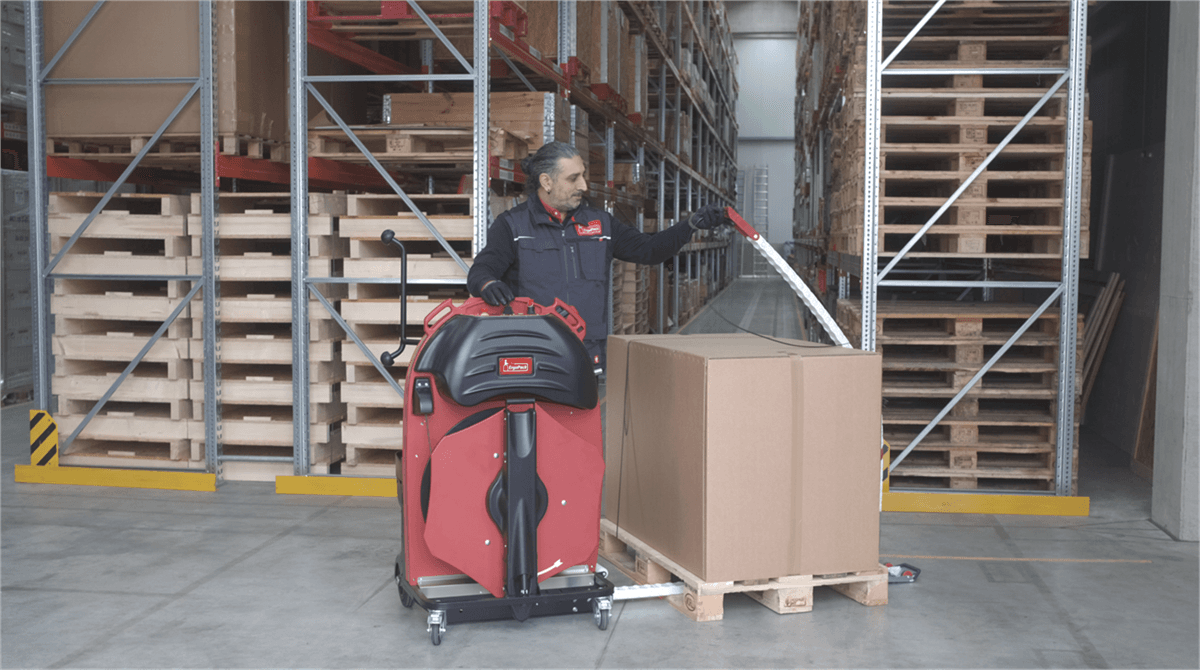
The phrase logistics machines is broad, but real buying cycles are not.
Operations teams usually review warehouse and dispatch equipment in the same capex conversation: dock equipment, pallet wrappers, scanners, conveyors, weighing systems, handling aids, and pallet strapping. The problem is that these machines are often compared as if they create value in the same way.
They do not.
Some logistics machines improve visibility. Some improve movement. Some improve loading safety. Pallet strapping is different because it affects three things at once:
- dispatch readiness,
- operator effort,
- and load stability at the point of release.
That is why mobile pallet strapping deserves a higher position in most logistics equipment plans than it usually gets.
Which logistics machines change dispatch performance fastest
Not every machine pays back at the same speed. In a typical dispatch operation, the highest-value equipment usually falls into one of these roles:
- movement: forklifts, pallet trucks, tuggers, conveyors,
- loading interface: dock levelers, dock shelters, lifting aids,
- verification: scanners, printers, weighing and labeling equipment,
- unitization and protection: wrappers, corner protection, pallet strapping,
- operator risk reduction: ergonomic handling and assist systems.
Pallet strapping sits at the intersection of unitization and operator risk reduction. That matters because a process can be fast on paper and still fail if the load is not ready to move or the operator has to work the hard way every time.
Why pallet strapping should be part of the logistics-machine shortlist early
If dispatch teams are still bending, walking around pallets, manually handling strap, or reworking unstable loads, then the operation has a recurring bottleneck that touches almost every outbound order.
A better strapping process can improve:
- dispatch flow,
- load handover quality,
- operator fatigue,
- consistency between shifts,
- and the speed at which one team can clear staging lanes.
That is why mobile pallet strapping is not just a packaging upgrade. It is a dispatch-system upgrade.
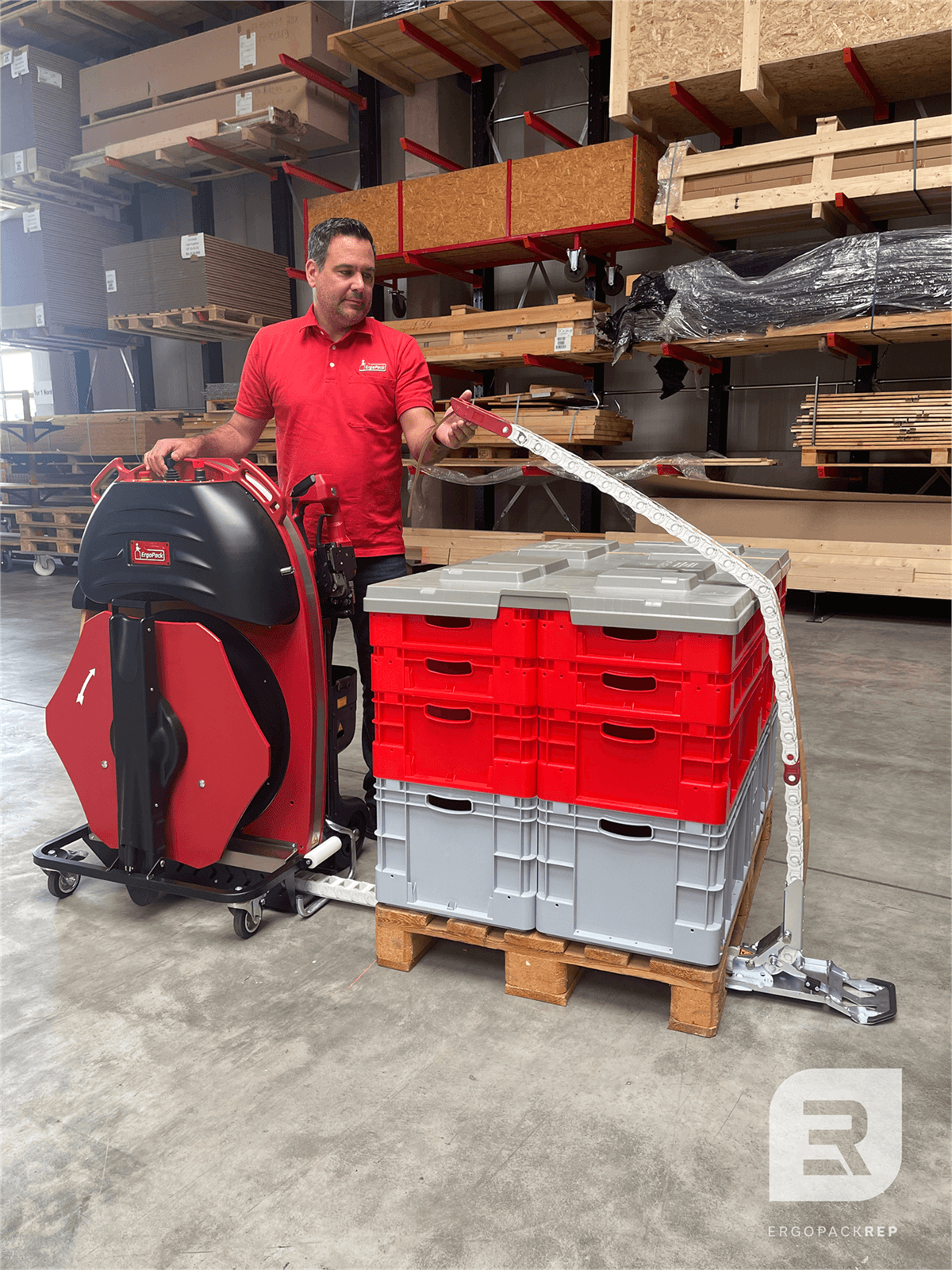
Where mobile pallet strapping fits inside the logistics stack
Mobile pallet strapping is strongest when the operation does not want to redesign the whole warehouse around a fixed station.
Examples:
- 3PL and contract logistics sites with multiple dispatch doors.
- Manufacturers shipping mixed pallet sizes from several staging points.
- Warehouse teams that build and strap loads where they stand.
- Spare-parts and industrial distributors where pallet profiles change every hour.
In those environments, a mobile strapping machine can create faster practical value than a more rigid fixed-system investment because it follows the work instead of forcing the work to follow the machine.
Match the strapping machine to the dispatch pattern
The right answer depends on the type of logistics work you are actually running.
Use ErgoPack GO for flexible multi-bay and multi-point dispatch
The ErgoPack GO is the strongest fit when the warehouse needs one portable unit that can cover several locations efficiently.
Why it works in logistics environments:
- portable battery-powered operation,
- 40 m/min chain speed,
- 350 cycles per charge,
- good fit for low-to-medium volume dispatch,
- and a simpler economic entry point when the operation needs flexibility first.
This is especially relevant when buyers search for logistics machines because they are not always trying to build a premium automated line. Often they are trying to remove one stubborn manual bottleneck with the least disruption.
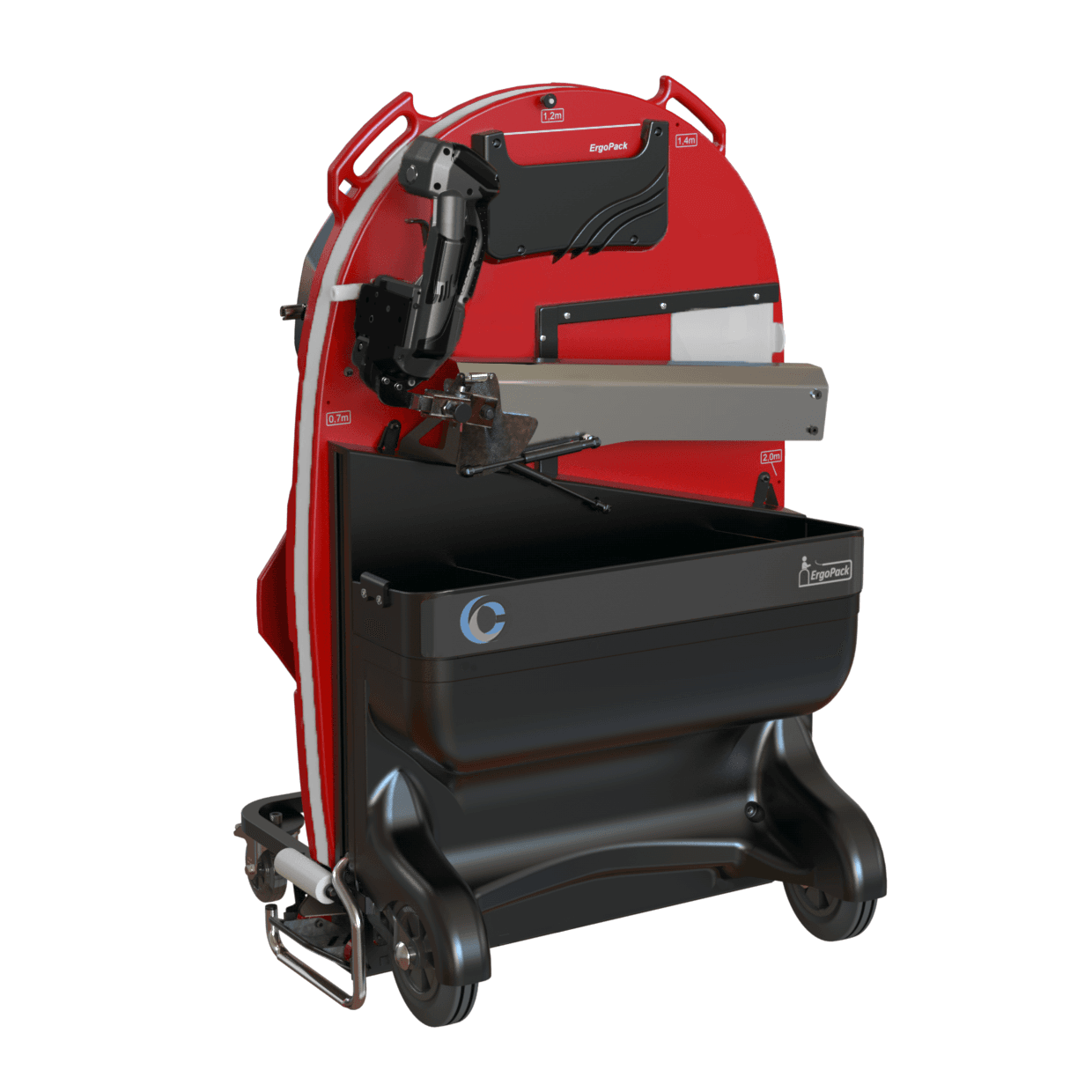
Use ErgoPack 700 when the site needs maximum simplicity and zero charging dependence
The ErgoPack 700 fits a different logistics profile:
- lower-volume dispatch points,
- remote or utility-constrained areas,
- backup applications,
- and operations that need broad strap-material compatibility.
Its hand-crank design means no battery dependence and no charging downtime. That is strategically useful for sites that care more about certainty, simplicity, and operating independence than top-end cycle speed.
It also brings broader material flexibility than the 726X Li because it can work with PP, PET, paper, cord, and composite straps.
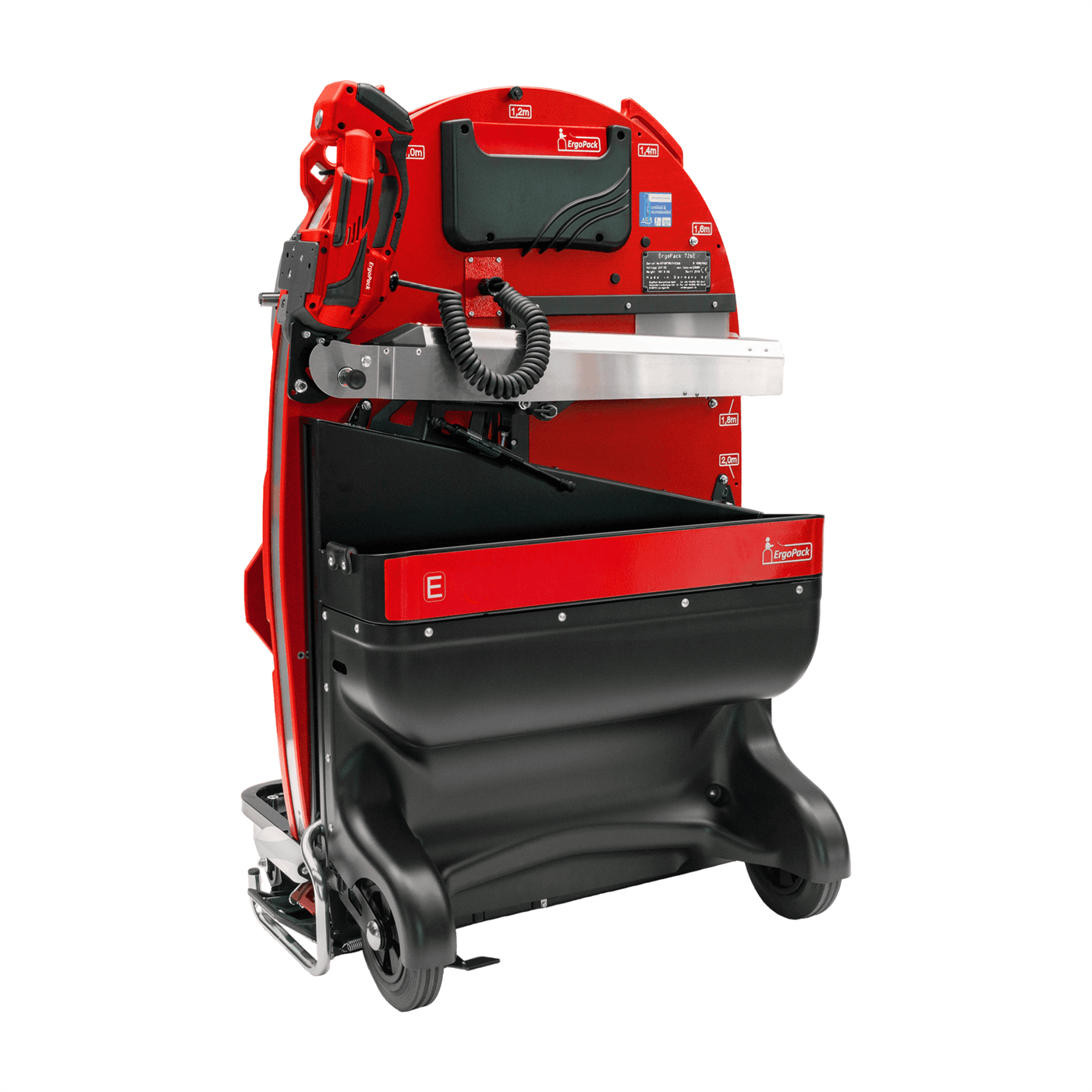
Use ErgoPack 726X Li when dispatch speed and daily utilization are rising
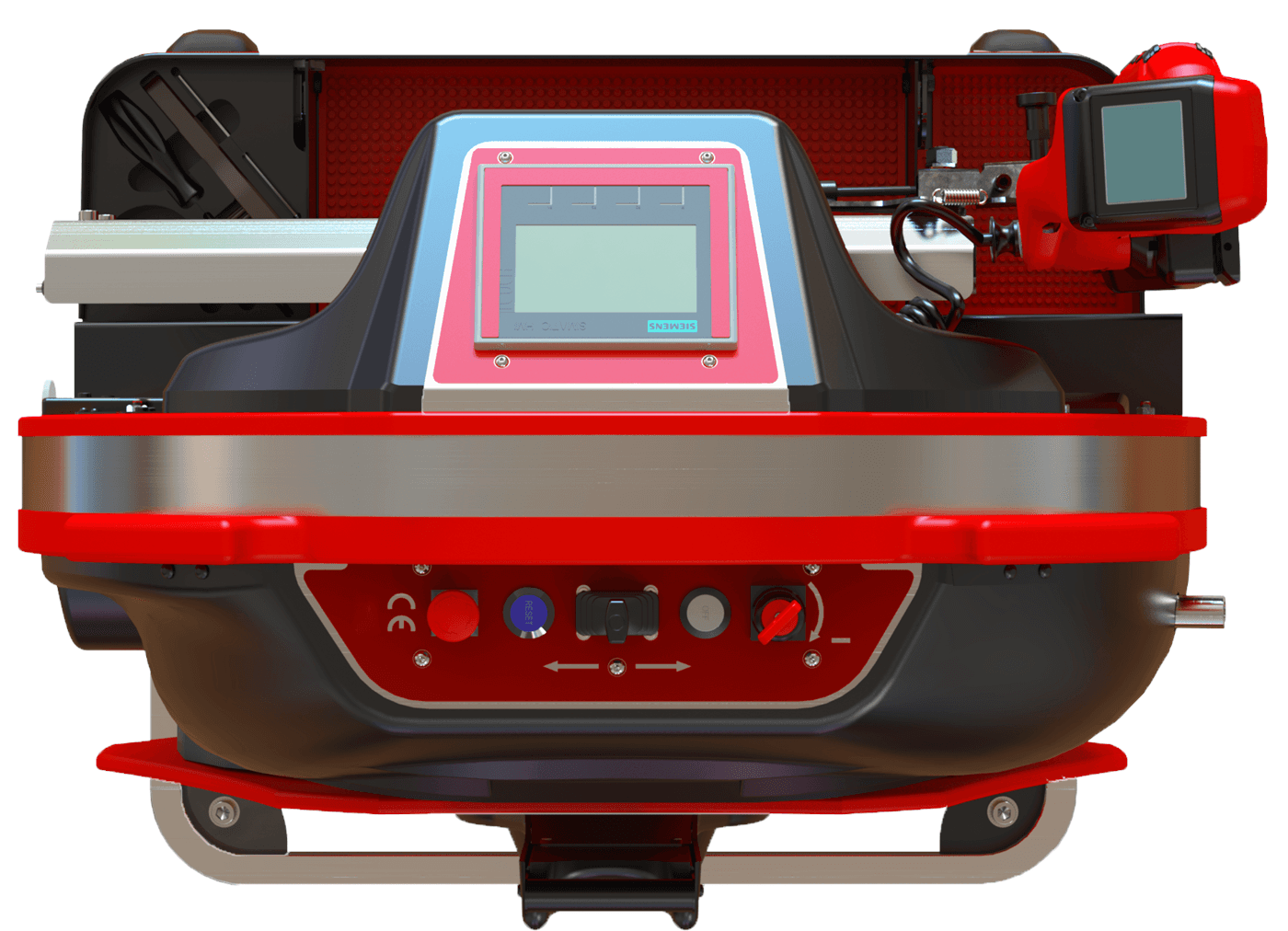
For logistics teams that are growing into a more demanding outbound profile, the ErgoPack 726X Li should usually be the lead recommendation.
Why:
- 66 m/min chain speed,
- up to 1200 cycles per charge,
- fast Lithium-Ion recharge profile,
- touchscreen-based parameter changes,
- line laser and tool-lift support,
- and a larger operating window for pallet width and height than the GO.
This is the right answer when the site is no longer just looking for a convenient mobile tool. It is looking for a mobile productivity platform.
Do not overbuy your first logistics-machine project
One of the biggest mistakes in warehouse capex planning is buying a machine for the most extreme case instead of the repeatable case.
If your dispatch operation is still proving its throughput pattern, a phased approach is often smarter:
- Identify the current highest-friction dispatch point.
- Start with one machine that solves the real load profile there.
- Measure pallets per hour, operator movement, rework, and queue reduction.
- Expand only after the process fit is clear.
That phased logic usually points to one of these starts:
- ErgoPack GO for flexible, mobile, multi-point operations.
- ErgoPack 700 for low-complexity or power-independent needs.
- ErgoPack 726X Li for growth-stage throughput and repeatability.
A simple technical decision matrix
Use this matrix when logistics teams need a fast recommendation:
Choose ErgoPack 700 if:
- volume is lower,
- power independence matters,
- the site needs simple mechanics,
- or the strap program includes paper, cord, or composite.
Choose ErgoPack GO if:
- dispatch is spread across several points,
- you need battery-powered mobility,
- pallets fit within the GO geometry window,
- and you want to remove manual work without moving into a premium-speed platform yet.
Choose ErgoPack 726X Li if:
- the site runs enough volume to feel dispatch pressure,
- 13 mm to 16 mm PP or PET is the core application,
- faster cycle speed and longer runtime will be used,
- and management wants a more future-ready mobile automation decision.
Why this matters commercially
When companies search for logistics machines, they are really asking where equipment investment changes the operation fastest.
Mobile pallet strapping often scores unusually well because it addresses:
- labor waste,
- load quality,
- operator fatigue,
- and dispatch consistency,
without requiring a full line rebuild.
That makes it one of the most pragmatic machine decisions in the outbound process.
What to do next
If your team is still mapping fit, start with Pallet Strapping Machine Guide: How to Choose the Right System for Your Warehouse. If the conversation is moving toward throughput and justification, read Automated Pallet Strapping: ROI, Throughput and When Mobile Automation Wins.
Then move into the commercial workflow:
- Review ErgoPack 700, ErgoPack GO, and ErgoPack 726X Li.
- Compare them side by side on the comparison page.
- Configure a floor-fit version inside Build Your Own ErgoPack.
- Use the ROI calculator with your own shift, labor, and pallet assumptions.
- Speak with ErgoPack India for site-specific application guidance.
Technical references
Talk to a pallet strapping engineer
BENZ Packaging and ErgoPack India engineers support installations and service anywhere in India. Tell us your pallet setup and we’ll recommend the right machine — and send pricing.
Related Reading
Continue with the next guide
products
Automated Pallet Strapping: ROI, Throughput and When Mobile Automation Wins
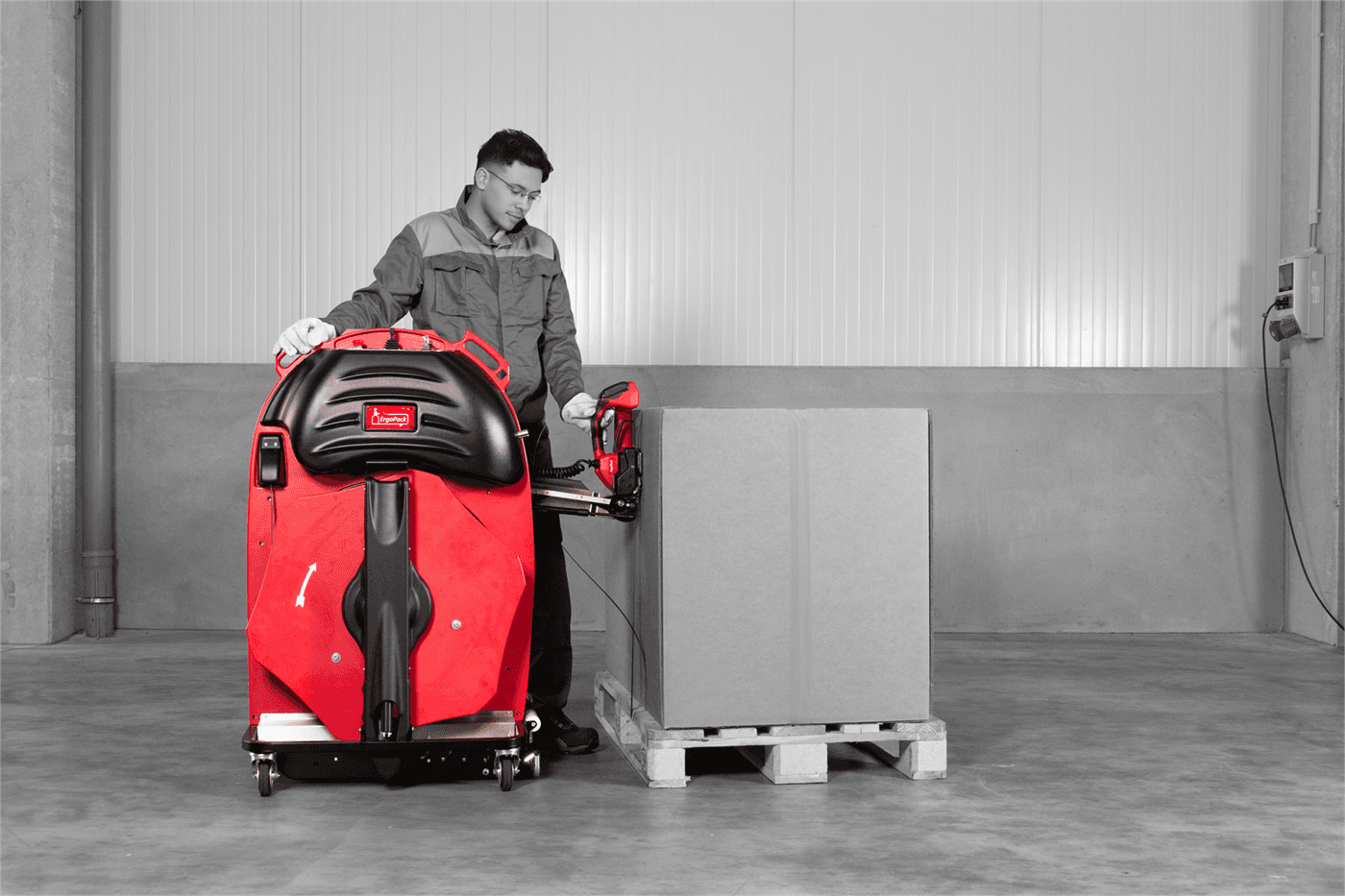
Automated pallet strapping is not just about speed. This guide breaks down throughput, labor, ergonomics, battery cycles, pallet variation, and when a mobile system like ErgoPack 726X Li beats a fixed strapping station.
products
Pallet Strapping Machine Guide: How to Choose the Right System for Your Warehouse
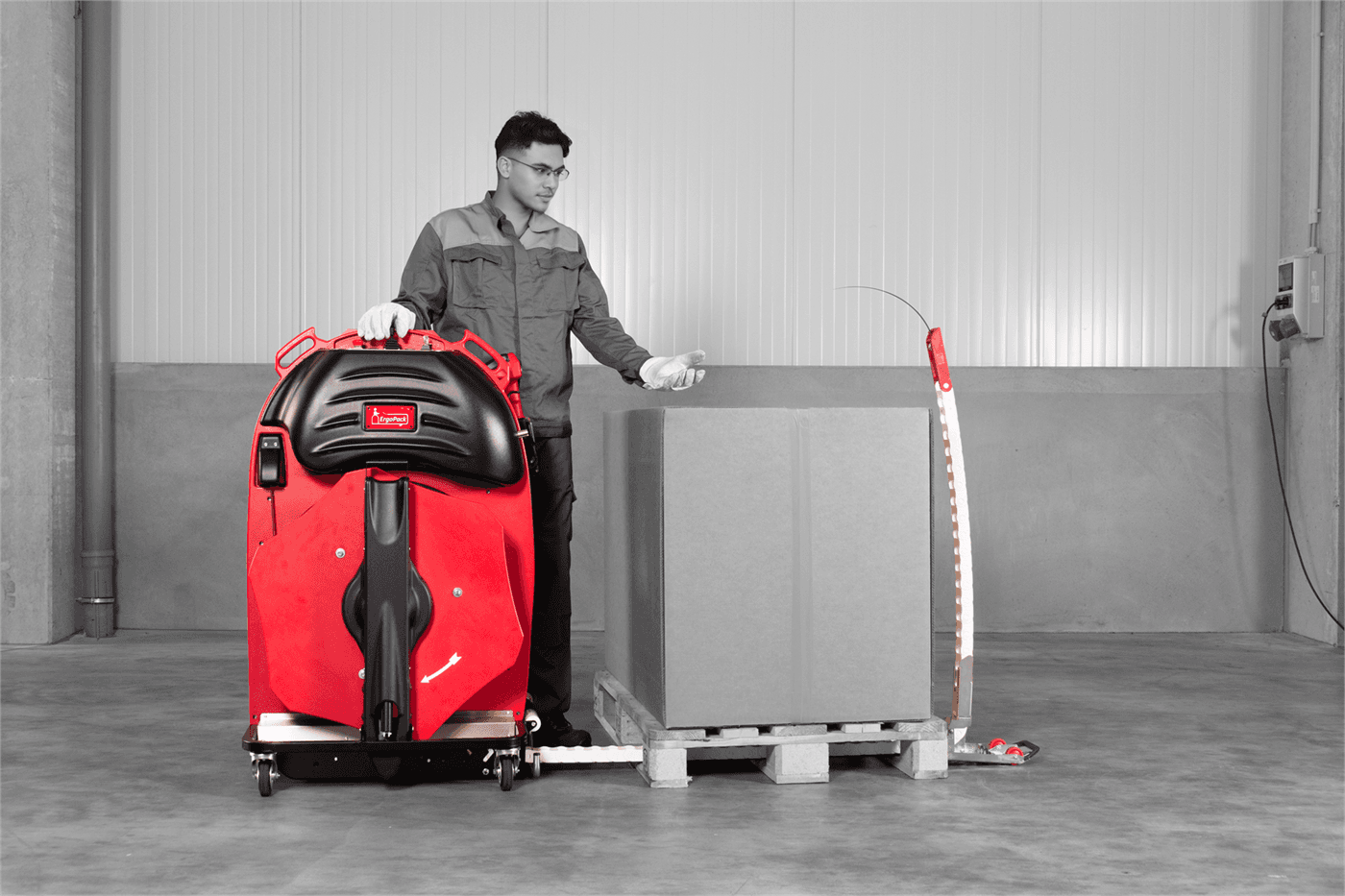
A technical buyer's guide to pallet strapping machines for Indian warehouses: compare manual, portable, and mobile automated systems by throughput, strap width, pallet size, ergonomics, and operating cost.