products
Pallet Strapping Machine Guide: How to Choose the Right System for Your Warehouse
A technical buyer's guide to pallet strapping machines for Indian warehouses: compare manual, portable, and mobile automated systems by throughput, strap width, pallet size, ergonomics, and operating cost.
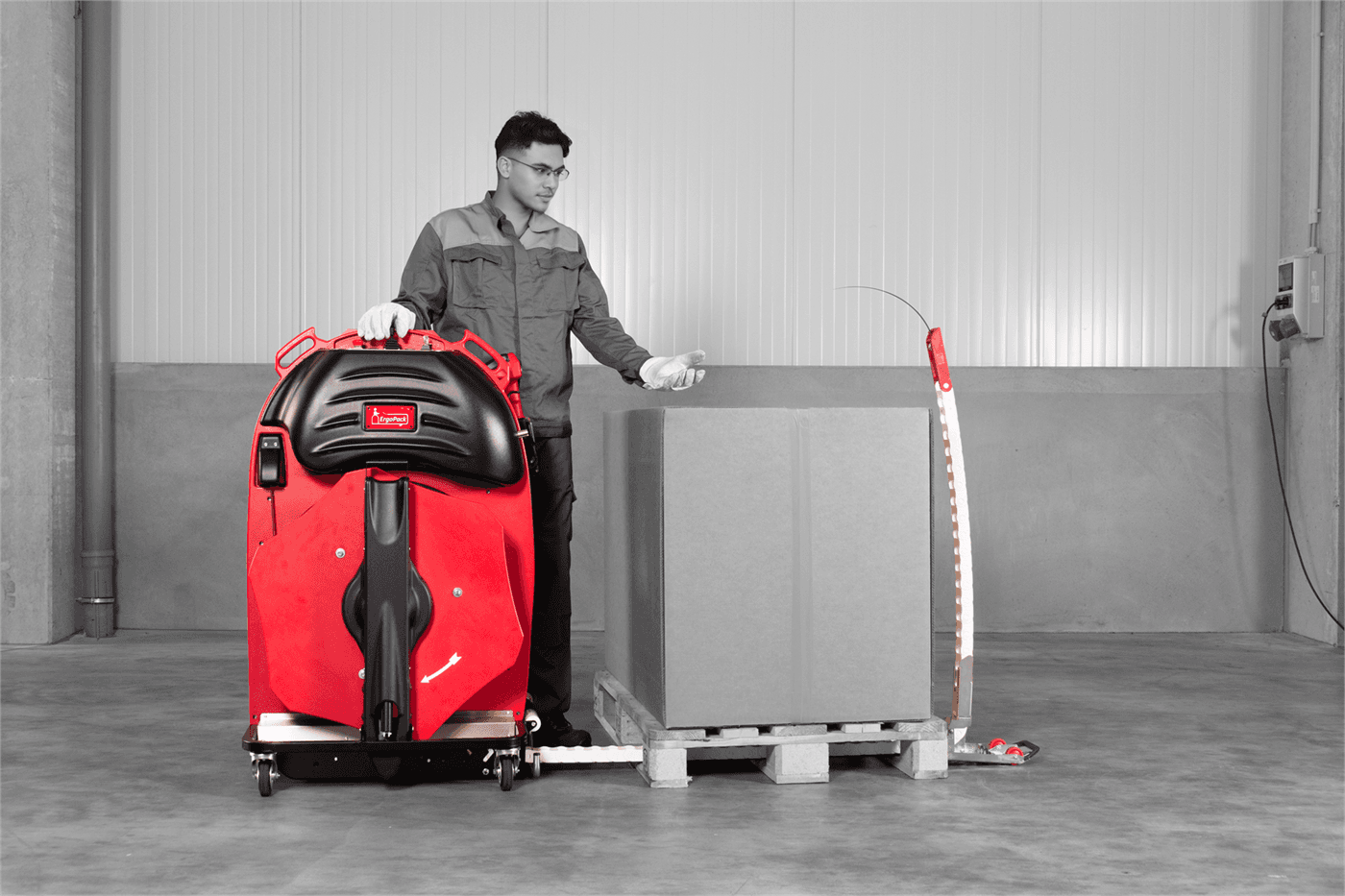
If you are searching for a pallet strapping machine, the most expensive mistake is starting with a brochure and not with the pallet, the strap, and the way your dispatch floor actually works.
Most warehouses do not have one perfect load profile. They have mixed pallet widths, different pallet heights, different dispatch bays, variable shift pressure, and operators who are expected to move fast without compromising safety. That is why the right pallet strapping machine is not the machine with the longest feature list. It is the machine that fits your load pattern, your strap specification, your throughput target, and your physical work environment.
For most buyers, the real decision is not manual versus automatic in the abstract. It is:
- Do you need power independence or battery speed?
- Do you need one machine to move between multiple bays?
- Are you strapping PP and PET only, or do you need paper, cord, or composite too?
- Are your pallets low, tall, narrow, wide, or inconsistent?
- Are you solving for cost per pallet, operator fatigue, or dispatch throughput?
This guide breaks that decision down in technical terms and then maps the right use case to the three models that matter most for ErgoPack India right now: the ErgoPack 700, the ErgoPack GO, and the ErgoPack 726X Li.
What a pallet strapping machine actually has to do
At a practical level, every pallet strapping system has to do four jobs well:
- Get the strap around the pallet without forcing the operator to bend, walk, or throw strap manually.
- Apply repeatable tension within the safe window for the selected strap and load.
- Seal the strap consistently so rework does not come back at dispatch.
- Fit the real pallet dimensions on the floor, not just the ideal pallet shown in a catalog.
That sounds simple, but this is where buyer fit usually breaks down. A system may be fast on paper and still be wrong for your operation if:
- the pallet entry clearance is low,
- the pallet height is outside the standard range,
- you need portable use across multiple locations,
- the strap material mix is broader than PP and PET,
- or the operator spends more time positioning the machine than actually strapping.
The five technical filters that should drive your selection
1. Strap width, thickness, and tension window
Start with the strap, not the chassis.
If your operation mainly uses 13 mm to 16 mm PP or PET, the 726 series is the right technical family to examine. The ErgoPack 726X Li is designed for that window and brings higher speed, touchscreen-based settings, and stronger daily throughput potential.
If you need broad material flexibility, especially paper, cord, or composite, the ErgoPack 700 is strategically different. It is the best fit when the business case is built around material flexibility and power independence rather than maximum cycle speed.
If you want a portable battery machine for lighter, flexible warehouse work, the ErgoPack GO sits between those two decisions. It is portable and battery-driven, but it is not intended to replace the 726X Li in higher-throughput 13 mm to 16 mm PP or PET applications.
2. Pallet width, height, and under-clearance
A pallet strapping machine that technically works with your strap can still be the wrong machine if it does not match the real pallet geometry on your floor.
The 700 and GO are not interchangeable on this point:
- ErgoPack 700: pallet width from 30 cm to 255 cm, pallet height from 10 cm to 230 cm.
- ErgoPack GO: pallet width from 30 cm to 240 cm, pallet height from 80 cm to 190 cm.
- ErgoPack 726X Li: pallet width from 40 cm to 270 cm, pallet height from 10 cm to 230 cm.
That means the GO is not the right recommendation for every pallet profile, even if portability is attractive. If your loads regularly fall below 80 cm or you need wider coverage up to 270 cm, the 726X Li gives you a larger operating window. If you want a fully power-free option with very broad height flexibility, the 700 has a clear role.
3. Mobility across bays and dispatch points
This is one of the most overlooked buying criteria.
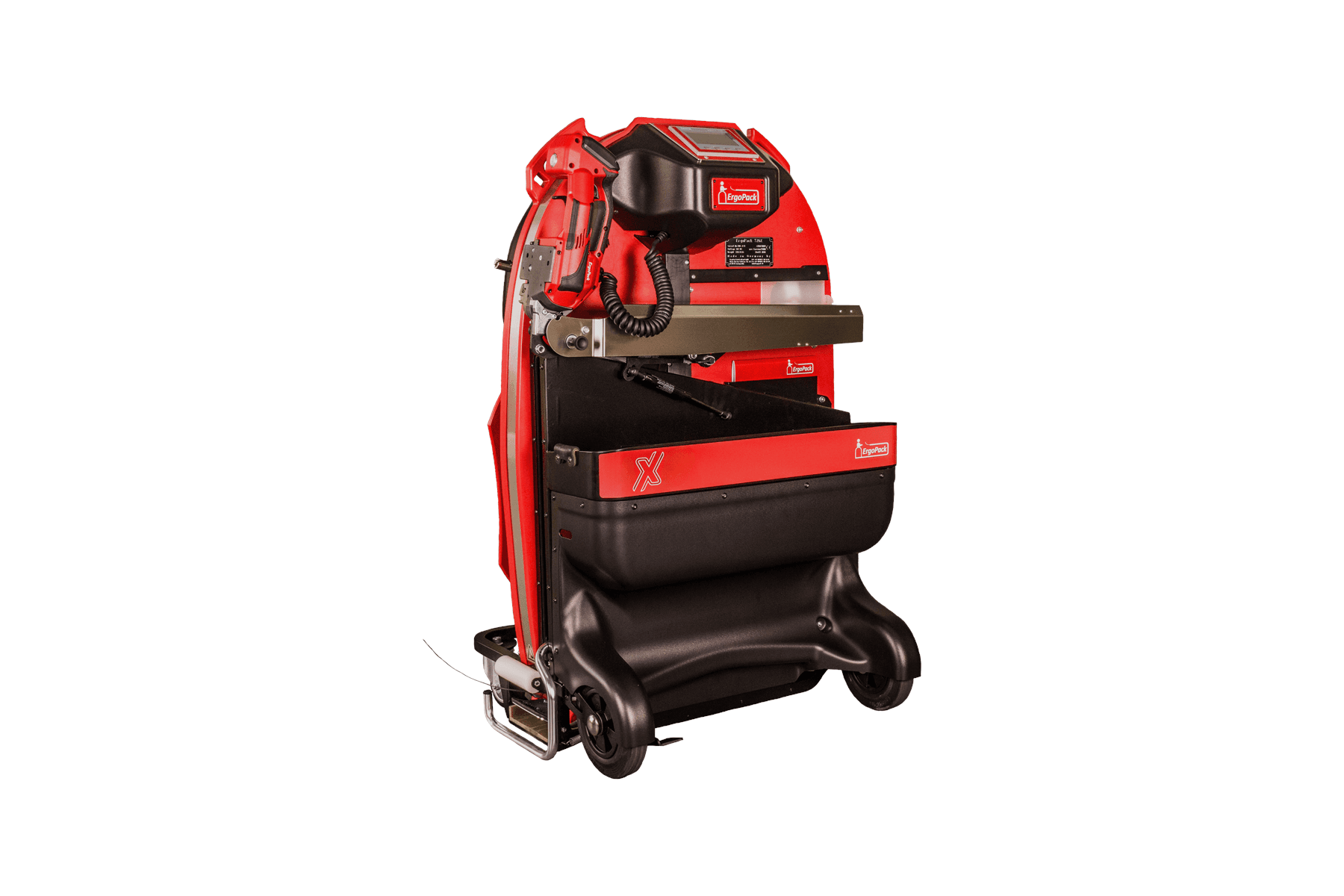
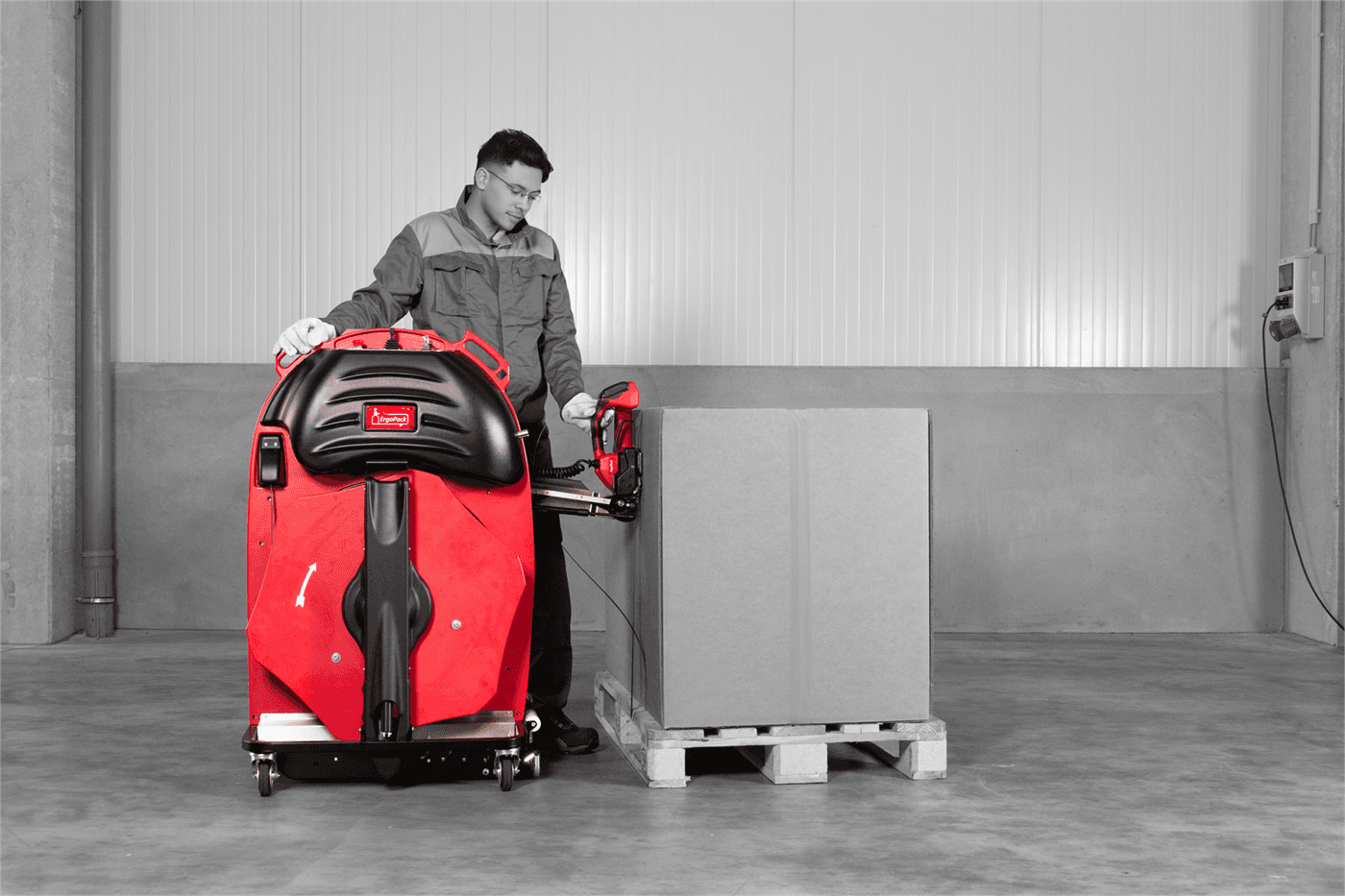
Many operations do not have a clean conveyorized line where every pallet comes to one fixed station. They build loads in staging lanes, pack near the line, or dispatch from multiple doors. In those cases, moving the strapping system to the pallet is often more efficient than moving the pallet to the machine.
That is exactly where a mobile pallet strapping system changes the economics:
- less pallet repositioning,
- less fork movement just to reach a fixed strapping point,
- less operator walking around the load,
- and fewer awkward manual handling steps.
For multi-bay, flexible, low-to-medium volume operations, the ErgoPack GO is usually the cleanest starting point. For higher-throughput mobile work, especially where 13 mm to 16 mm PP and PET dominate, the ErgoPack 726X Li is the stronger long-term platform.
4. Throughput per shift
If you compare machines only on purchase price, you miss the line-level cost.
The official technical data in this repo points to a meaningful separation:
- ErgoPack GO: 40 m/min chain speed and 350 strapping cycles per charge.
- ErgoPack 726X Li: 66 m/min chain speed and 1200 strapping cycles per charge.
- ErgoPack 700: manual hand-crank operation with no charging downtime.
That does not automatically make the 726X Li the answer for every site. It means the 726X Li becomes the correct answer sooner than many buyers expect once dispatch volume, shift pressure, or labor cost rises. If your floor has enough pallet volume to justify faster cycle recovery and fewer charging interruptions, the difference between 40 m/min and 66 m/min is operational, not cosmetic.
5. Ergonomics and consistency
Manual handling guidance from HSE and NIOSH consistently treats lifting, pulling, pushing, and repetitive handling as injury-risk tasks that should be avoided or reduced where reasonably practicable. Pallet strapping done the old way usually combines all of those problems in one job.
What buyers often call a "strapping problem" is actually a combined ergonomics, consistency, and throughput problem:
- inconsistent strap tension,
- repeated bending,
- repeated walking around the load,
- floor-level working posture,
- and rework when the final strap is not repeatable.
That is why ergonomic machine selection is not a soft topic. It is a production topic.
Which ErgoPack fits which workload
ErgoPack 700: best when simplicity, material flexibility, and zero power dependence matter
The ErgoPack 700 is the right recommendation when the operation values reliability, low complexity, and complete independence from battery charging.
Why it fits:
- Hand-crank operation with no battery and no electricity cost.
- Broad compatibility with PP, PET, paper, cord, and composite straps.
- Pallet width range of 30 cm to 255 cm and height range of 10 cm to 230 cm.
- Strong fit for low-volume operations, remote loading points, backup stations, and facilities that want the lowest operating complexity.
The 700 is not the "cheap alternative." It is the correct engineering answer when your site needs a mobile, ergonomic strapping process but does not need battery-powered cycle speed.
ErgoPack GO: best when one machine must cover multiple locations
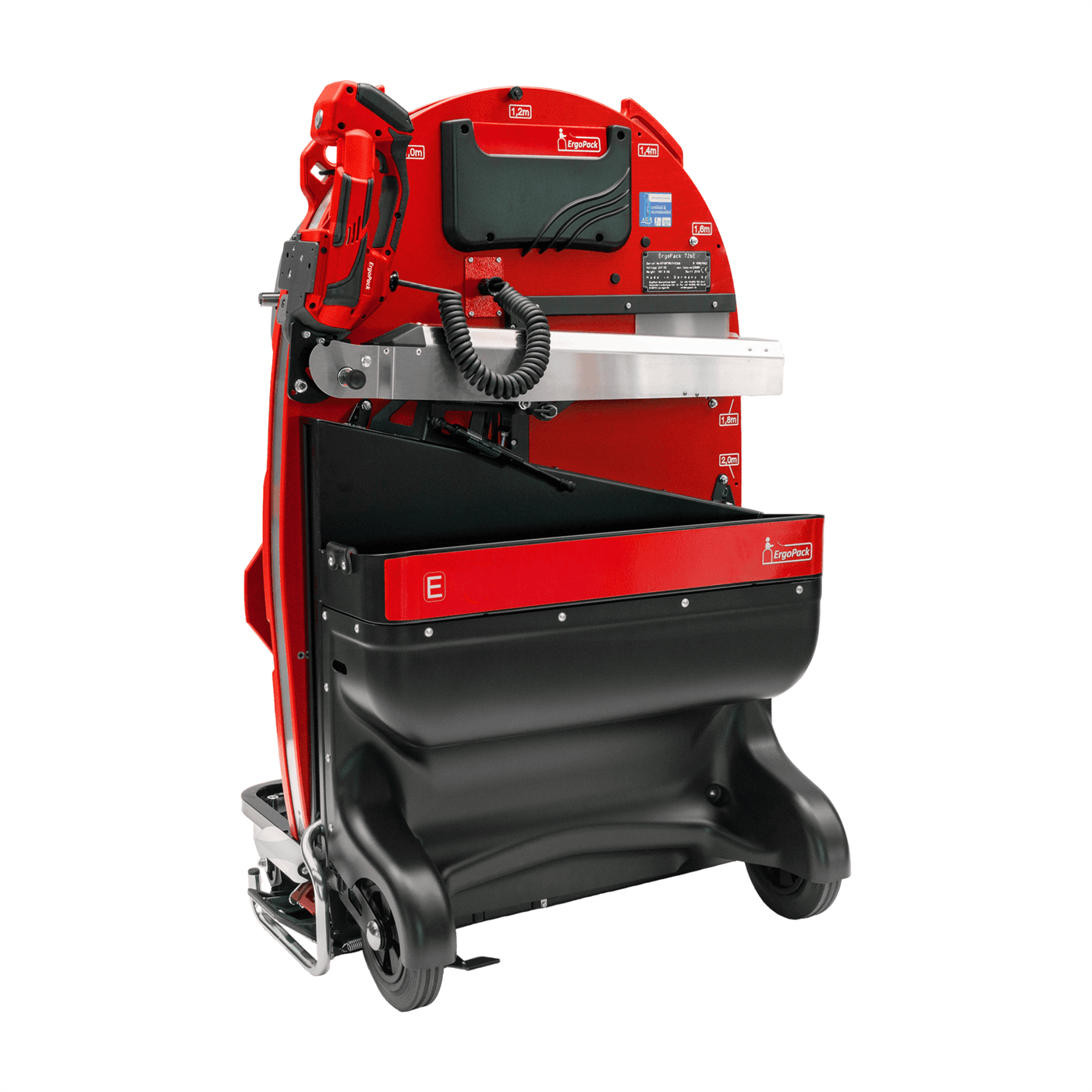
The ErgoPack GO is the most practical answer when portability and floor flexibility are the priority.
Why it fits:
- Portable battery-powered strapping for low-to-medium volume warehouse work.
- 40 m/min chain speed and 350 strapping cycles per charge.
- Good fit for multi-bay dispatch areas, flexible warehouse zones, and operations that do not want to overspend on a larger premium platform.
- Included standard tool-lift, joystick control, and portable operating concept.
Its key limitation is just as important as its strength: the GO works best inside its stated pallet and portability window. If you need a wider pallet range, lower pallet handling, or sustained higher throughput, it is time to step up.
ErgoPack 726X Li: best when throughput, control, and repeatability drive the project
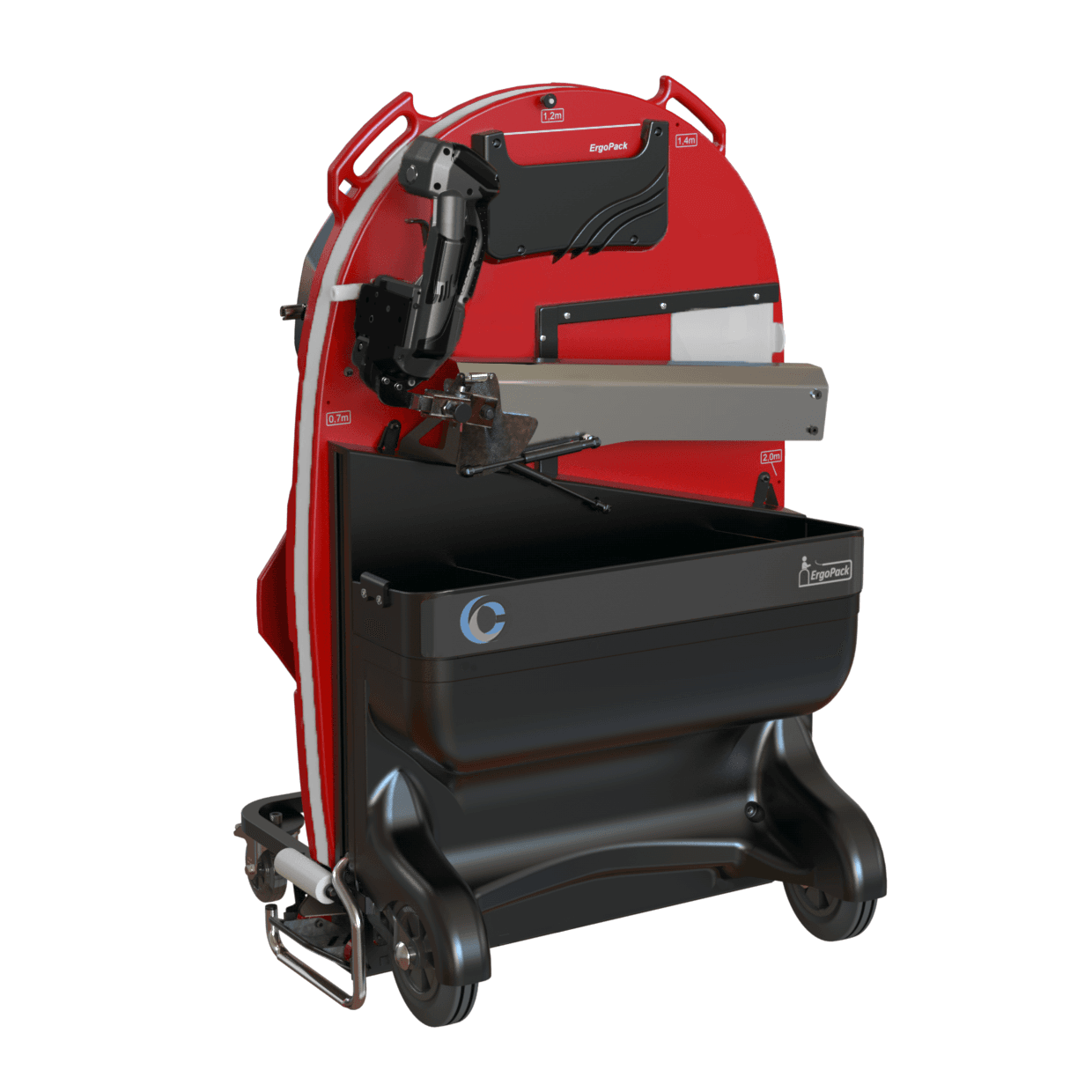
For many Indian warehouses, the ErgoPack 726X Li is the most strategic selling model because it sits at the best intersection of pallet strapping demand, speed, and practical floor flexibility.
Why it fits:
- Built for 13 mm to 16 mm PP and PET applications.
- 66 m/min chain speed for faster strap feed and recovery.
- Up to 1200 cycles per charge with a Lithium-Ion battery.
- Approximate 3.5-hour charge time.
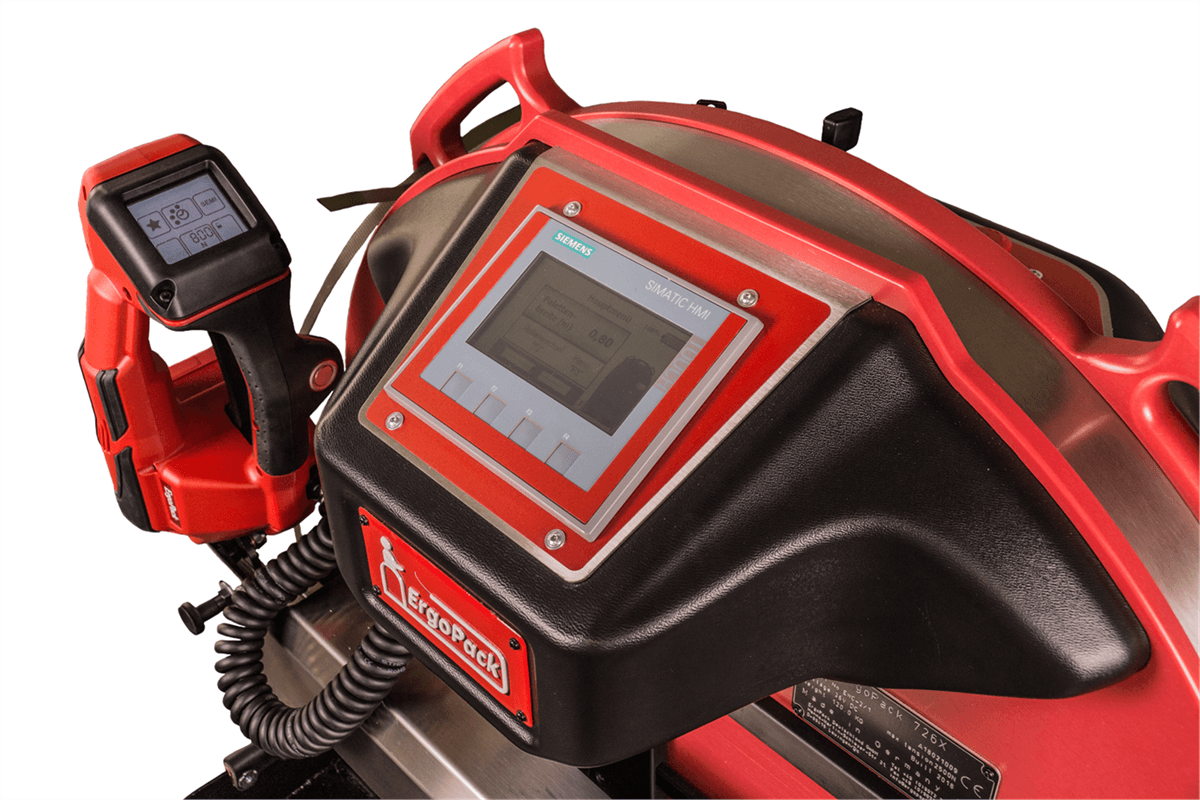
- Siemens industry touchscreen for easier setting changes.
- Included line laser and standard tool-lift in the official product data.
- Pallet width range from 40 cm to 270 cm and height range from 10 cm to 230 cm.
If your operation is already feeling dispatch pressure, operator fatigue, or inconsistent manual strapping quality, the 726X Li is often the machine that stops the business from underbuying.
Common buying mistakes that slow ROI
Buying only on machine price
The relevant number is not just purchase price. It is cost per stable pallet over time. Labor touches, rework, operator walking, dispatch delays, battery downtime, and strap inconsistency matter more than a lower invoice if the machine is wrong for the floor.
Buying too much machine for the wrong load profile
A premium platform is only premium if you use what you paid for. If your pallet volume is modest and you need one portable unit to move between dispatch points, the GO can create a better business case than a larger platform.
Buying too little machine for a growing operation
The reverse mistake is just as common. If the site is already running into throughput pressure, an underpowered decision creates a second purchase later. That is one reason the 726X Li is often the better long-term answer for growing warehouses.
Ignoring strap material
This is a technical filter, not a minor detail. If your strap program extends beyond PP and PET, the 700 deserves serious attention because it handles paper, cord, and composite too.
Recommended buying path for most teams
If you want to avoid both underbuying and overbuying, use this order:
- Identify the actual strap width and material in production.
- Confirm pallet width, height, and clearance ranges from real dispatch data.
- Separate low-volume, multi-bay, and high-throughput use cases.
- Match the machine family before discussing accessories and add-ons.
- Build the final configuration inside the Build Your Own ErgoPack tool.
- Compare options side by side on the machine comparison page.
- Run your commercial assumptions through the ROI calculator.
Recommended next step by use case
- Choose ErgoPack 700 if you want a manual hand-crank pallet strapping machine with zero battery dependence and broad strap-material flexibility.
- Choose ErgoPack GO if you need a portable pallet strapping machine for multiple bays or flexible warehouse zones.
- Choose ErgoPack 726X Li if you need faster mobile automated pallet strapping for 13 mm to 16 mm PP or PET with better daily throughput.
If you are still deciding between mobile flexibility and higher automation, read Automated Pallet Strapping: ROI, Throughput and When Mobile Automation Wins. If your budget is being discussed inside a broader warehouse equipment plan, read Logistics Machines for Dispatch Efficiency: Why Mobile Pallet Strapping Matters.
Technical references
Talk to a pallet strapping engineer
BENZ Packaging and ErgoPack India engineers support installations and service anywhere in India. Tell us your pallet setup and we’ll recommend the right machine — and send pricing.
Related Reading
Continue with the next guide
products
Automated Pallet Strapping: ROI, Throughput and When Mobile Automation Wins
Automated pallet strapping is not just about speed. This guide breaks down throughput, labor, ergonomics, battery cycles, pallet variation, and when a mobile system like ErgoPack 726X Li beats a fixed strapping station.
products
Logistics Machines for Dispatch Efficiency: Why Mobile Pallet Strapping Matters
When companies search for logistics machines, they usually compare conveyors, wrappers, dock equipment, scanners, and pallet strapping. This guide shows where mobile pallet strapping delivers the fastest operational win for dispatch areas, 3PL yards, and multi-bay warehouses.