products
Automated Pallet Strapping: ROI, Throughput and When Mobile Automation Wins
Automated pallet strapping is not just about speed. This guide breaks down throughput, labor, ergonomics, battery cycles, pallet variation, and when a mobile system like ErgoPack 726X Li beats a fixed strapping station.
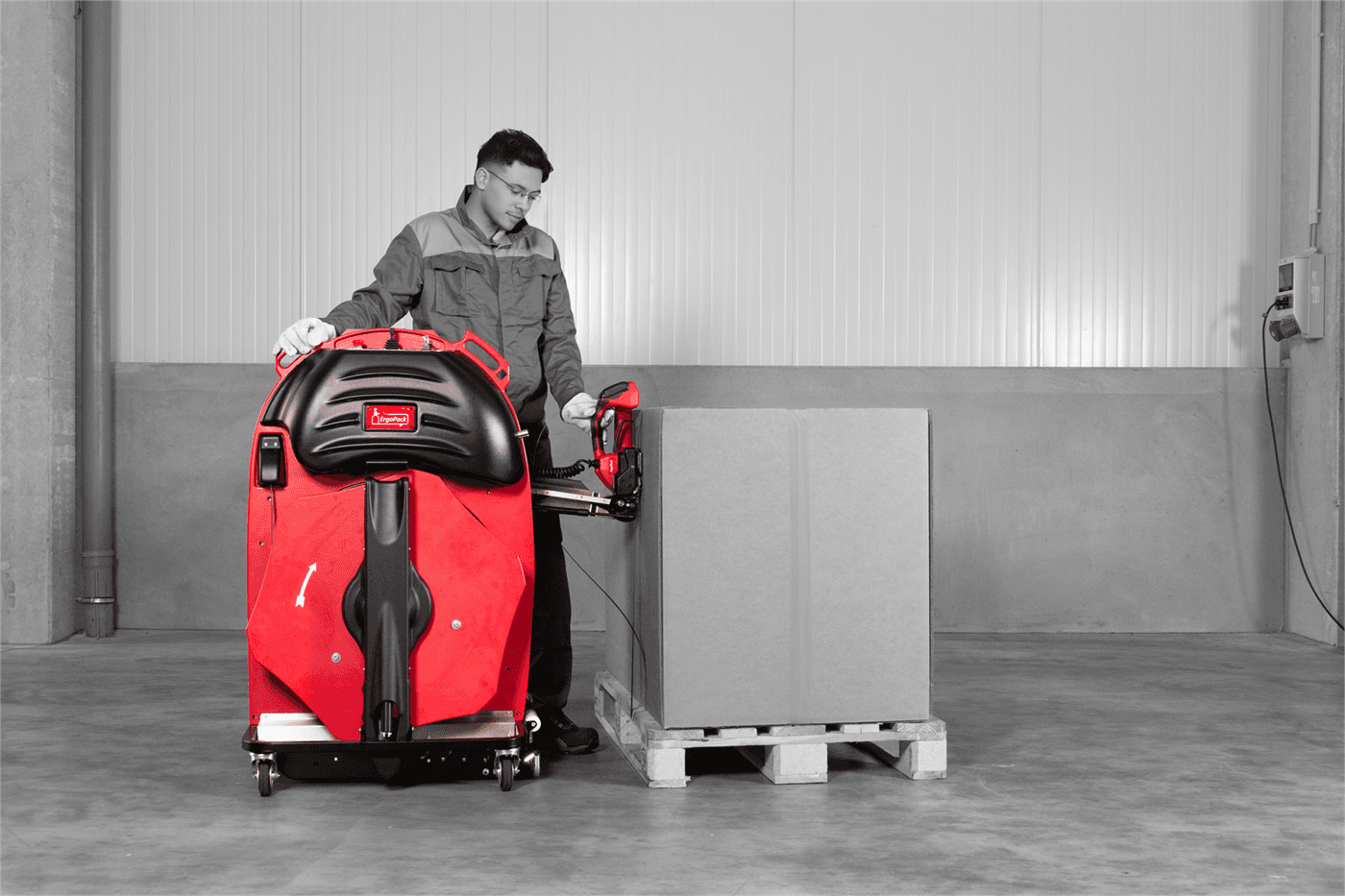
When buyers search for automated pallet strapping, they often put very different technologies in the same shortlist.
One category is fixed automation: conveyor-fed, repeatable pallet flow, stable dimensions, and a machine that waits in one place. The other is mobile automation: a strapping system that goes to the pallet, removes manual floor-level handling, and applies repeatable tension on the real dispatch floor.
Both approaches can be valid. But they solve different operational problems.
For many Indian warehouses, especially FMCG, contract packaging, spare parts, distribution, and mixed-load dispatch environments, the bottleneck is not that pallets are missing a machine in the abstract. The bottleneck is that real pallets are built in different places, vary in height and footprint, and still need fast, repeatable strapping without bending, walking, or manual throw-over work.
That is why mobile automated pallet strapping often creates faster practical ROI than buyers expect, and why the ErgoPack 726X Li is such an important selling platform.
First define what "automated pallet strapping" should mean for your site
The useful definition is not "how many motors does the machine have?" It is "which manual steps are removed from the process?"
An effective automated pallet strapping setup should reduce or eliminate:
- manual walking around the pallet to feed and recover strap,
- repeated bending and floor-level hand work,
- inconsistent tension caused by operator variation,
- unnecessary pallet movement to a remote station,
- and dispatch rework from poor seals or poor alignment.
That means automation should be measured as a process outcome, not as a marketing label.
Fixed arch systems versus mobile pallet strapping systems
Fixed arch or conveyor-based automation
This approach is strongest when:
- pallet dimensions are highly standardized,
- the load path is already conveyorized,
- floor layout supports a single strapping point,
- and the business can justify moving every pallet through a fixed station.
Mobile automated pallet strapping
This approach is strongest when:
- pallets are built or staged in multiple areas,
- dispatch happens across different bays,
- pallet dimensions vary,
- forklift movement to a fixed station adds waste,
- and the operation needs an ergonomic process without overbuilding the line.
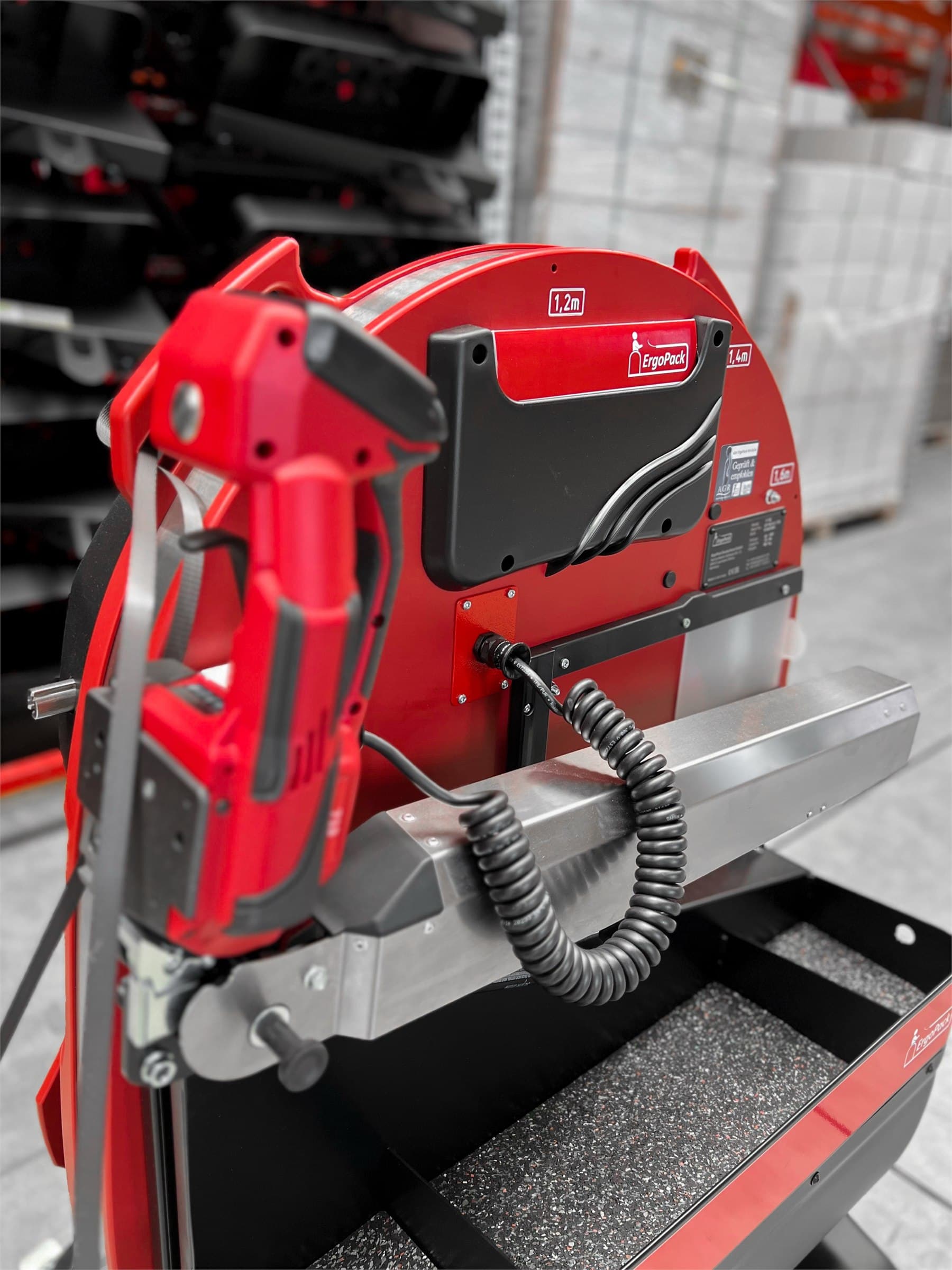
For many real warehouses, mobile automation has better utilization. The machine is working where the pallet already exists, instead of waiting for the pallet to come to it.
The ROI variables that actually matter
Automated pallet strapping projects are often approved or rejected with incomplete math. Buyers compare machine price but ignore the process cost that repeats every shift.
The most important ROI drivers are:
1. Labor touches per pallet
How many physical actions are required from the operator to complete one pallet? If automation reduces walking, bending, feeding, recovering, and rework, it reduces labor touches even before headcount changes are discussed.
2. Throughput under shift pressure
Can the system keep up with dispatch peaks without creating a queue? A machine that looks affordable but creates delay during the last two hours of the shift usually costs more than planned.
3. Tension repeatability
Poor repeatability creates hidden costs:
- crushed cartons from over-tension,
- unstable loads from under-tension,
- extra strap use,
- and rework before loading.
4. Battery runtime and recharge profile
Battery technology changes operational behavior.
From the official technical data in this repo:
- ErgoPack GO delivers 40 m/min chain speed and 350 cycles per charge from a 24 V lead-fleece battery.
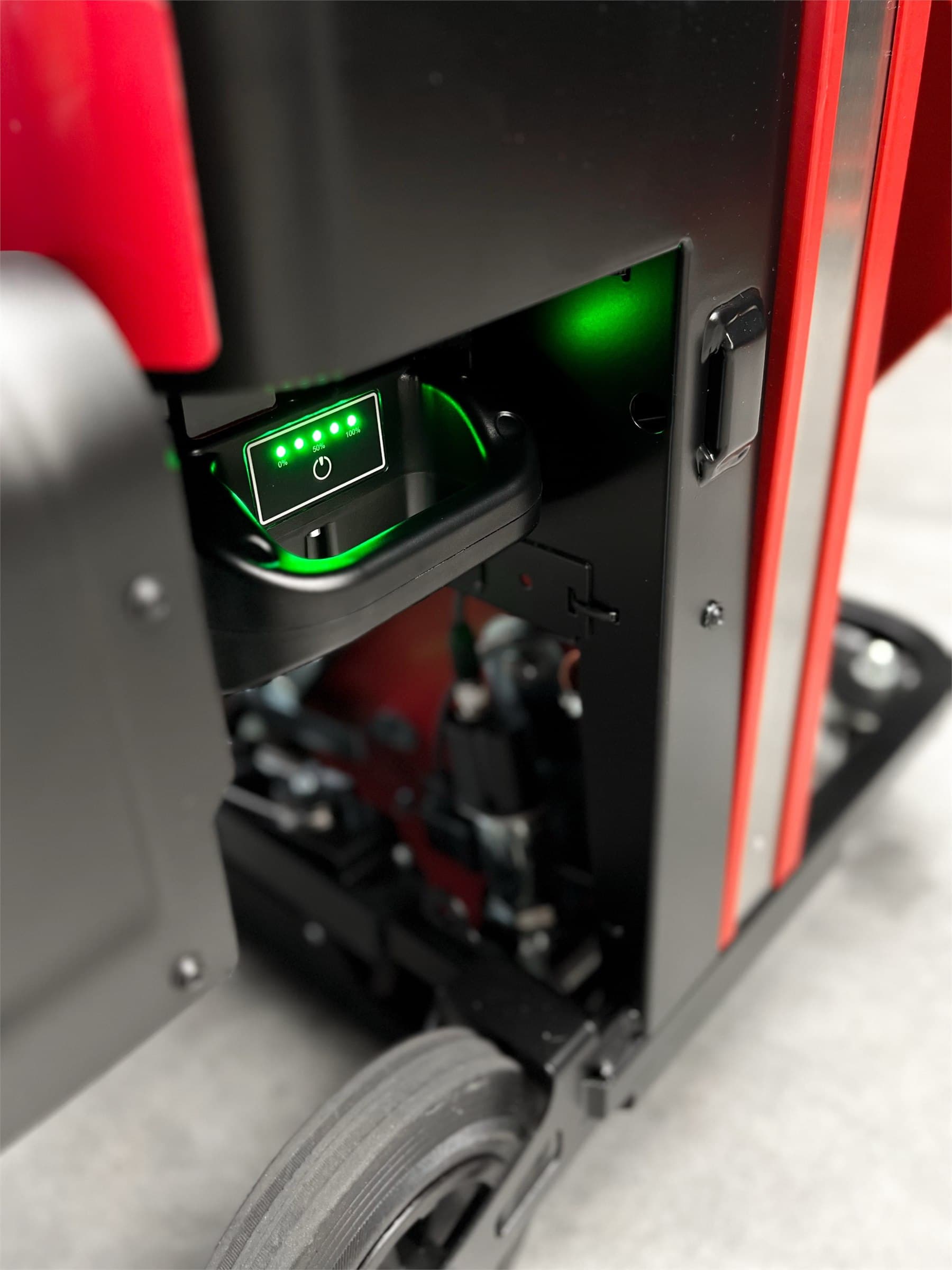
- ErgoPack 726X Li delivers 66 m/min chain speed and up to 1200 cycles per charge with a Lithium-Ion battery and roughly 3.5-hour charge time.
- ErgoPack 700 uses manual hand-crank operation and therefore avoids charging dependence entirely.
That gap affects real planning. Higher throughput with fewer charging interruptions changes what one operator and one machine can cover in a shift.
5. Pallet variety
If every pallet is the same, fixed automation can be attractive. If pallet geometry changes frequently, mobile automation often wins because it adapts without forcing every load through one rigid path.
Why the ErgoPack 726X Li is the lead recommendation for growing operations
There are strong reasons to position the ErgoPack 726X Li as the premium recommendation for buyers searching automated pallet strapping solutions.
Its fit is unusually strong when the operation needs:
- 13 mm to 16 mm PP or PET strap handling,
- faster cycle performance than standard economy platforms,
- better battery productivity,
- easier parameter changes,
- and a machine that stays mobile on the floor.
Key technical points from the product data already available in this repo:
- 66 m/min chain speed.
- Up to 1200 cycles per charge.
- Lithium-Ion battery with approximately 3.5-hour charging.
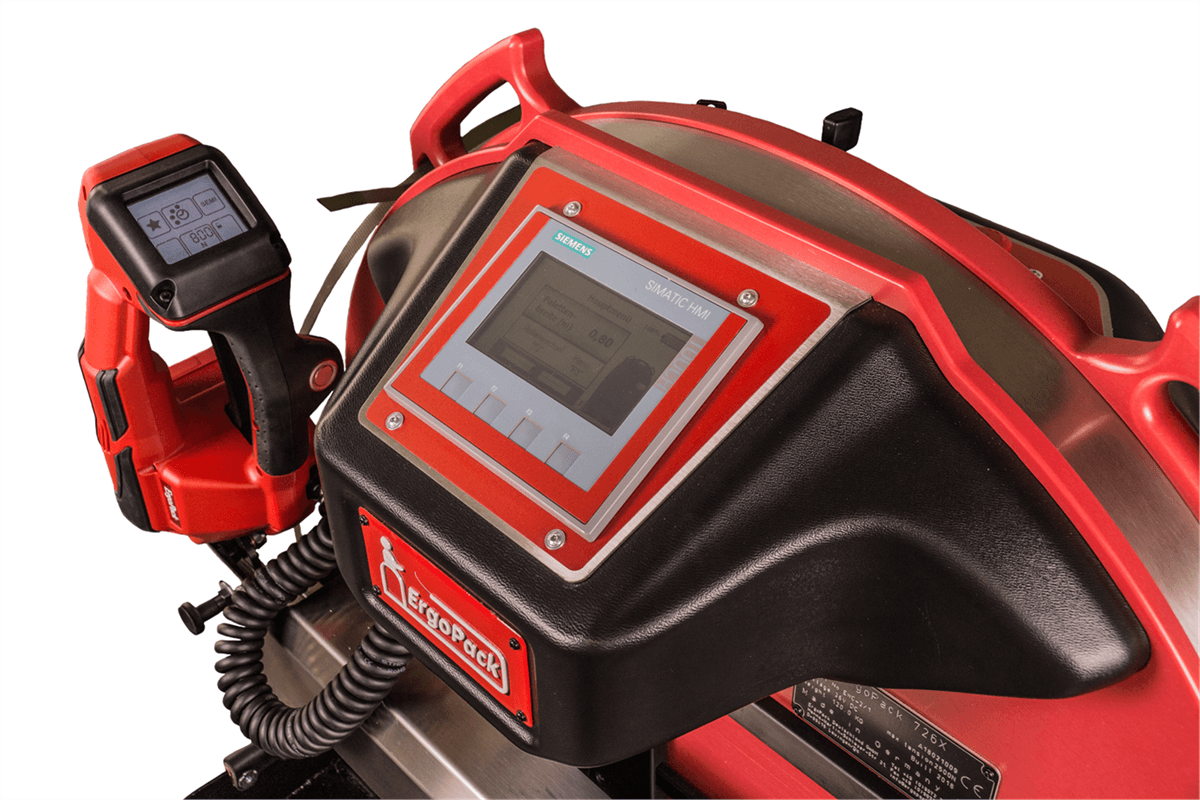
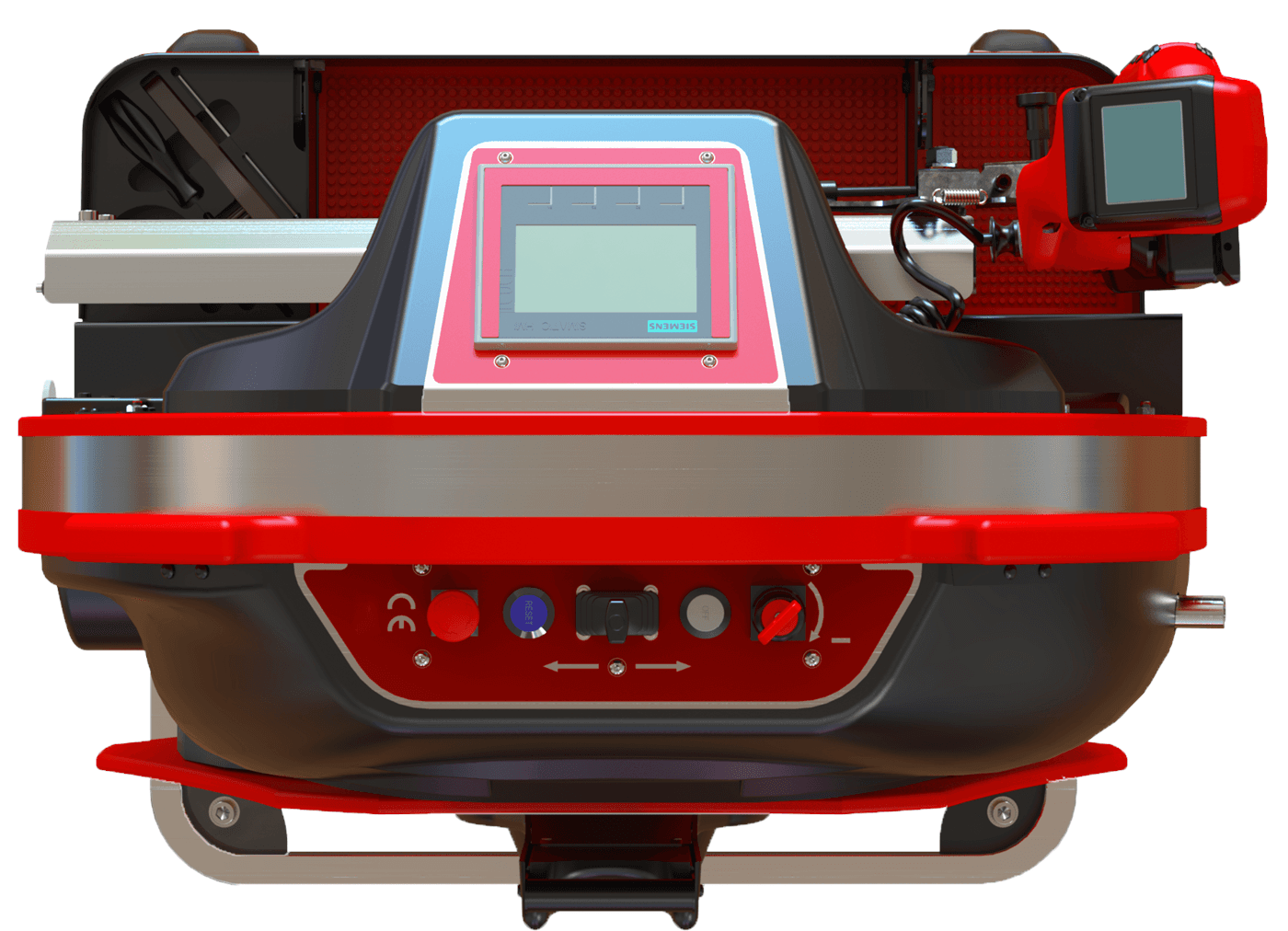
- Siemens industry touchscreen for easier setting changes.
- Included line laser and standard tool-lift in the official model data.
- Pallet width coverage from 40 cm to 270 cm and height coverage from 10 cm to 230 cm.
In plain operational terms, that means the 726X Li is not just a faster machine. It is a better answer for the warehouse that is already beyond "occasional strapping" but not interested in redesigning the whole dispatch line around a fixed arch system.
Mobile automation does not mean over-automation
A lot of buyers assume they need the biggest possible system to claim automation. That is backwards.
Good automation removes unnecessary work without forcing the site into a process it does not need. In many facilities, the right question is:
"How much manual handling can we remove while preserving mobility and flexibility?"
That is why the 726X Li often beats a more rigid concept on ROI. It removes the worst parts of the manual process while staying mobile, operator-friendly, and easier to integrate into existing dispatch layouts.
When the GO or 700 still wins
The 726X Li is the strongest general recommendation for higher-value automated pallet strapping projects, but not every site should start there.
Choose ErgoPack GO when:
- you need one portable machine to serve multiple warehouse points,
- your pallet height profile stays inside the GO operating window,
- your dispatch volume is real but not yet premium-platform level,
- and you want battery-powered mobility without jumping into a larger investment.
The ErgoPack GO is especially effective when the buying problem is floor flexibility, not maximum daily cycle count.
Choose ErgoPack 700 when:
- the site wants zero dependence on charging and power,
- volume is lower,
- simplicity matters more than speed,
- or the strap-material mix goes beyond PP and PET into paper, cord, or composite.
The ErgoPack 700 should be seen as a deliberate engineering choice, not a fallback.
Do not confuse load stability with only one machine
Automated pallet strapping improves repeatability, but good load security still depends on the full packaging system:
- the right strap specification,
- good pallet quality,
- the right sealing approach,
- sensible unitization,
- and transport-securement practices appropriate to the route and carrier.
That is why smart buyers treat pallet strapping as one critical part of load integrity, not as an isolated gadget purchase.
The practical implementation checklist
Before you approve an automated pallet strapping project, answer these questions:
- What is the real number of pallets per shift, not just the average monthly total?
- Which strap widths and materials are actually in use today?
- Are pallets standardized enough for a fixed station, or do they vary too much?
- How much forklift or pallet movement exists only because the strapping point is in the wrong place?
- Is the business trying to remove manual strain, increase throughput, improve consistency, or all three?
- Will one machine serve one point, or several?
- Is this a one-shift, two-shift, or growth-stage decision?
If the answers point toward mobile, flexible, faster PP or PET strapping, the ErgoPack 726X Li is usually the strongest commercial and technical recommendation.
How to move from interest to specification
The right sequence is:
- Start with the machine comparison page.
- Review the ErgoPack 726X Li product page.
- Validate accessories and fit inside the Build Your Own ErgoPack tool.
- Put labor and throughput assumptions into the ROI calculator.
- Use contact ErgoPack India for site-specific application review.
If you are still at the earlier selection stage, read Pallet Strapping Machine Guide: How to Choose the Right System for Your Warehouse. If your team is evaluating strapping alongside a wider warehouse capex plan, read Logistics Machines for Dispatch Efficiency: Why Mobile Pallet Strapping Matters.
Technical references
Talk to a pallet strapping engineer
BENZ Packaging and ErgoPack India engineers support installations and service anywhere in India. Tell us your pallet setup and we’ll recommend the right machine — and send pricing.
Related Reading
Continue with the next guide
products
Logistics Machines for Dispatch Efficiency: Why Mobile Pallet Strapping Matters
When companies search for logistics machines, they usually compare conveyors, wrappers, dock equipment, scanners, and pallet strapping. This guide shows where mobile pallet strapping delivers the fastest operational win for dispatch areas, 3PL yards, and multi-bay warehouses.
products
Pallet Strapping Machine Guide: How to Choose the Right System for Your Warehouse
A technical buyer's guide to pallet strapping machines for Indian warehouses: compare manual, portable, and mobile automated systems by throughput, strap width, pallet size, ergonomics, and operating cost.