guides
Electric & Battery Pallet Strappers: How They Work and When to Choose One
Electric and battery-powered pallet strappers bring digital tension and speed without an air line. How they work, where they fit between manual and fully automatic, and what to look for.
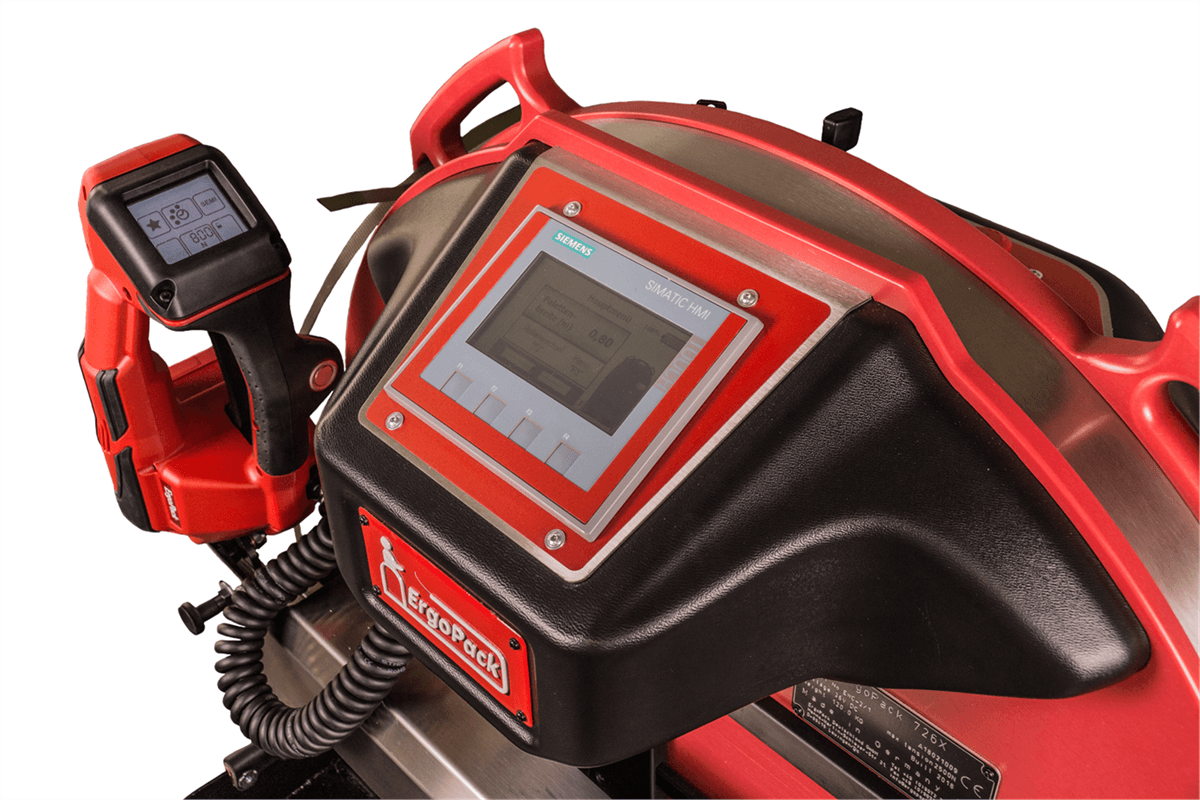
Between a manual hand tool and a six-figure inline arch sits the option most growing Indian operations actually need: an electric, battery-powered pallet strapper. It brings consistent tension and real speed without compressed air or fixed infrastructure. Here is how they work and how to choose one.
How an electric pallet strapper works
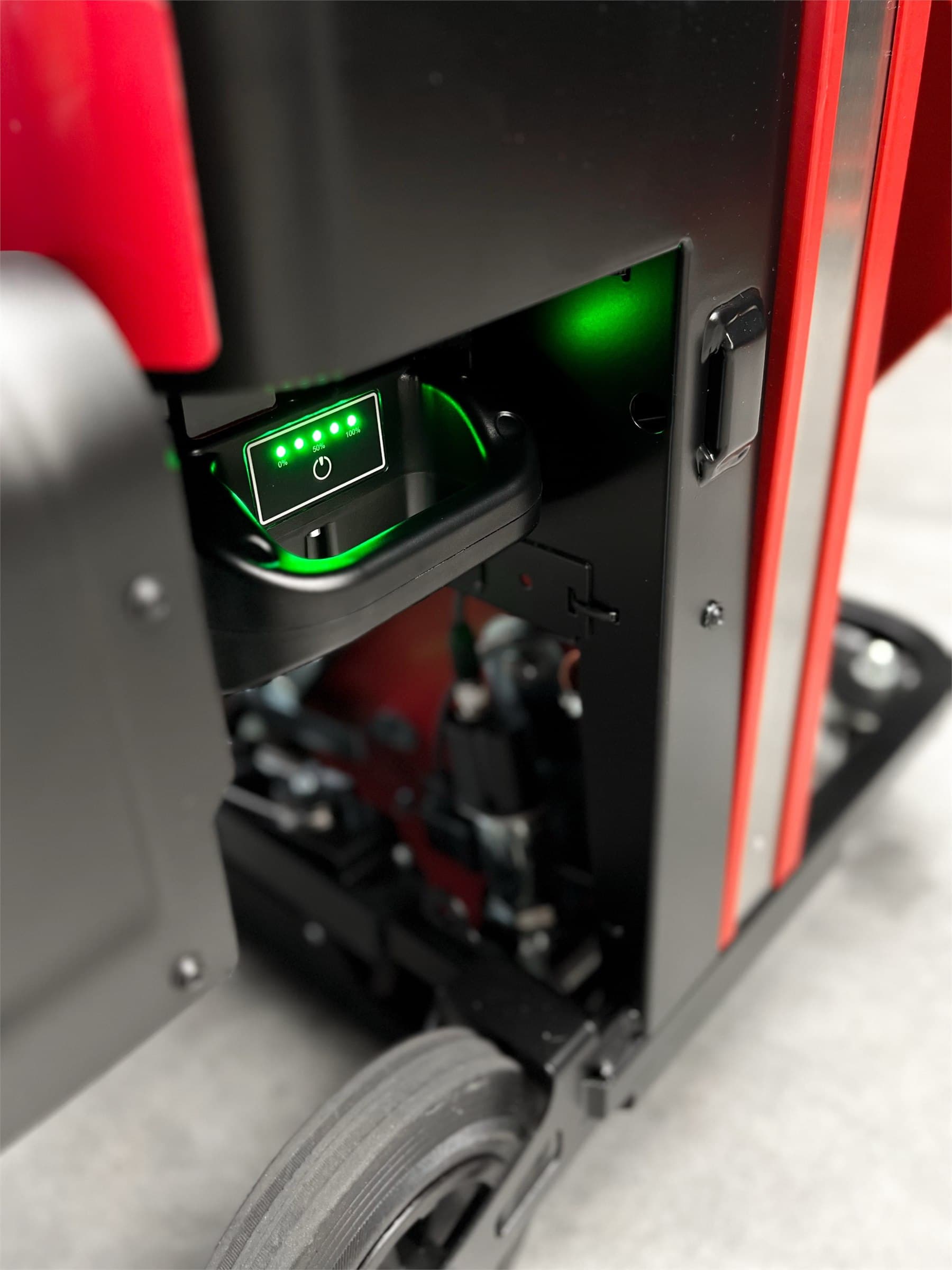
An electric strapper uses a motor — usually battery-powered — to drive the strapping cycle. In a combined battery tool, one trigger tensions, friction-welds and cuts the strap in a single motion. In a mobile electric system, a motor drives the ChainLance that routes the strap under the pallet, controlled by a joystick or touchscreen. Either way, the machine sets the tension, not the operator's arm — so it is repeatable.
Why electric/battery sits in the sweet spot
| Manual | Electric / battery | Fully automatic inline | |
|---|---|---|---|
| Tension | Variable (operator) | Digital, repeatable | Digital, repeatable |
| Speed | Slow | Fast | Fastest |
| Infrastructure | None | Charging only | Conveyors, 3-phase, civil work |
| Mobility | Full | Full (no air line) | None (fixed) |
| CapEx | Lowest | Mid | Highest |
| Best volume | Low | Medium–high | Very high, single line |
For the large band of operations strapping ~30–150 pallets a day across mixed loads, electric/battery is the right level: the consistency and speed of automation, without the cost and rigidity of a fixed line.
What to look for in an electric pallet strapper
- Digital, adjustable tension — set the force for the load and get it repeatably (look for a stated range, e.g. up to 2,500N).
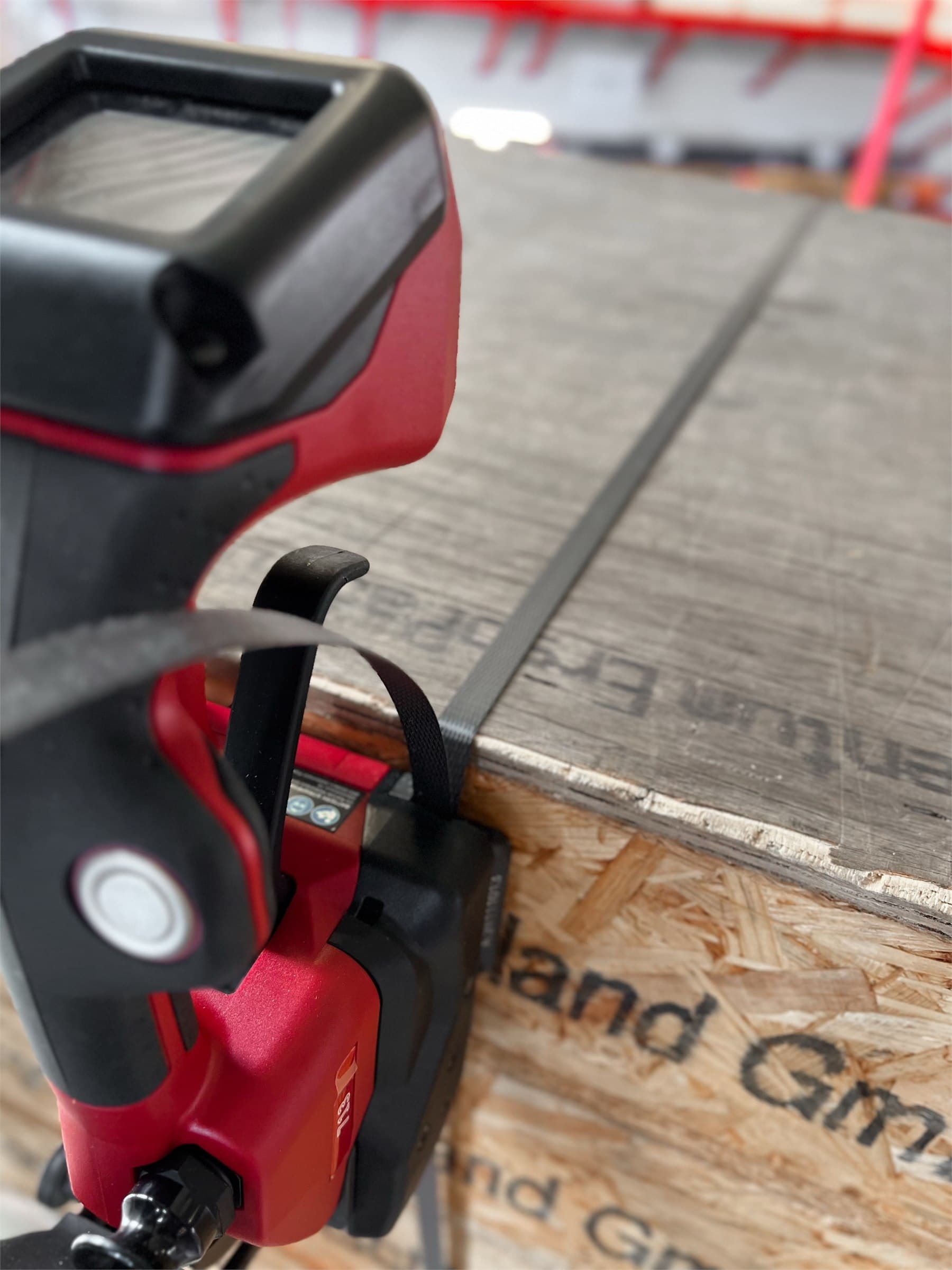
- Battery type and cycles per charge — Li-ion gives more cycles and faster charging; lead/AGM is proven and field-serviceable. Match cycles-per-charge to your daily volume.
- Strap compatibility — PP and PET at minimum; some machines also run paper, cord and composite.
- Sealless friction weld — fuses the strap to itself (no metal clips to buy or rust).
- Pallet range — make sure it covers your narrowest and widest pallets.
- Local service and parts — the difference between a day of downtime and an hour.
Electric mobile strappers: the ChainLance advantage
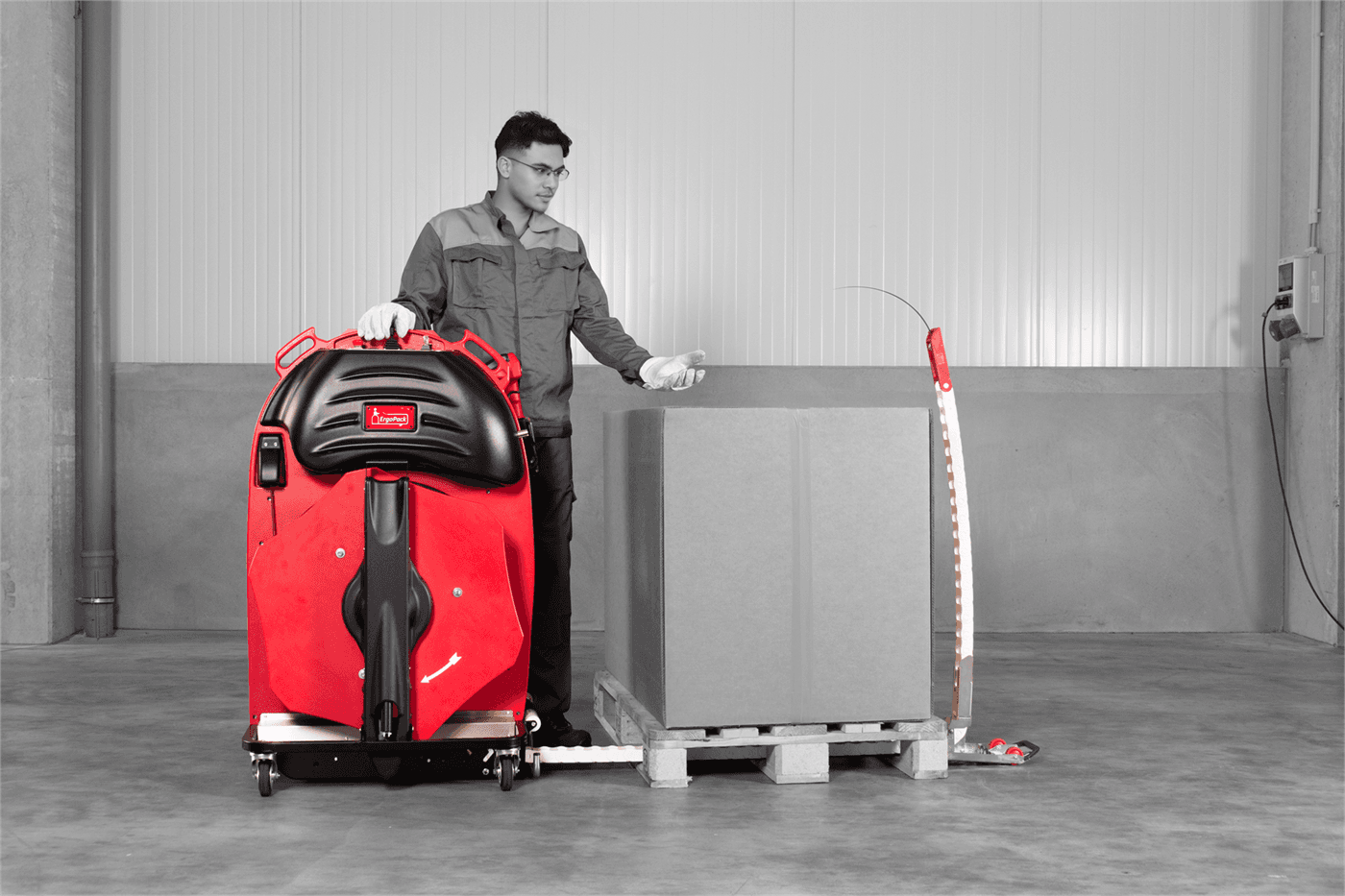
A handheld electric tool still only seals — the operator still routes the strap under the pallet by hand. An electric mobile strapper automates the routing too: the motorised ChainLance carries the strap under the pallet and back, so one operator straps in under 40 seconds from a standing position. That is the difference between a faster seal and a faster pallet.
In the ErgoPack range, the ErgoPack GO is the electric mobile strapper (joystick, 24V, multi-material) and the 726X adds Li-ion, a touchscreen, digital 400–2,500N tension and an integrated friction-weld head; the 700 is the manual-crank option for sites without power. See types of pallet strapping machines and the strapping tools comparison.
Electric strapper checklist
- Digital, adjustable tension with a stated range
- Battery type and cycles-per-charge matched to daily volume
- PP/PET (and paper/cord/composite if you need them)
- Sealless friction weld — no metal clips
- Covers your full pallet size range
- Local service and genuine parts available
- For a faster pallet (not just seal) — electric mobile routing
For most growing operations, an electric strapper is the right step: automation-grade consistency and speed, without the infrastructure of a fixed line.
Talk to a pallet strapping engineer
BENZ Packaging and ErgoPack India engineers support installations and service anywhere in India. Tell us your pallet setup and we’ll recommend the right machine — and send pricing.
Related Reading
Continue with the next guide
guides
PP vs PET Strapping: Which Should You Use, and When?
PP and PET strap suit very different loads. A clear guide to when polypropylene is enough and when polyester is essential — by load weight, settling, and export exposure.
guides
Strapping Machine AMC, Spares and Uptime: What to Check Before You Buy
A strapping machine is only as good as its uptime. What to check on service, spare parts and AMC before you buy — so the machine that saves you ₹25 lakh a year actually keeps running.
guides
Pallet Strapping Machine Buying Checklist: 10 Questions Before You Decide
Before you buy a pallet strapping machine, run through these ten questions. They cover loads, volume, power, tension, service and ROI — so you choose the right machine, not just the cheapest.