guides
Corrugated Box Plant Dispatch: How to Bundle and Strap Without Crushing or Slowing Down
Corrugated and paper plants ship bulky, compressible, irregular bundles at high volume. A guide to bundling and strapping them without crushing edges — and clearing the dispatch dock at peak.
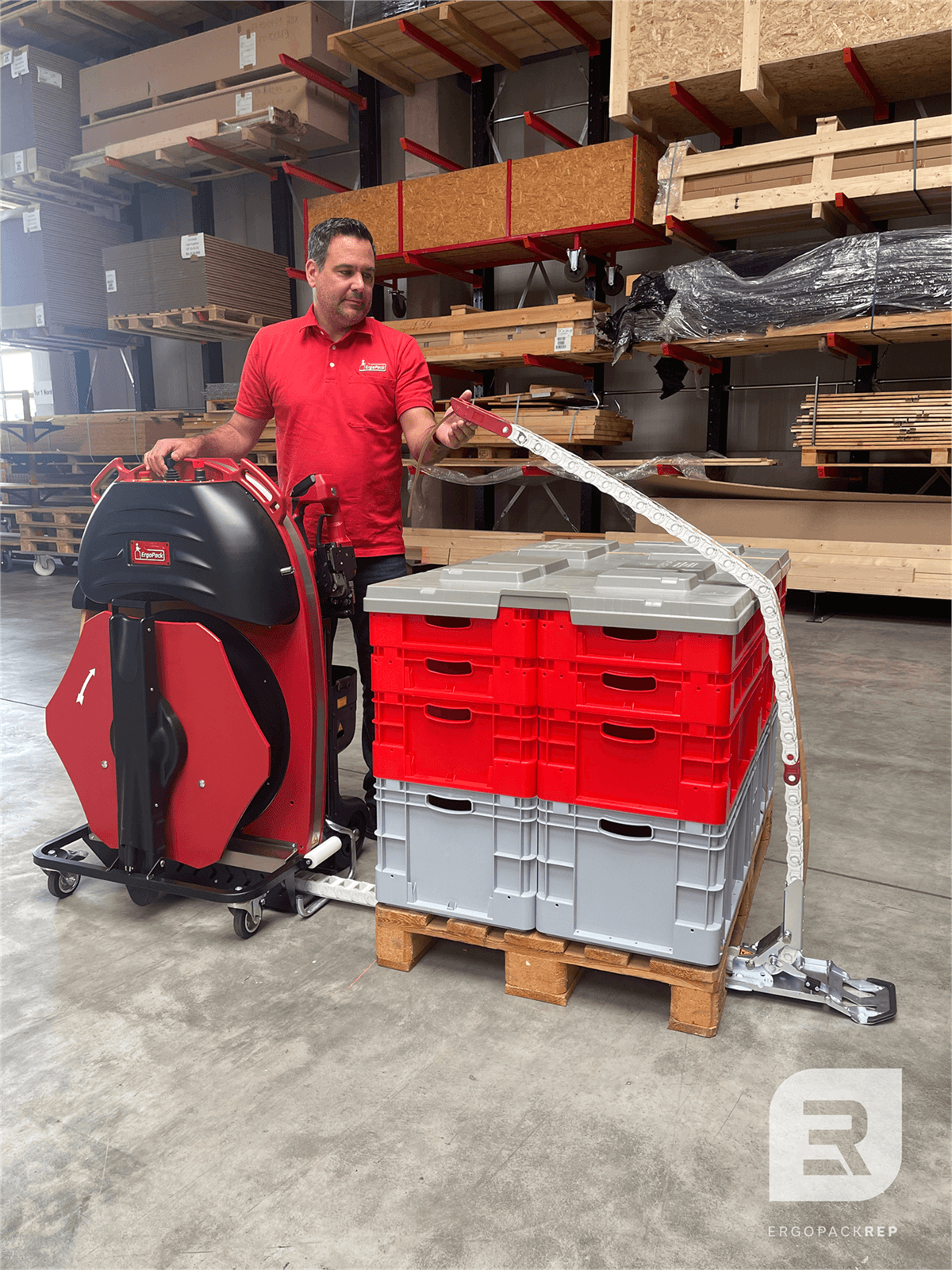
A corrugated box plant has a packaging problem of its own: it ships its product in bulky, lightweight, compressible bundles that are easy to crush and hard to keep square — at volumes where the dispatch dock becomes the bottleneck during peak runs. Getting bundling and strapping right is both a quality and a throughput issue.
Why corrugated bundles are hard to secure
- Compressible: the bundle settles and loses height in transit, so a strap tight at dispatch goes slack.
- Light but bulky: large surface area, low density — prone to leaning and shifting.
- Irregular heights: stacks of flat board or finished boxes rarely come out the same height.
- Edge-sensitive: over-tension crushes the corners — which is the product itself.
The operator faces the classic trap: under-tension and the bundle slips and collapses; over-tension and the strap cuts into and crushes the board.
The fix: exact, repeatable tension
Compressible loads need a tension that is firm but precise, applied the same way every time:
- Set a lower, exact tension — enough to hold the bundle square without cutting into the board. A calibrated machine such as the ErgoPack 726X can be dialled down to a gentle, repeatable force (from 400N) and applies that identical tension to every bundle.
- Use edge protectors so the strap force spreads along the edge instead of crushing a corner — see edge protectors & corner boards.
- Use PET strap so the bundle stays tight as it settles in transit, where steel goes slack.
This is covered in depth in our corrugated & compressible load strapping guide.
The throughput side: clearing the dock at peak
Corrugated plants run on volume and tight dispatch windows. Manual strapping at ~120 seconds per bundle becomes the bottleneck exactly when order volume peaks — finished bundles stack up, the loading dock backs up, and the press is producing faster than dispatch can ship.
Automating the strap routing clears that:
- One operator straps a bundle in under 40 seconds instead of two operators at 120.
- The dock keeps pace with the press during peak runs.
- The same machine handles the plant's range of bundle widths and heights without reconfiguration — the ChainLance adjusts continuously.
The ErgoPack GO and 700 automate the routing for plants using their own sealing tools; the 726X adds digital tension and an integrated friction weld.
Corrugated dispatch checklist
- Lower, exact tension set for compressible bundles
- Same tension applied to every bundle (calibrated, not by hand)
- Edge protectors so the strap does not crush corners
- PET strap so the bundle stays tight as it settles
- One machine that handles your full bundle size range
- Strap routing automated so the dock keeps pace at peak
Secure corrugated bundles this way and you stop choosing between crushed product and a backed-up dock — you get square bundles and a dock that keeps up with the press.
Talk to a pallet strapping engineer
BENZ Packaging and ErgoPack India engineers support installations and service anywhere in India. Tell us your pallet setup and we’ll recommend the right machine — and send pricing.
Related Reading
Continue with the next guide
guides
PP vs PET Strapping: Which Should You Use, and When?
PP and PET strap suit very different loads. A clear guide to when polypropylene is enough and when polyester is essential — by load weight, settling, and export exposure.
guides
Strapping Machine AMC, Spares and Uptime: What to Check Before You Buy
A strapping machine is only as good as its uptime. What to check on service, spare parts and AMC before you buy — so the machine that saves you ₹25 lakh a year actually keeps running.
guides
Pallet Strapping Machine Buying Checklist: 10 Questions Before You Decide
Before you buy a pallet strapping machine, run through these ten questions. They cover loads, volume, power, tension, service and ROI — so you choose the right machine, not just the cheapest.