guides
How to Stretch Wrap a Pallet Properly: Step-by-Step (and the Mistake Everyone Makes)
The correct way to stretch wrap a pallet by hand — anchoring, base layers, 50% overlap, top-down pull — plus the common mistakes, and the one thing wrapping can never do that strapping does.
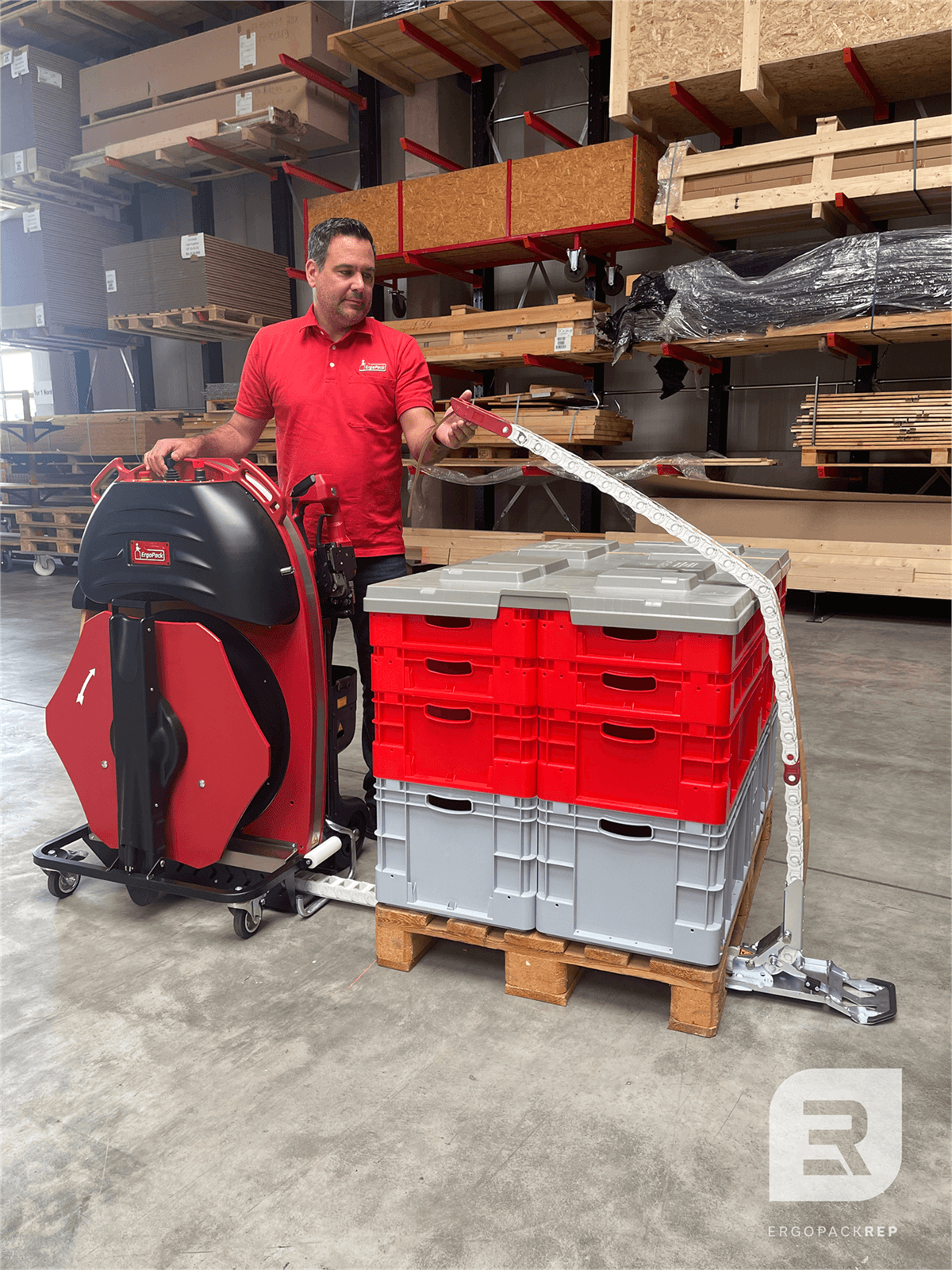
Stretch wrapping looks like the simplest job on the dispatch floor, which is exactly why it is done wrong so often. A poorly wrapped pallet falls apart in transit; a well-wrapped one still slides off the pallet if you relied on film alone. Here is the correct technique — and the limit you need to know about.
What stretch wrap actually does (and doesn't)
Stretch film binds the boxes to each other and adds a barrier against dust and moisture. That is genuinely useful. But film does not anchor the load to the pallet — it wraps the stack, not the connection to the deck. That distinction decides how you should use it, and we come back to it at the end.
How to stretch wrap a pallet — step by step
1. Build a tight, square load first
Wrapping cannot fix a bad stack. Stack boxes tightly with minimal gaps, evenly distributed, square to the pallet edges with no overhang. A wobbly stack stays wobbly under film.
2. Anchor the film to a corner
Tie or twist the film tail and secure it to one bottom corner of the pallet so it cannot pull free as you start.
3. Wrap the base — and catch the pallet
Apply at least three full layers around the base, and make sure the film goes under the top deck boards / around the pallet corners so the load is tied to the pallet itself at the bottom. A strong base is the foundation of the whole wrap.
4. Work upwards with 50% overlap
Spiral up the load, overlapping each pass over the previous one by at least 50%. Stretch the film until you feel clear resistance — but do not overstretch to the point of tearing. Consistent tension matters more than maximum tension.
5. Wrap the top and pull down
At the top, angle the film so it pulls downward on the load. This downward force is what resists the load shifting and toppling in transit.
6. Finish securely
Cut the film, press the tail firmly onto the load, and tuck the end under a corner so it grips and does not unravel.
Common stretch-wrapping mistakes
- Too little overlap — gaps weaken the wrap and let the load loosen.
- Inconsistent tension — some sections crush, others stay loose.
- Weak base — focusing on the top and under-wrapping the bottom.
- Not catching the pallet — film only around the boxes, not tied to the deck, so the whole stack can slide off.
- Too tight — crushes bottom cartons and tears the film.
- Too loose — never secures the load at all.
The limit of wrapping — and what to pair it with
Even a perfectly wrapped pallet has a ceiling: film binds boxes together but provides little vertical anchoring to the pallet, so under heavy vibration or a sudden jolt the unitised stack can still slide off the deck as one piece. For light loads that is acceptable. For medium and heavy loads, wrapping alone is not enough.
The complete method is strap to secure, then wrap to protect:
- Strapping passes tensioned PP or PET strap under the pallet and over the load, anchoring it to the base so it cannot shift — the securing.
- Wrapping adds the dust and moisture barrier on top — the protection.
And where hand wrapping struggles most — consistent tension — a machine removes the variation. The same logic applies to strapping: a calibrated system such as the ErgoPack 726X, GO or 700 applies repeatable tension on every pallet. For the full cost-and-stability comparison, see pallet strapping vs stretch wrapping.
Stretch-wrap checklist
- Load stacked tight, square, no overhang
- Film anchored to a bottom corner
- 3+ base layers, film caught under the pallet corners
- Spiral up with 50%+ overlap, consistent tension
- Top layers angled to pull down on the load
- Film cut and tucked so it grips
- For medium/heavy loads: strapped first, then wrapped
Wrap to this standard and the film does its job — but remember the film's job is protection, not anchoring. For loads that matter, strap first.
Talk to a pallet strapping engineer
BENZ Packaging and ErgoPack India engineers support installations and service anywhere in India. Tell us your pallet setup and we’ll recommend the right machine — and send pricing.
Related Reading
Continue with the next guide
guides
PP vs PET Strapping: Which Should You Use, and When?
PP and PET strap suit very different loads. A clear guide to when polypropylene is enough and when polyester is essential — by load weight, settling, and export exposure.

guides
Strapping Machine AMC, Spares and Uptime: What to Check Before You Buy
A strapping machine is only as good as its uptime. What to check on service, spare parts and AMC before you buy — so the machine that saves you ₹25 lakh a year actually keeps running.
guides
Pallet Strapping Machine Buying Checklist: 10 Questions Before You Decide
Before you buy a pallet strapping machine, run through these ten questions. They cover loads, volume, power, tension, service and ROI — so you choose the right machine, not just the cheapest.